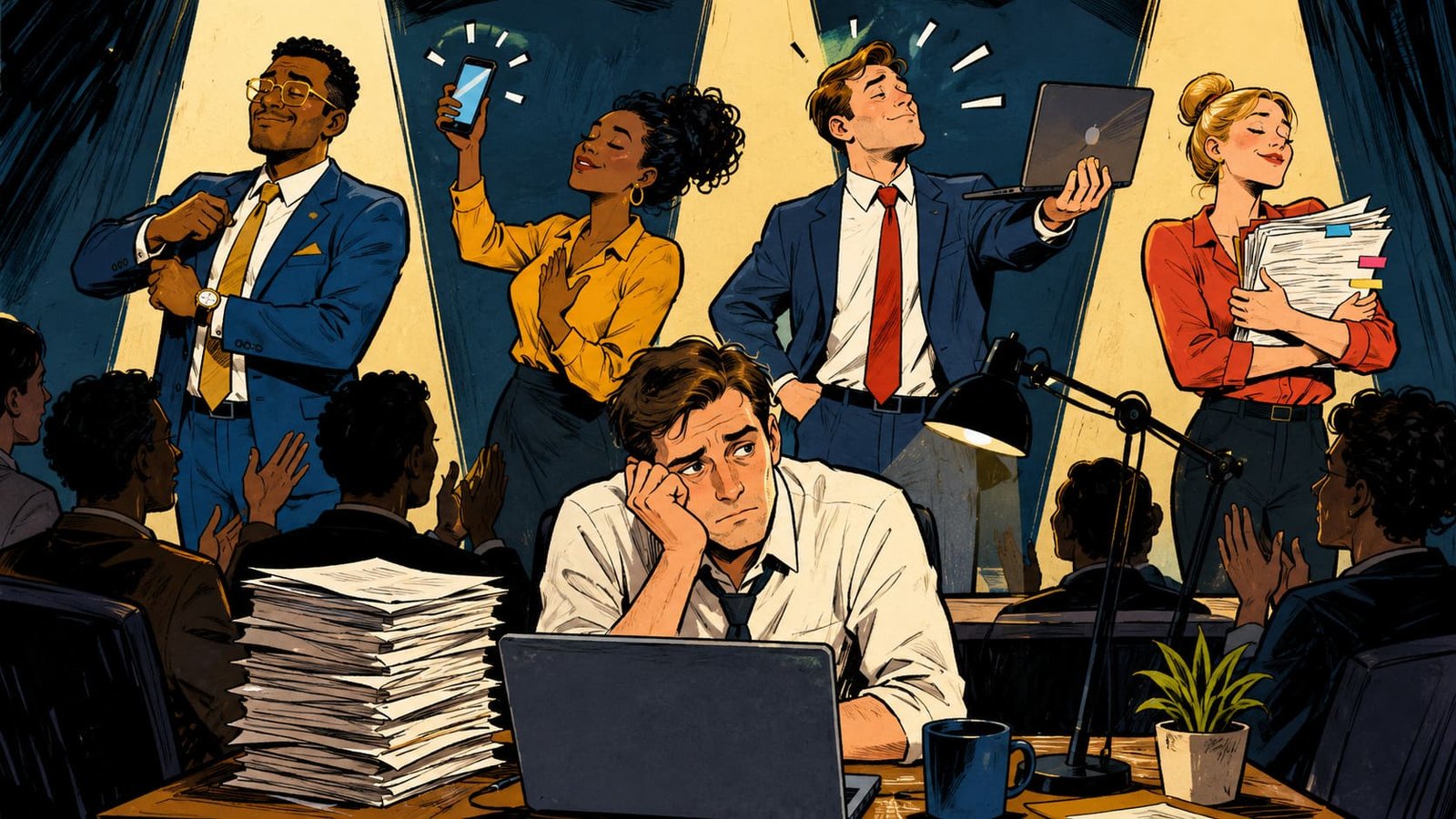
A dashboard turns green and a manager exhales. Meetings are full, messages are flying, reports are arriving, and nobody appears to be wasting time. Yet a customer complaint remains unresolved, a product decision has been postponed for another week, and an analyst is polishing a spreadsheet whose conclusions disappeared into an executive inbox yesterday. Modern organizations have become remarkably skilled at producing evidence of effort. The uncomfortable question is whether all that visible motion is actually taking the business anywhere.
Busyness has become a corporate performance. A crowded calendar looks ambitious, rapid replies look committed, overflowing task boards look disciplined, and elaborate reports look rigorous. Managers understandably reach for these signals because meaningful work is often difficult to observe while it is happening. A strategist thinking through a difficult market decision may look idle; a salesperson attending meetings all afternoon looks productive. Measurement becomes dangerous when the easiest things to count become substitutes for the things that actually matter. What gets rewarded soon becomes what people learn to perform.
Amazon offers a useful contrast because its operational culture has often connected measurement to concrete customer outcomes such as delivery and inventory performance. Toyota’s production philosophy similarly emphasizes identifying waste and exposing problems rather than decorating them with activity. A manager named Elena discovered the same principle after noticing her analysts celebrated producing a weekly report faster each month, even though executives rarely used it. She removed half the reporting and redirected the team’s time toward answering the decisions those reports were supposed to inform. Output fell. Useful work rose.
Then came Tomas, who ran a customer service operation where response time had become sacred. Employees answered internal messages almost instantly, and leadership praised the speed. Soon, thoughtful replies felt risky because thinking took longer than typing, so employees learned to optimize responsiveness instead of resolution. A team can answer every customer within minutes and still leave the underlying problem untouched. That is how a metric becomes theatre: not because employees are dishonest, but because intelligent people adapt to whatever the organization quietly declares important.
Good metrics should therefore behave less like surveillance cameras and more like instruments in a cockpit. They should reveal whether the organization is moving toward a meaningful destination, not merely prove that the machinery is running. A sales team measured only on calls can become spectacular at making calls; measure qualified opportunities, conversion quality, retention, and customer value, and different behavior follows. Metrics shape attention because they tell people where to look. Eventually, they shape judgment because people begin deciding what deserves effort according to what will be counted.
A company can become astonishingly efficient at winning the wrong game. That is the danger hiding inside every beautiful dashboard. The strongest leaders eventually ask a question that sounds almost embarrassingly simple: what became better because this work happened? Maybe a customer received a solution, a dangerous defect disappeared, a decision became clearer, or an unnecessary process died quietly. Productivity is not the amount of motion an organization can display. It is the value that remains after the motion stops. If the applause disappeared tomorrow, would the work still matter?
