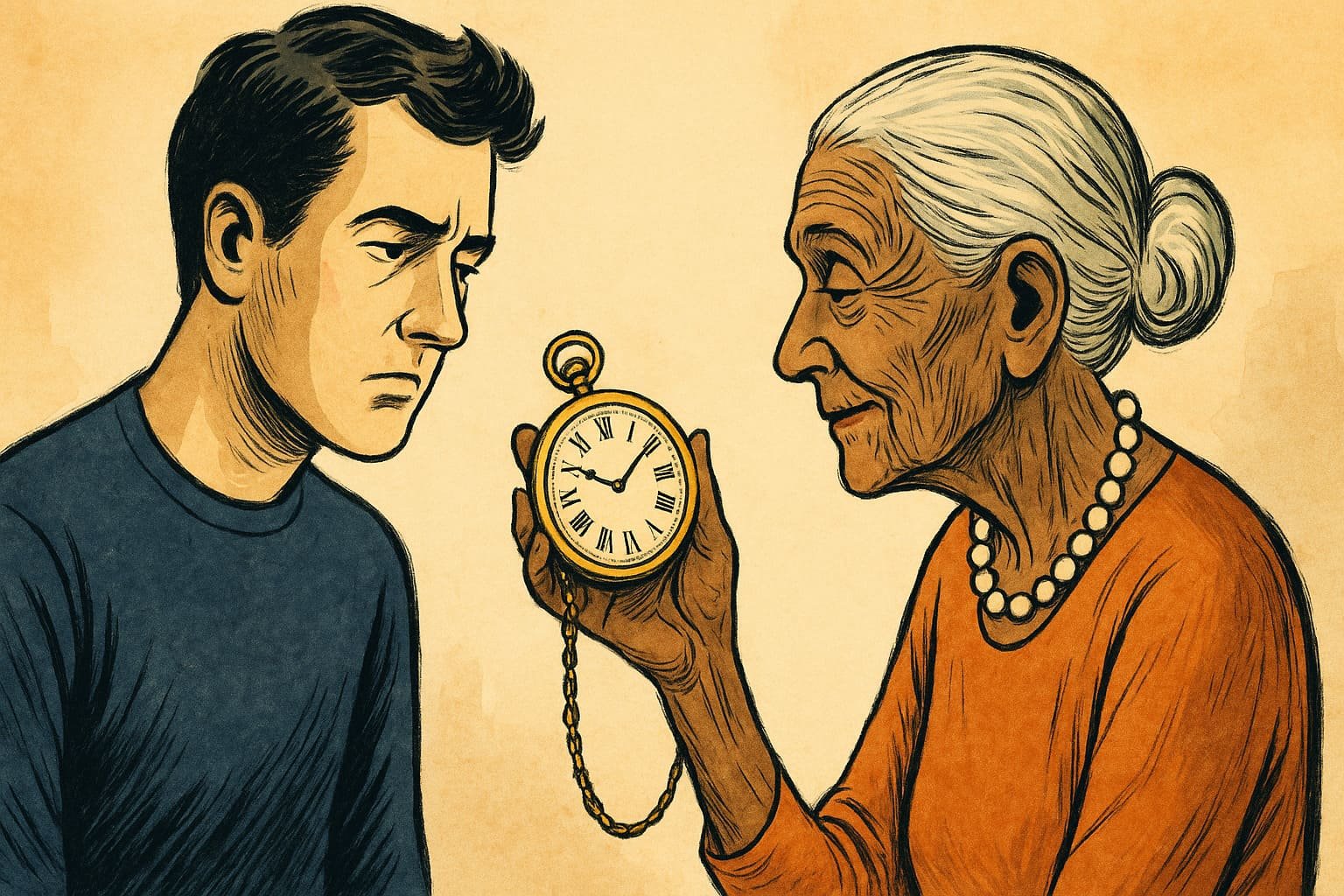
In a glass-walled showroom that smells of new money and synthetic ambition, executives gather, hungry for the next “disruptor.” Their eyes scan digital dashboards glowing with trend charts, but something quietly rebels at the edge of the stage. There it sits: an old, battered leather armchair that should have been trashed a decade ago, its creases mapped with forgotten lives. The buzz of new launches barely stirs it. Nobody remembers who first rolled it in. Yet, while last season’s gadgets have already died on clearance racks, the chair outlasts, defiant. It’s the oldest thing in the room, and—ironically—the only object anyone will remember years from now.
The moment you see it, something stirs that cannot be explained by the logic of quarterly growth. There’s a magnetic pull to things that linger after their “season.” For every viral product that flares out in a week, there’s a Leica camera, a Rolex, or a Le Creuset pot quietly aging in kitchens and closets, passing hands, collecting stories. This is not nostalgia. This is survival by excellence, not hype. Timeless products don’t just resist the current—they bend culture, turning patience into a form of silent protest.
Designers argue, founders fret, marketers spin. Yet, in boardrooms and bedrooms, people keep holding onto things that do not rush, do not shout, and do not need to be replaced every year. What if the true power of a brand is not its ability to invent the future, but to outlast the fever of the present? That’s the heresy that keeps getting whispered between the lines at Apple and whispered even louder in the backrooms of independent craft studios.
Behind every timeless product is a rebel who refuses to dance to the algorithm’s tune. It’s not just luxury watches or Japanese denim. It’s the pencil a novelist grips, the kitchen knife a chef can’t replace, the battered suitcase that has outlived its owner. As companies chase “the next big thing,” the real secret is in the objects that gather grace with every passing year. Here, design isn’t fast—it’s immortal. And in a world obsessed with youth, nothing is more radical than aging with style.
If you’re hungry to know how businesses, designers, technologists, and even entire cultures are flipping the script on “planned obsolescence,” you’re exactly where you need to be. Settle in. This isn’t about yesterday’s classics—it’s about tomorrow’s icons, built to outlast every trend, every tweet, and every algorithm that tries to erase them.
Quick Notes
- Longevity Crushes FOMO: Forget viral launches—what actually wins is what survives the hype. A cast iron skillet or a Parker pen outlives a thousand so-called “game changers,” becoming more essential as time passes.
- Heritage Is the New Innovation: Startups pivot and chase trends, but brands like Barbour or Montblanc quietly reinvent heritage for new generations, turning legacy into rocket fuel.
- Design That Grows With You: The most addictive products are not those that solve a single need, but those that gather meaning—like the Moleskine notebook that chronicles a decade of your life, or the Eames chair that becomes a family heirloom.
- Customers Want Roots, Not Just Wings: People crave products with soul, not just specs. If it feels like it could outlast a dozen CEO regimes, it gets a permanent place in the home—and in the heart.
- Timelessness Is the Ultimate Flex: In a culture obsessed with the latest, owning something that laughs at time itself is the true status symbol. Authenticity and durability trump flash and fad, every single time.
Ancient Tech, Future-Proof: Why Some Products Never Die
Some things survive every storm, like vinyl records spinning through digital ages or the Zippo lighter flicking on in every war movie. When technology leaps forward, a handful of inventions stubbornly hold their ground. It’s not a glitch. These products do more than function—they create rituals that outlast upgrades. The return of film cameras and the enduring charm of fountain pens offer proof that people want to touch, hold, and feel legacy in their hands.
Every year, startups tout “the next big thing,” only for last year’s hardware to rot in desk drawers. The irony is that those chasing the cutting edge often burn out fast, while objects designed decades ago remain at the center of daily life. The best example comes from the kitchen: the cast iron skillet, unchanged for generations, holds a legacy that digital gadgets envy. Tech blogs may not shout about them, but these objects hold emotional real estate no notification can touch.
Think of the Nintendo Game Boy. While new consoles arrive with lifelike graphics, it’s the chunky, monochrome brick that makes people light up with recognition. Engineers at Nintendo knew that ruggedness, not flash, would win the long game. Years later, collectors and gamers still hunt for working units. The Game Boy survives battery changes, drops, and the rise of virtual reality, proving some tech gets better with scars.
Alison Grant, a founder of a boutique audio gear startup, tells a story about a 1970s turntable that kept her company afloat when their Bluetooth speaker launch fizzled. Customers kept asking for repairs and custom parts for their parents’ old turntables, not the latest gadgets. “We realized,” she laughs, “that timelessness pays better dividends than the hottest trend.”
History shows that products with soul create tribes. When you inherit your grandfather’s watch or your mother’s typewriter, you join a lineage. The best technology, then, is not just smart—it’s sentimental, making you a keeper of stories, not just specs.
Design DNA: The Blueprint for Lasting Love
You spot a timeless product not by the logo, but by the feeling it sparks. Designers who ignore fleeting tastes and focus on universal needs build icons. The Eames Lounge Chair still turns heads, decades after its debut. Apple’s early iPod clicked with a simplicity and tactile pleasure that today’s apps can’t mimic. It’s a lesson most brands miss: form and function age, but emotion lingers forever.
To create something with staying power, designers step outside the algorithm. They study how people live, not just what they buy. The best brands ask: will someone want this in their living room after the paint peels and trends fade? This question is at the heart of Scandinavian design, which made the IKEA “POÄNG” chair a living room staple for forty years. Comfort, versatility, and simplicity outlast any fleeting Instagram aesthetic.
Authenticity works like armor. Paul Richardson, co-founder of artisan luggage company Stone & Mason, explains how their hand-stitched leather bags became family treasures. “We don’t chase trends. We listen for the stories people want to tell,” he says. Customers bring back bags to repair, not replace. The scuffs become badges, not blemishes.
Brands that dare to create with “forever” in mind break the cycle of planned obsolescence. When design is honest, it grows roots. The result is a product that feels like it belongs to you before you even own it. It’s why a Leica camera is handed down like an heirloom, and why some sneakers never make it to the thrift store.
Case studies from luxury watches to rugged outdoor gear prove the point: durability is the new luxury. When you can hand something to your kids, it says you chose well. For designers, making something that ages with grace isn’t just good ethics—it’s smart business.
Culture Code: Society’s Secret Affair With Timeless Goods
Society swings like a pendulum between fast and slow. Fast fashion, fast food, fast tech. But deep down, people crave anchors—objects that remind them of where they come from and who they hope to be. The rise of “heritage brands” is not just marketing. It’s a cultural craving for substance over spectacle.
In Japan, the philosophy of “wabi-sabi” finds beauty in imperfection and wear. A cracked teacup gains value with each year. This reverence for age has turned Japanese denim into a global obsession. The jeans fade, tear, and patch, recording the journey of their owner. It’s a direct rebellion against the shiny, disposable culture that dominates most markets.
Media mogul Sonya Miles, whose online store specializes in restoring vintage furniture, has seen a surge in young buyers seeking “pieces with stories.” She recounts a twenty-something entrepreneur who furnished his apartment entirely with reconditioned Danish furniture. “He said it made him feel like part of a bigger story,” Sonya recalls. “That’s the power of things built to last—they make you feel less disposable, too.”
Cultural icons don’t just sell objects—they sell a sense of belonging. The Harley-Davidson motorcycle, the Birkin bag, the Swiss Army knife: each holds meaning beyond utility. Their owners become members of a tribe that stretches across generations. When you carry a product that outlasts its trend, you wear a badge of endurance, not just wealth.
There’s a quiet revolt underway. Young professionals are ditching cheap, trendy decor for handcrafted goods. Restaurants brag about using cookware from “before Instagram existed.” Even the world’s biggest brands are scrambling to look “timeless,” borrowing design cues from the past. The desire to slow down, to invest in things that outlive trends, is rewriting the rules of consumption.
Startups, Status, and the Timeless Advantage
Entrepreneurs get fed a steady diet of “move fast and break things.” But the startups that win for decades are those that embrace “move slow and build things that matter.” It’s not the speed, but the substance, that sets legends apart from fads. Patagonia built an empire not by racing, but by crafting jackets and gear that last longer than their owners’ adventures.
Startups with staying power often have a founder obsessed with legacy. Take Maya Desai, creator of a minimalist notebook brand. Instead of chasing app integrations, she focused on paper quality and binding that could survive a lifetime of scribbles. Her notebooks, now cult classics among designers and writers, have barely changed since launch. “If you want to make history,” she jokes, “start by making something that history will want.”
The best pitch decks feature not just a roadmap, but a philosophy. Investors are finally waking up to the reality that durable products mean loyal customers, lower returns, and higher margins. It’s not about infinite scale, but infinite relevance. When startups build with a horizon longer than the next funding round, they create brands people trust to last.
Real differentiation now means resisting the hamster wheel of seasonal upgrades. Patagonia famously urged customers to buy less, encouraging repairs over replacements. Their revenue soared, proving that when you signal confidence in your product’s lifespan, customers reward you with devotion.
The new currency is credibility, not novelty. Startups willing to defy fashion cycles and invest in craftsmanship carve out cult followings. In a world where every app is a clone and every widget is forgettable, the only defensible advantage is aging with grace. Founders who play the long game aren’t betting against change. They’re betting on meaning.
Timeless by Design: Lessons for Business, Tech, and Culture
The true lesson of timeless products is not just in what survives, but why. Brands that thrive over decades understand that meaning outpaces metrics. In design, simplicity, repairability, and material quality win hearts long after specs fade. In business, customer loyalty comes from trust, not tricks. Culturally, what people treasure are the things that become a part of their story.
This isn’t about rejecting newness. It’s about respecting roots. Legendary brands and entrepreneurs have learned to anchor their identity in principles that do not age: honesty, utility, and empathy. When a company makes you feel valued every time you use their product, it earns a place in your daily life—and your memory.
The digital world can feel like quicksand, swallowing yesterday’s apps and devices without a trace. Yet, there’s an underground current pulling culture back to what lasts. From the slow revival of fountain pens to the explosion of repair cafes, communities are forming around the philosophy that it’s cooler to keep, fix, and pass down than to toss and replace.
Daniel Kroft, an independent watchmaker in Berlin, explains why he refuses to chase trends. “I want my work to be found in a drawer in fifty years, still ticking,” he says. Each watch is built to be repairable, customizable, and deeply personal. His business grew not by scaling fast, but by becoming the favorite of people who want something nobody else has.
The lesson for leaders, designers, and builders is radical in its simplicity. Want to win the future? Build something the future can’t live without. The world doesn’t need more stuff. It needs more stories, more meaning, and more objects that age with grace.
When Objects Become Legends—The Final Echo of Timeless Grace
A shadow falls across the showroom as the last crowd leaves. That battered chair waits, unnoticed, among sleek, abandoned prototypes. Overhead, the neon lights hum. Every object in the room was once “the future.” Only the ones with scars remain.
Somewhere, a founder lingers, fingertips trailing the armrest’s cracked leather, eyes tracing the uneven stitches. The new products gather dust, while the old chair glows with borrowed time. The true victory isn’t in a thousand launches, but in a single object that keeps returning, each year more beloved.
Even the coldest boardroom softens when faced with something that remembers more than it reveals. Stories collect in seams, fingerprints layer into patina, and meaning sneaks in where marketing never reached. Every empire dreams of this—endurance that slips beyond measurement, beauty that deepens, not fades. The lesson lingers in the silence: real value outlasts every trend.
The air stirs, thick with memory. In that pause, you feel it: time holds its breath for what refuses to be rushed or replaced.
So here’s the dare: What are you building that will grow more precious every time the world tries to forget it?
Partnered. Provocative. Worth Your Scroll.
This is a Promoted Post by ESYRITE—yes, it’s paid, but never filtered. Our voice stays raw, real, and razor-sharp. We team up with bold ideas, game-changers, and stories that spark something real. If it’s here, it earned its place—no fluff, just impact. We don’t just promote—we provoke. Stay sharp. Dive deeper.
