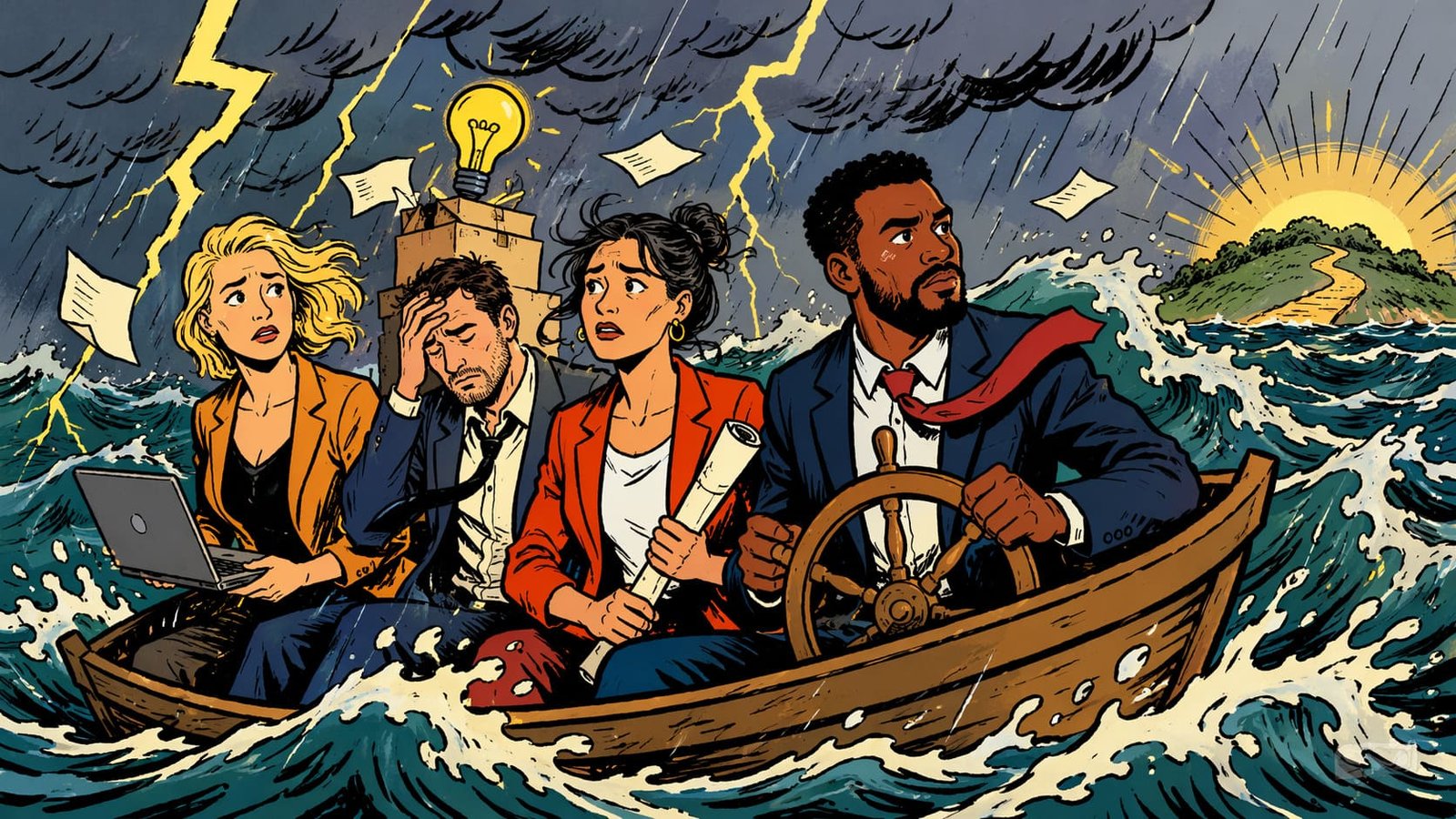
Thunder rolled across a skyline where glowing office towers hid thousands of private disappointments. Inside one rented workspace, a founder erased ambitious revenue targets from a whiteboard, then quietly rewrote the next week’s priorities with a black marker that squeaked louder than expected. Failure rarely announces itself with dramatic headlines. More often, it arrives disguised as delayed invoices, difficult conversations, exhausted teams, and the stubborn silence that follows a product launch nobody notices, forcing entrepreneurs to confront uncomfortable truths long before markets acknowledge their resilience.
Popular culture celebrates entrepreneurial victories while skipping the chapters that matter most. Every successful company contains hidden moments when retreat looked entirely reasonable. Airbnb survived repeated rejection before investors believed strangers would trust one another with their homes. Howard Schultz struggled for years convincing skeptics that premium coffee deserved premium prices. Those stories endure because persistence alone was never enough. Each setback demanded fresh thinking, sharper execution, and painful decisions that reshaped businesses before customers ever experienced their breakthrough moments.
A weather-beaten fishing harbor offers an unlikely lesson about entrepreneurship. Experienced captains never waste energy arguing with storms because rough seas ignore confidence. They study conditions, adjust routes, protect crews, and keep moving whenever possible. Elena learned that lesson after launching a specialty food company during rising supply costs. Instead of expanding product lines, she narrowed her catalog to customer favorites, strengthened supplier relationships, and preserved cash. Revenue recovered slowly, but disciplined focus protected her company while larger competitors stumbled beneath unnecessary complexity.
Markets reward adaptability far more generously than optimism. Jim Collins famously argued that disciplined people, disciplined thought, and disciplined action create enduring organizations. Recent history continues supporting that idea. During periods of economic uncertainty, companies that communicate honestly with employees, customers, and suppliers often emerge stronger because trust compounds quietly over time. Marcus, founder of a regional manufacturing business, invited his team into difficult financial discussions rather than hiding reality. Employees proposed efficiency improvements leadership had overlooked, transforming anxiety into collective problem-solving that restored confidence.
Curiously, broken ceramic bowls repaired through the Japanese art of kintsugi become more distinctive because their fractures remain visible beneath golden seams. Businesses often follow a similar pattern. Every failed product launch, difficult negotiation, or abandoned strategy leaves marks that thoughtful leaders no longer conceal. Those experiences sharpen judgement, improve hiring, strengthen customer empathy, and temper reckless ambition. Success built without hardship may impress investors briefly. Success forged through repeated adversity usually develops deeper foundations capable of surviving unpredictable futures.
Fog settled across an empty industrial park while another entrepreneur switched off office lights without knowing whether tomorrow would bring opportunity or another unexpected challenge. Uncertainty has always accompanied meaningful ambition, quietly separating dreamers from builders through countless ordinary decisions made when nobody is watching. Storms never ask whether businesses feel prepared. They simply reveal whether courage has matured into disciplined resilience before the clouds finally arrive.
