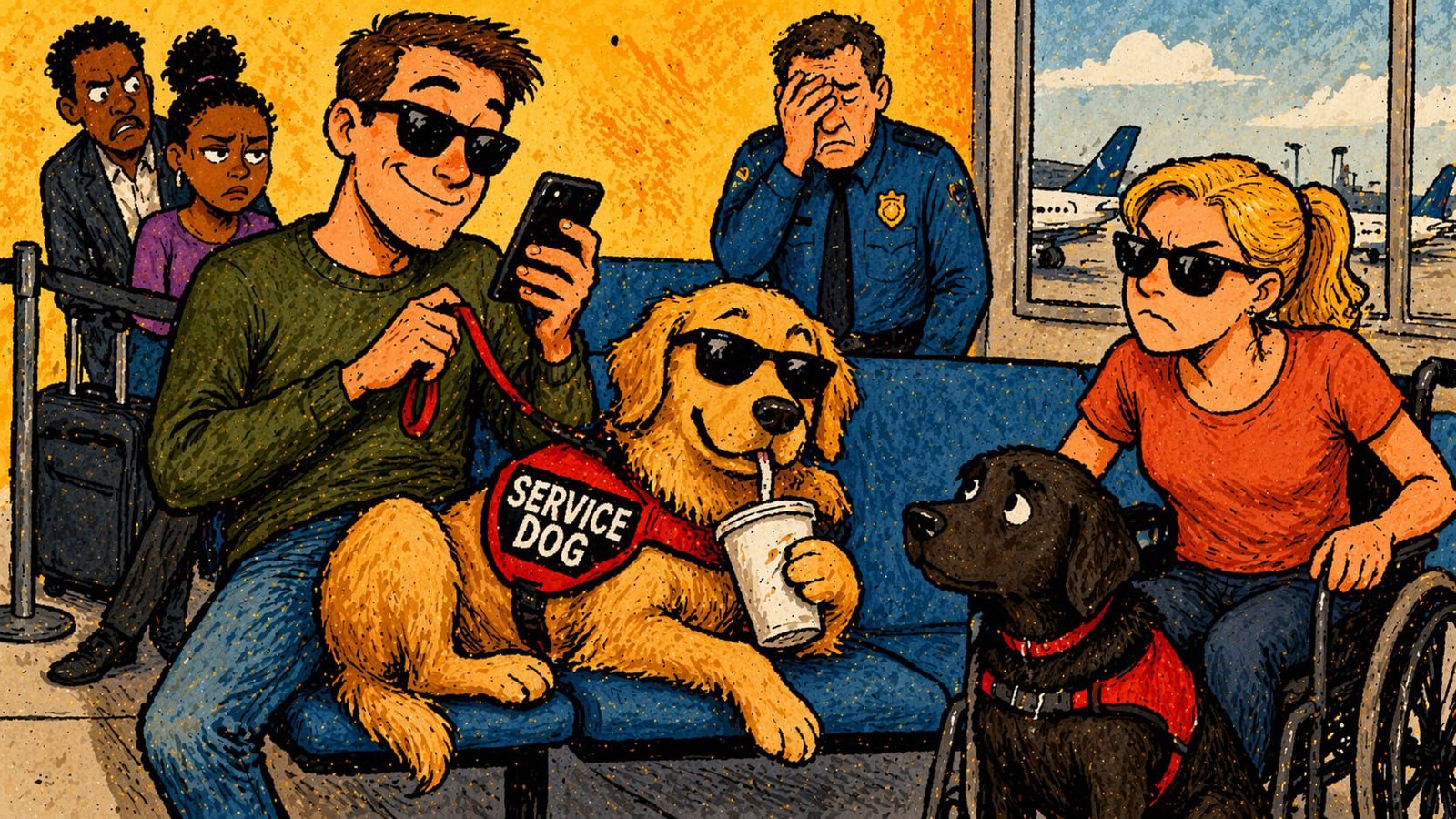
The entrance is quiet, almost routine. A person walks in with a dog at their side, the leash held with casual confidence. No one questions it. The assumption is immediate. This is allowed. This is necessary. The system depends on that assumption.
What makes this dynamic fragile is its reliance on trust. Service animals exist within a framework that prioritizes accessibility and dignity. It is designed to reduce barriers, not create suspicion. The rules are intentionally respectful, built on the idea that most people will act in good faith.
That expectation is beginning to strain. Instances of individuals presenting untrained animals as service dogs have become more visible. The impact is not always dramatic, but it is cumulative. Each misuse introduces doubt into a system that relies on certainty.
A café owner named Tomas encountered this tension firsthand. After a series of incidents involving disruptive animals, he found himself hesitating in situations where he previously would not have. He described the feeling as “questioning something that should not need questioning.” The discomfort lingered long after the moment passed.
The issue is not just about policy. It is about perception. When boundaries are blurred, people begin to reassess what they see. A legitimate service animal may be met with skepticism. A necessary accommodation may be viewed as a potential misuse. The shift is subtle, but its effects are real.
There is a broader tension between kindness and enforcement. Systems built on empathy often resist strict verification. They aim to create ease, not friction. Yet without some form of accountability, they become vulnerable to exploitation. Balancing these forces is not straightforward.
A trainer named Sofia, who works with certified service animals, once explained how much discipline and consistency the process requires. She noted that a properly trained dog behaves in ways that are often invisible to those unfamiliar with the standards. The contrast with untrained animals becomes clear, but only after something goes wrong.
The cultural impact extends beyond individual incidents. It shapes how people interact, how they interpret situations, how they extend trust. When misuse becomes more visible, it can erode the willingness to assume good intent.
Still, the system persists because it serves a necessary purpose. For many, service animals are not optional. They are essential. Protecting that reality requires maintaining both compassion and clarity, a balance that is increasingly difficult to sustain.
In a public space where quiet cooperation once felt natural, a small hesitation begins to take hold. A glance that lasts a second longer, a question that remains unasked, a shift in how presence is perceived.
And the thought that settles, quietly but firmly, carries its own weight: when trust becomes something people start to doubt, what happens to the kindness it was meant to protect?
