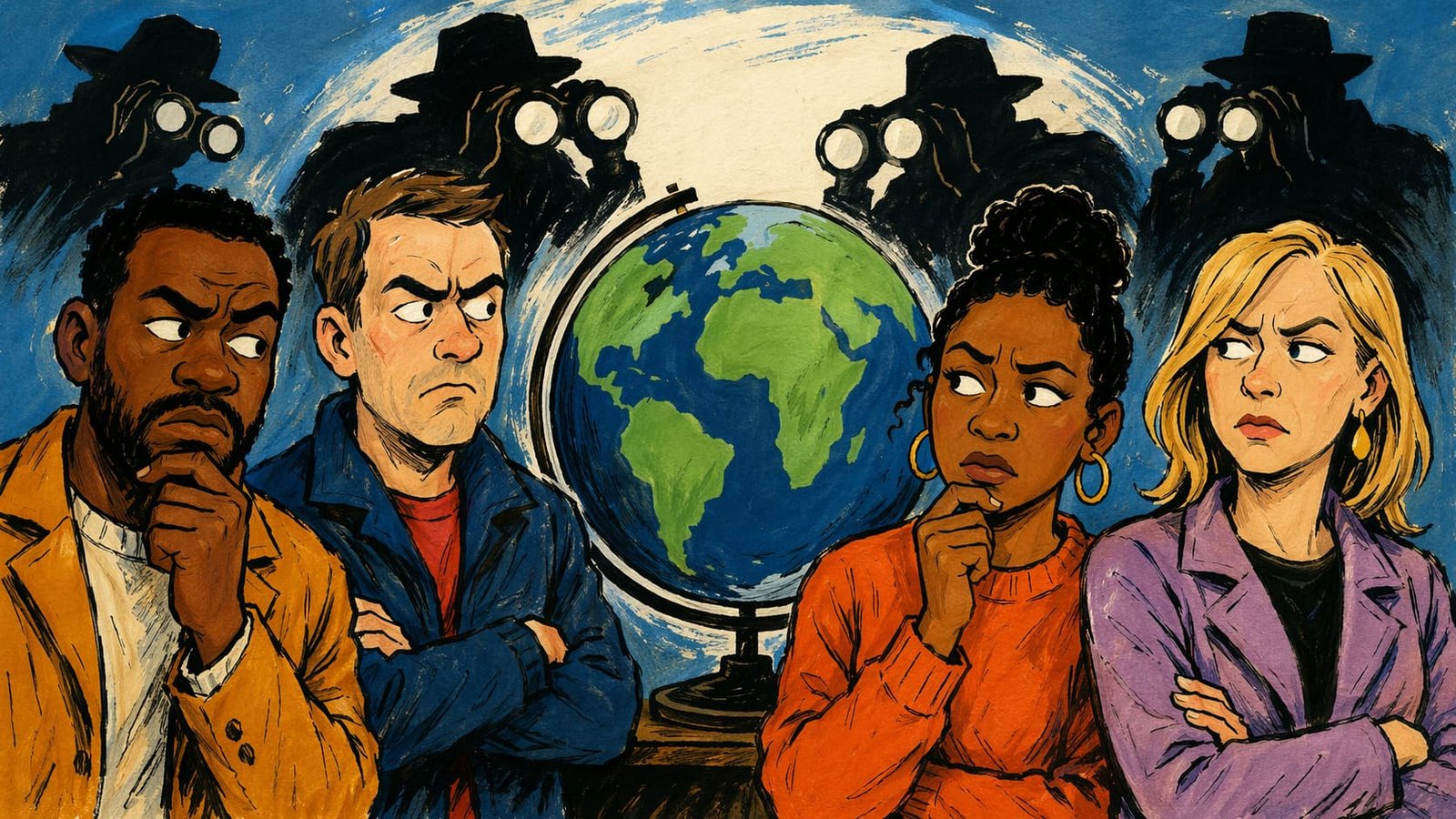
The line at the border moves slowly, not because of numbers but because of hesitation. Papers are checked, faces studied, questions repeated with careful distance. No one raises their voice, yet the air feels charged, as if every step forward carries a quiet negotiation. Movement, once seen as a natural part of human history, now feels like something that must justify itself.
For centuries, migration shaped cities, economies, and identities. People moved in search of safety, opportunity, or simply a different horizon. Entire cultures were built from these crossings, blending languages, traditions, and ideas into something new. Movement was not always easy, but it was understood as part of life’s rhythm, a constant reshaping of place and belonging.
The tone has shifted in recent years, not through a single event but through accumulation. Headlines frame movement as pressure, as strain, as something to be managed rather than understood. The language becomes sharper, more cautious, more defensive. Borders are no longer just lines on maps. They become symbols of control, markers of who belongs and who must prove it.
A shop owner named Marta once described how her neighborhood changed over time. New families arrived, bringing different foods, languages, and rhythms. At first, there was curiosity, even excitement. Over time, conversations shifted. Small inconveniences were linked to larger fears. Differences that once felt interesting began to feel unsettling. Nothing dramatic happened. The mood simply tightened.
This is where panic takes root, not in facts alone but in perception. When uncertainty grows, people look for clarity, and often find it in simplified narratives. Movement becomes a problem to solve rather than a story to understand. The complexity of human lives is reduced to categories, statistics, or labels that feel easier to manage but harder to humanize.
Media plays a powerful role in shaping this perception. Repetition creates familiarity, and familiarity shapes belief. When migration is consistently framed through tension or crisis, it becomes difficult to see it through any other lens. The nuance fades, replaced by images that reinforce a single narrative. Over time, suspicion begins to feel like common sense.
A policy analyst named Karim once worked on integration programs designed to support new arrivals. He noticed a shift in how these programs were discussed. What was once framed as investment began to be framed as cost. The same initiatives, the same outcomes, were interpreted differently depending on the surrounding narrative. The work did not change. The perception did.
The deeper tension lies in how societies balance openness and security. Both carry legitimate concerns, both shape policy and public sentiment. Yet when fear becomes the dominant lens, it narrows the space for empathy. People are no longer seen as individuals with stories, but as risks to be assessed. The human dimension fades behind layers of precaution.
There are still moments that challenge this narrative. A teacher welcomes students from different backgrounds and watches them form friendships that ignore the categories adults debate. A local business thrives because of new ideas brought by those who arrived recently. These stories rarely dominate headlines, yet they persist quietly, offering a different perspective on what movement can mean.
In a quiet waiting area, a family sits together, documents in hand, their future resting on decisions made by people they will never meet. The room is calm, almost ordinary, yet the weight of the moment is unmistakable. Movement has become something to justify, something to defend, something to explain. And in that stillness, a question lingers with quiet intensity, one that reaches beyond policy and into something more human: when movement is treated as a threat, what happens to the idea that the world itself was built by those who moved?
