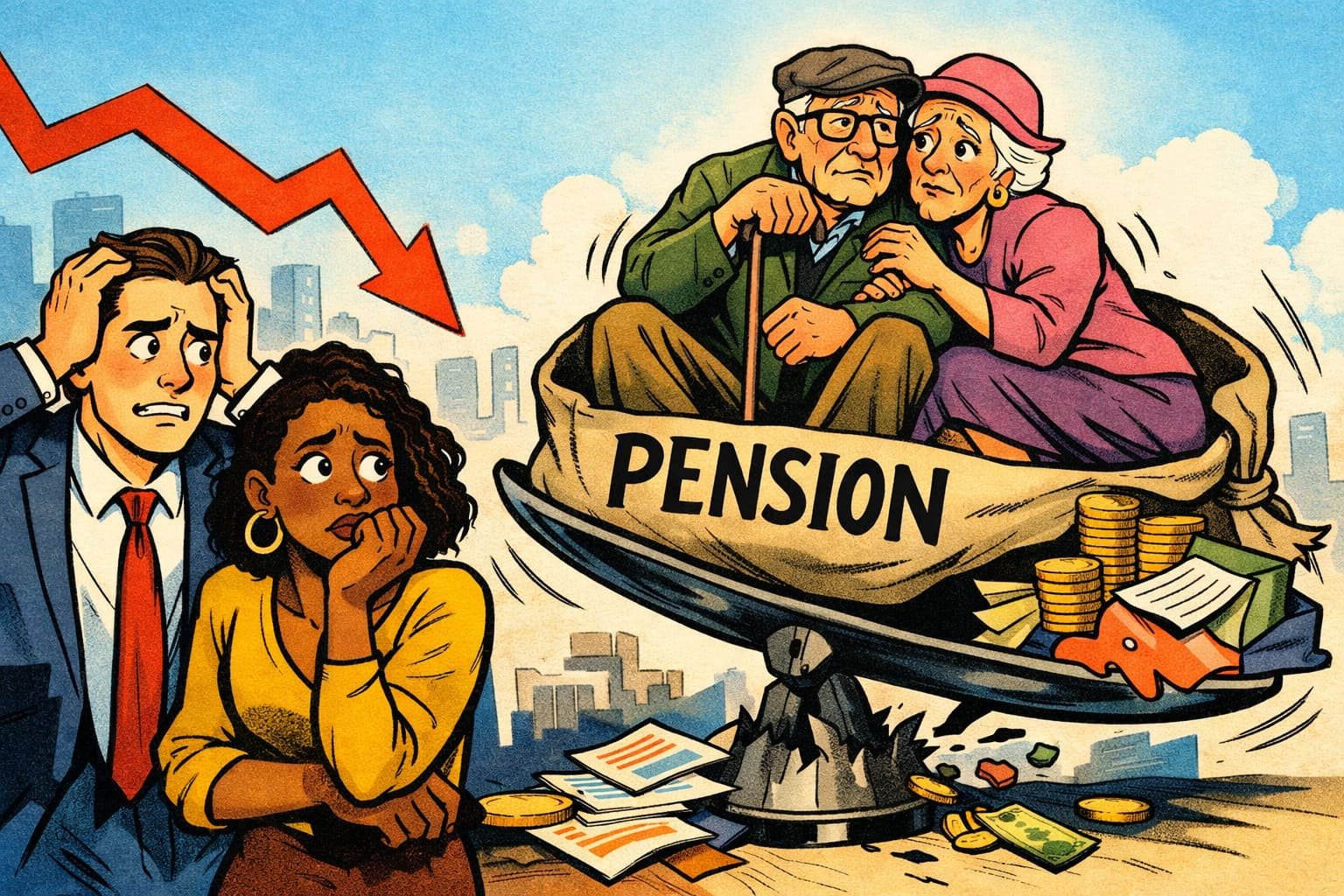
At first the change looks gentle. A little more silver hair on trains. A few longer queues at clinics. Pension debates pushed one notch higher on the evening agenda. Then the budget begins to bend. Quietly, steadily, almost politely, aging societies rewrite the script of public finance. They do not do it with crisis movie drama. They do it with patience. That is what makes the pressure so powerful. It arrives in plain clothes, sounding almost reasonable, right up until governments realize the old promises were drafted for a population structure that no longer exists.
Pensions are where demography becomes fiscal fact. A society with more retirees and relatively fewer workers is not simply older. It is differently financed. Public systems built on today’s workers funding today’s retirees start to strain when the balance shifts. The OECD and IMF have both stressed that aging puts persistent pressure on budgets through pensions, healthcare, and long-term care, while also affecting the revenue base that supports them. This is not a temporary shock. It is a long, slow rewrite of what governments can afford and when.
That is why pension debates often feel so emotionally charged. They are never just about formulas. They are about time, fairness, and the meaning of a promise. Older voters hear reform as betrayal. Younger workers hear the status quo as a bill left on the kitchen table with their name on it. Politicians hear both sides at once and often respond with delay, which is the costliest instinct in the room. Pension pressure compounds while governments postpone the hard design work. The arithmetic gets worse. The politics gets touchier. Nobody leaves the argument feeling noble.
France has shown how explosive this terrain can become. Italy has lived with the fiscal heaviness of an aging population for years. Japan has wrestled with the broader macroeconomic reality of longevity, labor force change, and public finance together. These cases differ in detail, but they rhyme in substance. Aging is not a niche social policy issue. It reaches into growth, debt, tax design, labor markets, family structures, migration debates, and intergenerational trust. Once a population grows older, nearly every budget line begins to speak a different language.
A pension promise becomes dangerous when it is spoken as though time were frozen. Many governments still behave as if retirement ages, contribution patterns, health outcomes, household structures, and lifespan expectations belong to one stable moral universe. They do not. Lives are longer. Careers are patchier. Informal work remains common in many places. Family support structures are weaker or differently shaped. Public expectations keep rising. The budget is then asked to hold two incompatible stories at once, that retirement security should remain generous, and that tax burdens should remain politically painless.
A civil servant in southern Europe once described pension reform as trying to move cathedral stone with bare hands. Every block is sacred to someone. A modest adjustment to eligibility can feel like an assault on dignity. A change in indexation can sound like theft. Yet the same official admitted something harder to say in public. Doing nothing was also a choice, and not a neutral one. It meant shifting the burden outward, onto younger workers, future taxpayers, weaker services, and a politics permanently trapped between denial and resentment.
The sharpest mistake is framing pension reform as cruelty versus kindness. Good reform is neither. It is architecture. It asks which promises are essential, which are outdated, and which adjustments protect the system from a much uglier collapse later. Raising retirement ages without looking at health, job quality, and occupational reality is lazy. Protecting every legacy entitlement while squeezing younger households is lazy too. The serious path blends adequacy with sustainability. It treats the pension system as a living institution, not a museum display that can only be dusted and admired.
There are smarter levers than the public debate often admits. Automatic adjustment mechanisms can remove some of the political drama by linking parameters to life expectancy or other structural factors. Stronger labor participation among older workers helps. So does better migration policy where politically feasible. Encouraging later, flexible retirement can do more than blunt cuts alone. Private savings can play a role, though never as a magic wand. What matters is honesty about the mix. Pension systems fail not only from stinginess or generosity, but from pretending there is a painless route through demographic change.
The fiscal danger widens when pension pressure is isolated from the rest of the budget. In reality, it collides with healthcare, housing, social care, defense, climate investment, and debt service. That is when a society starts to discover that aging is not only about caring for older citizens. It is about deciding what kind of burden-sharing will define the whole social contract. Once that question opens, everything becomes moral. Who waits longer. Who pays more. Who works later. Who is protected first. Budgets become family arguments with legal force.
A retailer in Osaka once kept three generations under one roof and spoke about the pension state with exhausted gratitude. His father depended on it. His daughter doubted it. He funded both through taxes and private support, while managing his own fragile savings. That tiny household contained the national story. Aging does not produce villains. It produces collisions between decent claims. That is why simplistic slogans fail. No group is entirely wrong. No spreadsheet can soothe the emotion by itself. Policy has to do more than balance numbers. It has to preserve legitimacy.
The best pension reformers understand something almost literary. People can accept change if they believe the story is fair. They resist when the script feels rigged or suddenly rewritten behind closed doors. That means gradualism matters. Clear communication matters. Protection for the vulnerable matters. So does political courage. The OECD’s work on aging and fiscal pressures makes clear that pension issues cannot be separated from broader budget sustainability and growth policy. Put bluntly, governments either redesign the promise with care, or the promise redesigns the budget with much harsher hands.
In the end, pension pressure is not simply a burden of age. It is a mirror held up to a society’s honesty. It asks whether a country can love both its elders and its future enough to tell the truth to each. The budget, patient and unsentimental, keeps rewriting itself around that answer. The lines do not shout. They accumulate. Then one day the page looks different, and everyone understands that time had been negotiating all along. The only real question left is whether the next promise will be written with courage or with nostalgia.
