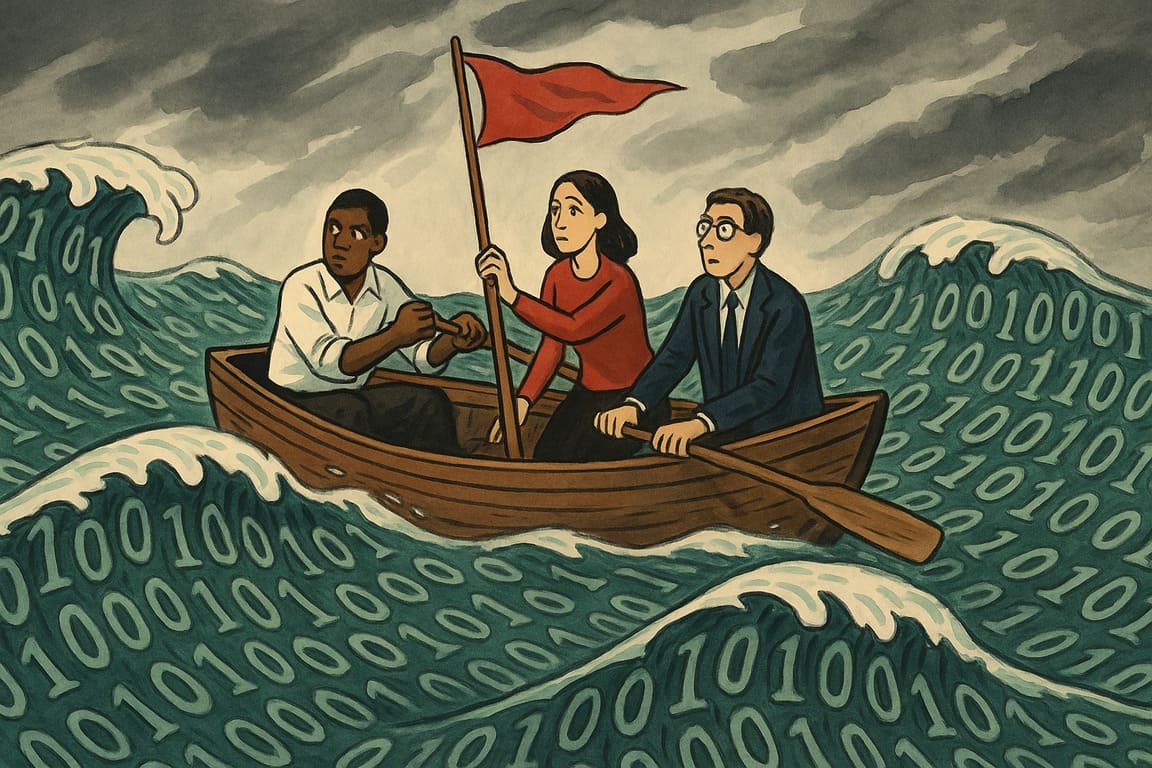
A cold rain spatters the windows of a neon-lit control center. Inside, an entire wall pulses with live feeds: social streams, transaction logs, real-time heatmaps, shifting market tides. A lone operator sits before a forest of screens, tracing threads through this living, breathing maze. Every blink brings a flood of fresh signals, enough to drown a small country. In this ocean of noise, a single, overlooked pattern could be the difference between revolution and irrelevance. Here, it isn’t the size of the data that matters, but the ability to swim when others sink.
The rise of big data transformed business into a high-stakes deep-sea dive. You might imagine yourself with goggles strapped tight, plunging into waters filled with digital creatures—some shimmering with insight, others ready to drag you down. Fortune favors the diver who brings a net, not just a camera. True value comes from what you bring back to shore, not the volume of water you splash through. Many have found themselves lost, caught by the undertow of data that promised wisdom but delivered only confusion.
If you’ve ever tried to read market sentiment during a breaking crisis or watched dashboards spin out of control in a product launch, you know the dizzying power of too much information. Every new tool promises clarity, but most just pour more water into the pool. The secret is navigation. The legendary story of British supermarket chain Tesco comes to mind. They were among the first to use loyalty cards, not just to track purchases but to predict shopping trends, restock shelves, and transform an entire retail industry. While rivals watched helplessly, Tesco’s quiet data revolution let them steer confidently through storms.
Your challenge isn’t collecting more signals, it’s tuning your antenna. What’s trending isn’t always what’s relevant. A global energy firm once invested in sophisticated satellite data to predict oil prices, only to realize their own logistics teams were sitting on more useful information about shipping bottlenecks. Sometimes, the best navigators aren’t the ones with the flashiest maps, but those who know the coastline by heart.
In this sea, you’ll find pirates—vendors selling “big data” miracles that vanish when the tide turns. The wise build their own compass. Netflix, in its relentless pursuit of audience tastes, doesn’t just harvest viewing stats. It combines them with micro-surveys, social trends, even pauses and rewinds, searching for the deep currents beneath the surface. Their edge is not volume, but understanding: reading the data like an ancient mariner reads the sky.
Big data has its monsters. Privacy scandals erupt when navigators lose sight of the ethical boundaries. The Facebook-Cambridge Analytica debacle wasn’t just a breach—it was a shipwreck, a warning flare that spread far beyond Silicon Valley. Today’s explorers must know where not to go, what lines must never be crossed, or risk losing trust forever.
As you chart your own course, know that survival depends on adaptability. The map keeps changing. Twitter became a global newswire not by collecting more data than newspapers, but by letting the world speak in real-time. The lesson? Velocity beats volume. Agility beats amassing everything. Those who survive the waves are the ones who adjust their sails the quickest.
But don’t forget the humans on deck. Algorithms may chart a path, but it’s intuition that spots the iceberg. At Airbnb, when the company faced a glut of empty listings, it wasn’t big data alone that solved the crisis. A team of analysts and local hosts, armed with boots-on-the-ground knowledge, worked side by side to reframe the entire model. Their blend of analytics and street smarts kept the company afloat during its roughest waters.
Every leader must choose: delegate everything to the algorithm, or build teams who know when to override the code. Amazon’s infamous “hands off the wheel” policy has evolved. More and more, their brightest minds are teaching machines not just to crunch numbers, but to explain their reasoning, spot blind spots, and ask human questions. Big data is only as powerful as the questions you dare to ask.
Data’s scale can make you feel tiny, but every ship leaves a wake. A small, scrappy non-profit once used open-source census data to identify neighborhoods in need of clean water. By zooming in—focusing on ten city blocks, not ten million points—they transformed lives, won awards, and outmaneuvered better-funded giants. The lesson: size is seductive, but precision is priceless.
The great myth is that there’s a single, magical dashboard waiting to unlock it all. In reality, you build your own lighthouse—one insight at a time, mistake by mistake, until you trust your bearings. Great navigators keep a logbook of failures as well as successes. When Spotify’s algorithms failed to predict a viral hit, it was the team’s memory of past misses that inspired their next breakthrough.
Big data’s final riddle is humility. The ocean is always bigger than the boat. The best guides know that mastery is impossible, and instead aim for fluency—the ability to speak with data, question it, and sometimes, let it talk back. A culture of curiosity beats a warehouse of servers every time.
As you chart your next journey, remember: you are not just collecting seashells, but discovering new continents. Your compass is not a tool, but a mindset. In the sea of big data, wisdom goes to those who dare to ask “what if,” not just “how much.”
Night falls on the control center. Monitors blink, casting shadows like restless waves. The operator stands, stretching tired limbs, and gazes out over the city’s sleeping expanse. Somewhere, a new storm brews. The sea will always be wild, but the thrill comes from riding it, not fleeing its depths.
No map survives the first storm unscathed. The best captains keep steering, scanning the horizon for signals others fear to follow. They know every safe harbor began as an unknown cove, waiting for a bold hand at the helm.
You are holding the wheel now. Will you steer into the tempest, or let the tides of data decide your fate?
