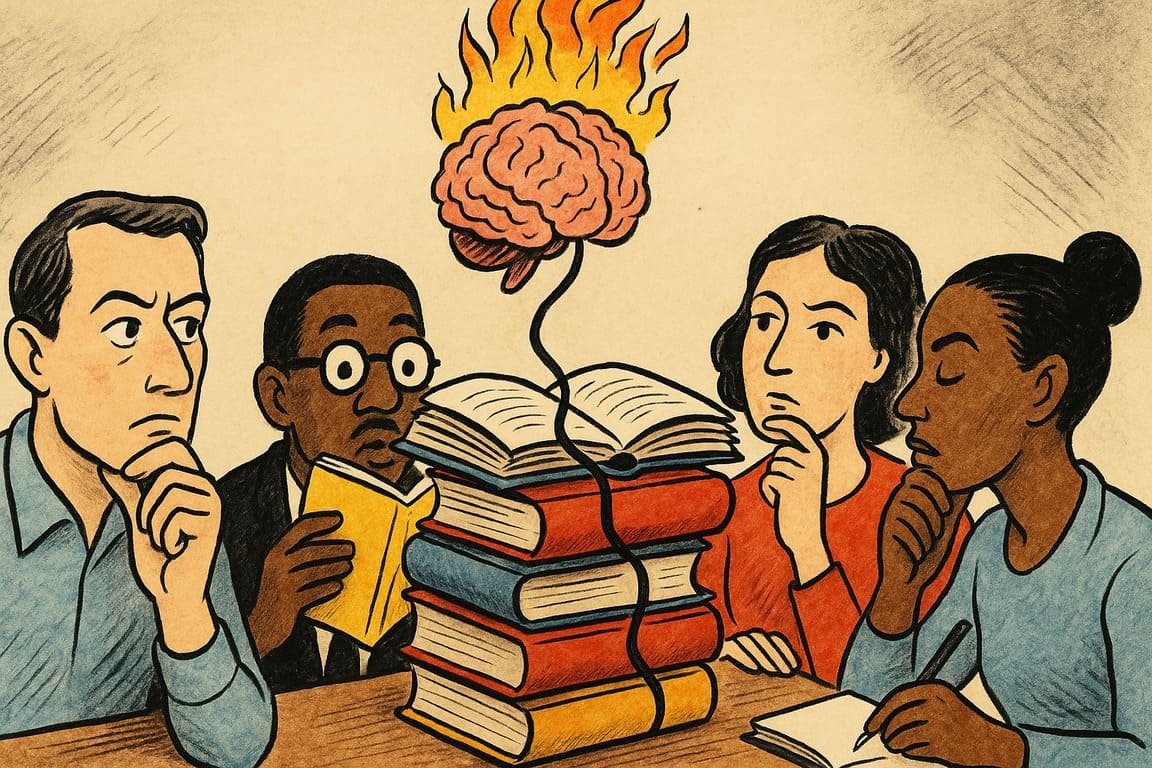
The shop is dim and hushed, lined floor to ceiling with spines in every color. Rain taps on the old glass, a chorus to the low hum of an espresso machine behind the counter. A small crowd gathers around a single shelf labeled “Design & Creativity.” In this sanctuary, the air is thick with anticipation. Somewhere within these worn covers and dog-eared pages, the next breakthrough idea is sleeping, waiting for someone curious enough to wake it. Every designer knows the hunger—a desperate search for inspiration that only the right book can satisfy. Here, books become brain fuel, and those who read with intention discover the secret code for rewriting what’s possible.
The history of design is encoded in ink and paper. Paul Rand’s essays, Dieter Rams’ manifestos, and Jessica Walsh’s playful provocations all serve as a guide for navigating the chaos of creation. These books offer more than technique; they are philosophical engines, challenging you to see beyond aesthetics and to embrace intention, empathy, and restraint. Icons in every creative discipline credit their greatest leaps to an idea, a phrase, or even a single diagram encountered at the right time.
If you want to break a creative block, you reach for a book. The discipline of reading—immersing yourself in someone else’s hard-won wisdom—reminds you that every great designer is first a great observer. In “Steal Like an Artist,” Austin Kleon gives you permission to remix and borrow, transforming imitation into originality. Meanwhile, Ellen Lupton’s “Thinking with Type” has become a bible for anyone trying to harness the silent power of typography. Each title whispers: the most powerful tool you possess is not a software or gadget, but your mind.
You feel this on the rough days. When deadlines loom and every mockup feels stale, flipping through Chip Kidd’s “The Cheese Monkeys” offers a jolt of rebellious energy. Or, in moments of uncertainty, Debbie Millman’s interviews in “Brand Thinking” serve as a reminder that every famous brand started with messy sketches and countless revisions. Books do not just inform; they rescue, nudge, and dare you to take creative risks.
The best design books are more than how-tos. They offer case studies, stories of failure, confessionals, and behind-the-scenes glimpses into messy process. “Don’t Make Me Think” by Steve Krug remains essential for anyone crafting digital experiences, not because it dictates rules, but because it shows the human cost of confusion. The wisdom is simple: clarity is kindness, and empathy beats cleverness every time.
Many teams build libraries as culture, not luxury. Walk into IDEO’s headquarters and you’ll see stacks of “Change by Design” scattered among prototypes. Google’s UX team swaps titles after project launches, their recommendations passed around like treasure maps. These books become a common tongue, sparking debate and bonding teams through a shared love of the craft.
Book clubs have quietly become innovation engines. When the marketing squad at Lumen Digital read “Creative Confidence,” they didn’t just discuss design—they mapped out experiments, hacked workflows, and gave each other permission to fail. By the next quarter, productivity soared, and their work felt fresher, riskier, and more original. Books are not passive objects; they are invitations to reinvent how you work and think.
The classics remain, but new voices push the field forward. “Sprint” by Jake Knapp democratizes rapid prototyping. “Design is a Job” by Mike Monteiro pulls no punches, demanding that creatives take responsibility for their choices. These texts bring ethics and urgency into the process, asking you not just what you can make, but why it matters and for whom.
Design thinking crosses disciplines, so the best books rarely fit neatly into one genre. Biographies of artists, memoirs from filmmakers, or collections of poetry can spark as much insight as a color theory manual. When Pixar’s Andrew Stanton credits “Zen in the Art of Archery” for shaping his approach to storytelling, it’s a reminder that the boundaries between disciplines are illusions. Creativity thrives on cross-pollination.
The bravest creatives treat books as launchpads. They annotate margins, argue with the author, and scribble wild ideas on the endpapers. Inspiration is not found—it’s made, wrestled from the text and brought to life in new sketches, pitches, and prototypes. The habit of reading deeply and widely sets apart those who occasionally stumble on a good idea from those who build whole careers on innovation.
Ultimately, books are blueprints for transformation. They give you new words to describe problems and new models for seeing possibility. With every page, your creative DNA mutates, evolving into something more resilient, more playful, and more daring.
As the last customer lingers by the rain-speckled window, book in hand, the shopkeeper smiles, knowing another revolution is about to start. Pages rustle, ideas leap, and the world outside softens in anticipation of what comes next.
Every breakthrough begins with a question and a willingness to learn. Will you nourish your creativity with the brain fuel of essential books, or will you let your genius starve for want of a new perspective? The story, as always, waits for you to turn the page.
