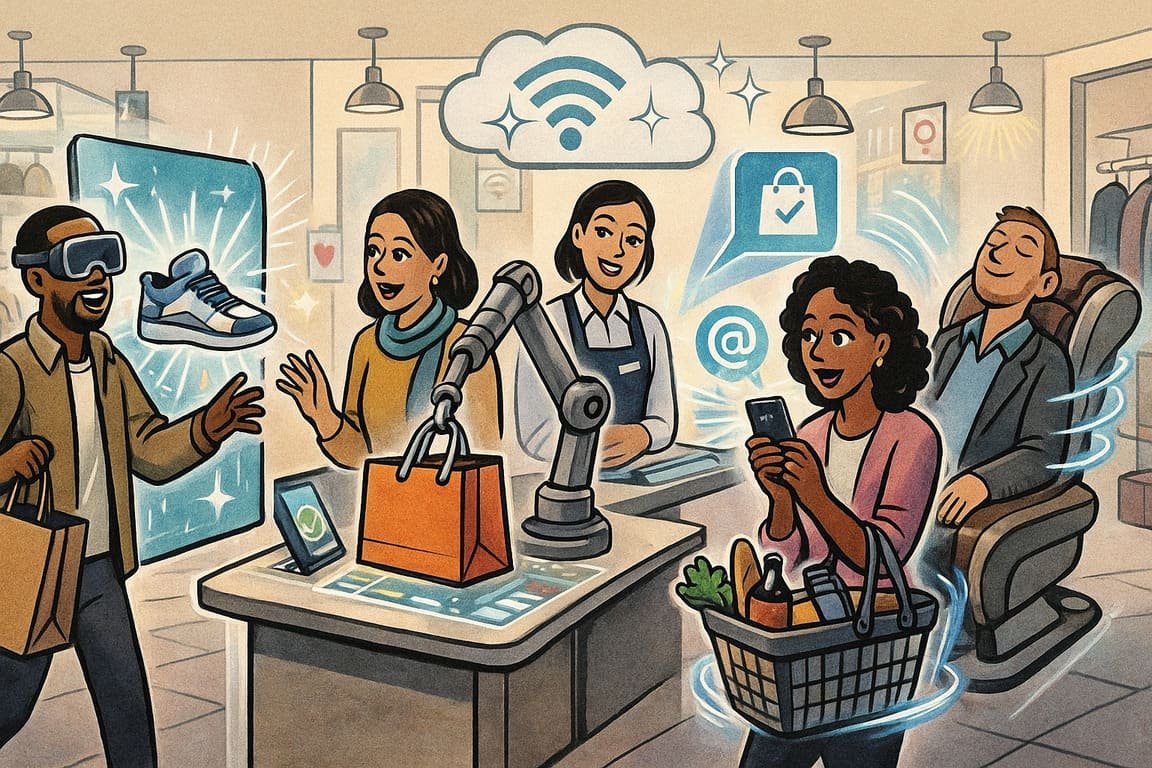
Every morning, sliding glass doors part to reveal a stage set for a modern epic: digital screens flicker with personalized welcomes, ambient music drifts through the air, and mannequins change clothes with a tap on a hidden tablet. Shoppers pause, mesmerized by holographic product demos dancing just beyond reach, as a robotic attendant glides by offering samples with a synthetic smile. In this new world, retail isn’t about shelves or queues. It’s a spectacle, a high-stakes performance where brands win hearts not with discounts, but with digital sorcery that feels almost magical. There’s tension in the air—the sense that at any moment, a single technical glitch could send the whole show tumbling, but for now, the illusion holds.
On this digital stage, customer experience isn’t just enhanced, it’s reinvented. Smart mirrors offer style advice, virtual assistants remember birthdays, and checkout feels almost invisible. The traditional sales floor, once ruled by weary clerks and tangled receipts, has been swept away by a tide of innovation that promises shoppers both ease and delight. It’s not just about convenience. It’s about anticipation—guessing what you want before you even know you want it. The story of Zara’s real-time inventory tracking, which lets customers reserve items before stepping inside, set a new bar for global retail. Now, the question isn’t whether to adopt tech, but how quickly you can catch up.
You, as the customer, become the lead actor. Sensors notice your preferences, apps nudge you with just-right recommendations, and every interaction feels oddly personal. There’s no room for boredom: every visit reveals a fresh scene, every purchase a surprise twist. Retailers who ignore this shift risk fading into irrelevance. The lesson from Borders, once a giant, now a ghost: evolve or exit quietly. When Amazon Go opened its cashierless stores, skeptics scoffed, but now even local grocers are exploring similar tech to keep pace.
This transformation doesn’t come easy. Behind the scenes, IT teams race to sync systems and wrangle data, while managers wonder if human staff can keep up with the learning curve. During a holiday rush, one fictional electronics store in Nairobi adopted smart checkout kiosks. At first, confusion reigned. But after a day of chaos, employees discovered that guiding customers through new tech built loyalty faster than any sale. They began sharing stories—one senior citizen who learned to scan her own groceries, a teenager delighted by a touchscreen game, a single dad grateful for curbside pickup that worked the first time. Each story reinforced a new reality: tech isn’t the enemy, but the co-star.
It’s easy to forget the tactile side of retail in the rush toward automation. Yet, some brands, like Glossier, blend digital with physical so seamlessly that shoppers barely notice the transition. Their flagship store in New York feels like a gallery and an app at once: customers snap selfies in augmented reality booths, consult live chat screens for skincare advice, and leave with both a shopping bag and a shareable memory. For them, tech isn’t a cold layer. It’s the secret ingredient that brings human connection to the surface, making each customer feel seen.
The emotional stakes are real. A parent searching for the perfect birthday gift can find hope in a chatbot that remembers their last purchase. A lonely traveler, lost in a foreign city, stumbles into a store where multilingual AI greets them by name. Even the smallest gesture—an automated coupon for a hard day—can shift a mood, build loyalty, spark a smile. The difference between a sale and a story is empathy, and modern tech gives retailers more ways to show it than ever before.
Of course, not every innovation lands. Sometimes a glitchy self-checkout sparks anger, or a poorly programmed recommendation feels intrusive. Tech is a double-edged sword, and companies that fail to test, iterate, and adapt risk backlash. The viral tale of a fashion retailer whose app crashed during Black Friday haunts executives everywhere. What saved them was humility—a quick apology, a transparent email, and extra support staff ready to help. In the end, customers remember who made things right, not just who got it wrong.
At the heart of this transformation lies data: every click, swipe, and smile fuels algorithms that learn, adapt, and evolve. Privacy becomes both a promise and a battleground. Shoppers want to be known, but not watched. The winners will be those who draw clear boundaries, who treat every byte as a sacred trust. In Paris, a small boutique gained cult status by letting customers set their own data limits, turning privacy into a competitive advantage.
Retail tech isn’t just about gadgets. It’s about creating moments of wonder, relief, and delight. When an old-school bookstore in Tokyo offered AR tours through classic literature, crowds lined up for hours just to experience something new. These stories ripple through communities, inspire competitors, and reshape expectations. Every customer becomes a storyteller, every purchase an invitation to share.
The ultimate risk? Complacency. A store that feels stale, a brand that ignores its audience, a manager who resists change—they all fade, sometimes without anyone noticing. The future belongs to those who keep experimenting, who embrace both chaos and order, who dare to dream that retail can be both art and science. In this game, there are no fixed rules, only endless possibilities.
Night falls and the bright screens power down, but the memory of today’s shopping adventure lingers in the air. In the half-light, rows of mannequins stand quietly, echoing the laughter and wonder that filled the space. Outside, the city’s noise fades to a hush, leaving behind the faint trace of perfume, the brush of a digital coupon on a phone screen, and a sense of possibility that will return when the doors open once more. Tomorrow, the spectacle will begin again, different but familiar, always chasing the next wow. You step into the world with a new question: what kind of experience are you building—and what will customers remember when the lights go out?
Partnered. Provocative. Worth Your Scroll.
This is a Promoted Post by ESYRITE—yes, it’s paid, but never filtered. Our voice stays raw, real, and razor-sharp. We team up with bold ideas, game-changers, and stories that spark something real. If it’s here, it earned its place—no fluff, just impact. We don’t just promote—we provoke. Stay sharp. Dive deeper.
