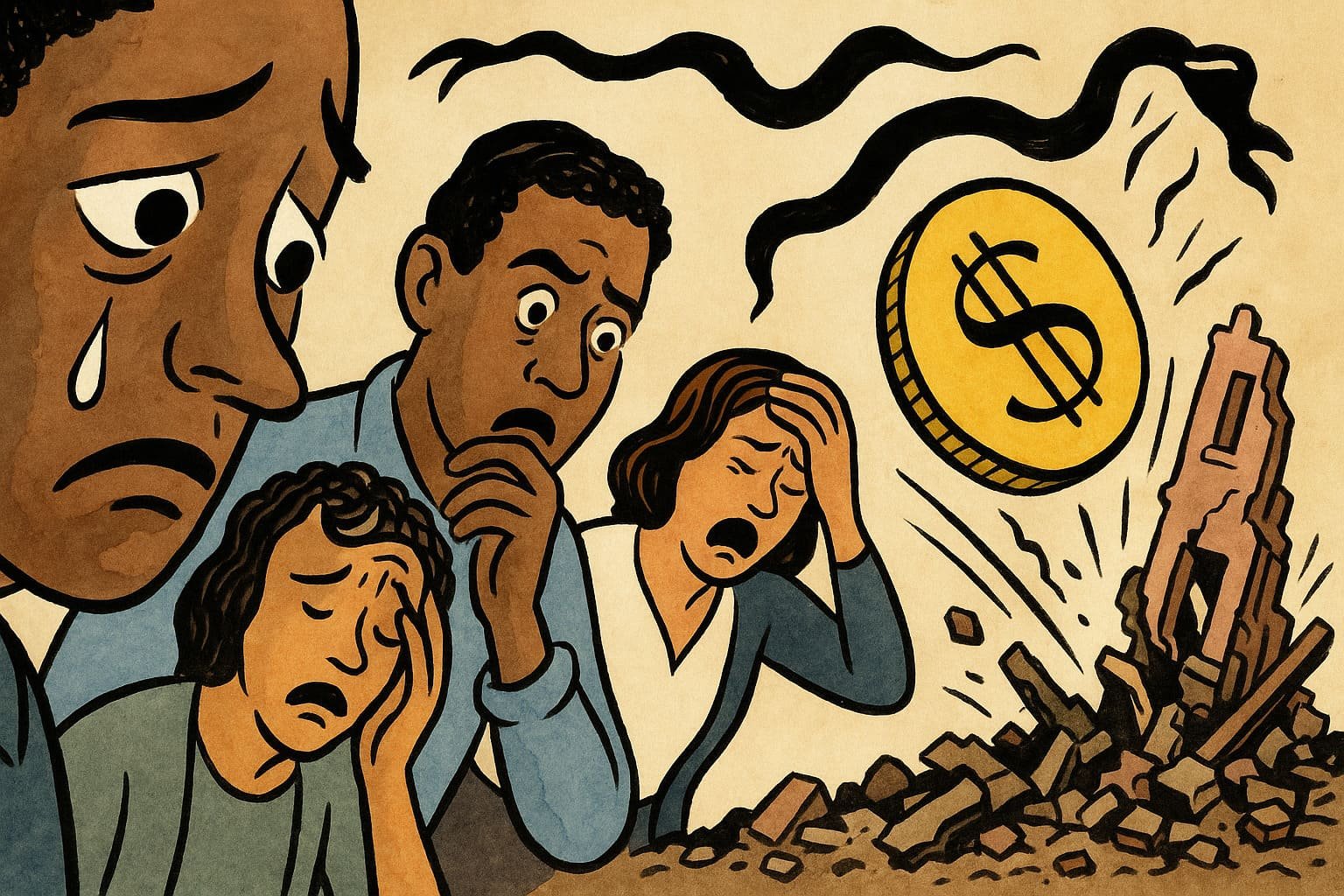
Glass crunches underfoot in the abandoned lobby of a once-bustling headquarters, the light catching jagged edges like a warning. Every surface reflects a story—shattered promises, broken trust, and the silent collapse that follows a single untruth. High above, dust gathers on award plaques once earned for “integrity.” The golden logo on the wall peels in slow disgrace, a symbol of what happens when reputation cracks and value seeps away.
A conference room table sits empty, coffee stains ringed around old memos. The chairs are pushed back as if people fled in a hurry. Outside, investors huddle in the rain, clutching phones, faces ashen from headlines about fraud and losses. The city’s heartbeat stutters. Billboards advertising “trust” flicker over streets where workers once walked tall, now heads down, wondering what happened to loyalty.
In the quiet corners of banks and boardrooms, nervous laughter replaces confident handshakes. A young analyst checks the numbers twice, fear pressing on her chest. The graphs all point downward, hope slipping away with every press release. Another news alert flashes: investigation, scandal, denial. The cycle repeats. Each whisper of dishonesty ripples out, toppling careers, savings, dreams.
Across the city, a small café becomes a safe haven for truth seekers. Journalists and accountants trade rumors over lukewarm coffee, piecing together the puzzle of what went wrong. Betrayed employees recount moments when things felt “off”—emails that never got replies, managers dodging questions, silence in place of answers. The pain lingers long after the headlines fade.
Down in the archives, a lone auditor sifts through years of ledgers, searching for the first sign of rot. She marks pages with red ink, each line a record of trust betrayed. She wonders if those who caused the collapse ever felt regret. Above her, the broken mirrors reflect only emptiness.
Quick Notes
- One Lie Wrecks Billions: Corporate fraud and small deceptions alike can destroy entire companies, leaving investors and workers with nothing but dust.
- Trust Vanishes Overnight: Confidence built over decades can crumble in a single news cycle, creating panic and lasting scars.
- Every Stakeholder Suffers: Lies ripple through the economy, ruining lives far beyond the boardroom—families, communities, and suppliers feel the shock.
- Regret Can’t Restore Value: Once trust collapses, it’s almost impossible to win it back. Even the most public apologies rarely heal the wound.
- Honesty Pays, Always: Sustainable growth demands transparency, accountability, and courage—even when truth is hard.
Smoke, Mirrors, and the Price of Deceit
Trust is currency. When leaders gamble it away, whole economies pay. The temptation to “adjust” numbers or hide a loss can be overwhelming when the pressure mounts, but those shortcuts lead to ruin. Companies that once stood as pillars collapse almost overnight, taking years of work with them.
Consider the downfall of Helios Holdings, a fictional conglomerate admired for relentless growth. At the helm, CEO Emily Carrow smiled for cameras and reassured investors during every quarterly call. Yet behind closed doors, Emily approved a strategy to inflate earnings with off-the-books deals. At first, the numbers dazzled. Shares soared, and bonuses flowed.
But every deception leaves a trail. When a junior accountant flagged oddities in vendor invoices, he was silenced with promises and threats. As the truth bubbled up, Emily doubled down, believing one more quarter would fix it all. When the story finally broke, Helios’s value crashed, creditors circled, and employees woke to locked doors.
Stories like this echo everywhere. Enron’s implosion gutted thousands of retirements, while fraudulent startups like Theranos cost investors fortunes and shattered medical dreams. Each time, the public feels burned, becoming more suspicious of every promise. Confidence in financial reports, audits, and even leadership itself takes a permanent hit.
A single dishonest act may seem small in the moment. Yet, in a world built on contracts and faith, those small lies are poison. Without trust, money flows elsewhere. Without transparency, no amount of PR or spin can save a sinking ship.
Trust—The Unseen Asset That Holds Markets Together
Most balance sheets show assets and liabilities, yet rarely capture the true value of trust. Companies rise or fall on invisible agreements, from handshake deals to digital contracts. Investors place faith in leadership, believing their savings are safe. Customers stay loyal, assuming quality will never slip.
Jessica Hwang, a veteran auditor for a global firm, shares her story of watching a beloved family-run grocery chain spiral after a fake recall. The owners, afraid of embarrassment, hid a minor issue until it became public through a social media leak. Shoppers vanished overnight, suppliers demanded cash upfront, and banks pulled credit lines. The store never recovered.
Regulators try to enforce honesty with inspections and fines, but no law can replace a reputation. A breach of trust erases decades of goodwill in days. When trust fails, suppliers demand payment upfront, creditors hike rates, and the cost of doing business explodes. No spreadsheet can predict the speed or pain of that collapse.
Trust also lives in the small details—a smile at the register, a prompt refund, an honest answer to a hard question. Every business owner, from tech giants to street vendors, knows reputation is fragile. It is earned slowly and lost quickly.
Stakeholders remember betrayal. Stories circulate at industry events and on social feeds, shaping who gets a second chance. Companies that value integrity not only survive but attract the best partners, clients, and employees.
Lies That Hurt the Little Guy—Real People, Real Pain
The fallout from deception does not stop at the boardroom door. When a company implodes, the damage ripples outward. Employees lose jobs, families lose security, and small suppliers get pushed into bankruptcy. The human cost is always greater than the headlines suggest.
When Arcadia Foods collapsed after a labeling scandal, baker Lucia Fernandez lost her largest wholesale contract overnight. She scrambled to keep her bakery open, calling friends and negotiating payment plans with flour suppliers. Lucia remembers the day her daughter asked why they could not afford ballet classes anymore. “Trust,” she says, “pays the bills, too.”
Communities also suffer. Towns built around a single employer may watch schools close and home values plummet. The pain lingers for years, visible in boarded-up shops and fading “Help Wanted” signs. When people feel betrayed, bitterness replaces pride.
Consumers react quickly to scandals. Social media spreads stories faster than any press release. Viral hashtags can destroy a brand’s reputation in days. People crave accountability, demanding apologies, resignations, and restitution.
Rebuilding takes time, money, and humility. Some leaders never recover. Others work for years to rebuild what was lost. The lesson is simple: protecting trust protects everyone.
From Scandal to Reset—Can Value Ever Return?
Restoring trust is like piecing together a vase shattered on marble floors. Apologies matter, but actions speak louder. Transparency must become a daily practice, not just a crisis response. Companies that survive scandal always return to basics: honesty, accountability, and clear communication.
Marvin Patel, a turnaround consultant, describes his work with a luxury fashion house rocked by embezzlement. At first, executives hoped to “move on” quietly. Instead, Marvin demanded public apologies, third-party audits, and staff workshops on ethics. The brand spent years regaining its sparkle. “You can’t skip the hard parts,” Marvin says. “If you want to heal, you have to face what happened.”
Some businesses never regain their old value. Customers switch loyalties, employees move on, and competitors fill the gap. Others reinvent themselves. When a ride-sharing startup in Berlin was caught manipulating user data, it nearly folded. Leadership chose to go transparent, sharing failures openly and offering refunds. Over time, the company clawed its way back.
The financial cost of rebuilding trust is always steep. Marketing, legal fees, and lost revenue add up quickly. Yet, the cost of ignoring the problem is even higher. Companies that invest in culture, transparency, and customer engagement are best positioned for recovery.
True value lies not in glossy annual reports, but in the everyday decisions to do right by people. That is the only way to rebuild trust, brick by brick.
The New Golden Standard—Earning Trust in a Ruthless Era
The digital age exposes every flaw. Lies and half-truths rarely survive the scrutiny of a connected world. Leaders must accept that transparency is not optional. Every email, transaction, and policy decision is a test of integrity.
Sarah Kim, founder of a fintech startup, built her brand on radical honesty. She publishes user complaints on the company’s homepage, along with solutions and follow-up outcomes. Critics scoffed, predicting disaster. Instead, her business grew quickly as customers flocked to a brand they could see—flaws and all.
Corporate culture must change from the top down. Boards should reward truth-telling, not just profit. Audits must be independent and relentless. Internal whistleblowers should be celebrated, not punished. A single brave voice can save millions in losses.
Trust is not just an ethical ideal. It is a competitive edge. Investors back companies with transparent leadership and ethical track records. Employees stay loyal when they feel respected. Consumers pay more for products from brands that keep promises.
The future belongs to those who choose integrity, even when it hurts. The new golden standard is not just profit, but trust that stands up under pressure.
Ashes and Light—The Last Gift of Truth
The night wind rattles broken blinds in an empty accounting office, its chill crawling across forgotten spreadsheets and silent keyboards. The building hums with memories—late-night reconciliations, nervous laughter, hopes pinned to clean ledgers. In a far corner, a single lamp burns, casting sharp shadows across a desk littered with apology notes never sent.
Across town, a busker strums a slow tune beneath a neon sign blinking “OPEN.” Shoppers pass by, some remembering when trust felt solid and simple, not fragile and rare. Inside a shuttered bakery, the scent of bread lingers, haunting a space where promises once tasted sweet. Far away, the city’s skyline glimmers, each light a question, each shadow a lesson.
A young accountant stands on a rooftop, breathing in the sharp air, thinking about every balance that can never be reconciled by numbers alone. Trust, once lost, can turn futures cold. Yet, in the ashes, new beginnings take shape. Someone, somewhere, will risk honesty again, lighting the way for the next story.
You know the cost of broken promises. Will you be the one who risks everything to rebuild trust when others have only left ruin behind?
Why scroll… When you can rocket into Adventure?
Ready to ditch the boring side of Life? Blast off with ESYRITE, a Premier Management Journal & Professional Services Haus—where every click is an adventure and every experience is enchanting. The ESYRITE Journal fuels your curiosity to another dimension. Need life upgrades? ESYRITE Services are basically superpowers in disguise. Crave epic sagas? ESYRITE Stories are so wild, your grandkids will meme them. Want star power? ESYRITE Promoted turns your brand cosmic among the stars. Tired of surface-level noise? ESYRITE Insights delivers mind-bending ideas, and galactic-level clarity straight to your inbox. Cruise the galaxy with the ESYRITE Store —a treasure chest for interstellar dreamers. Join now and let curiosity guide your course.