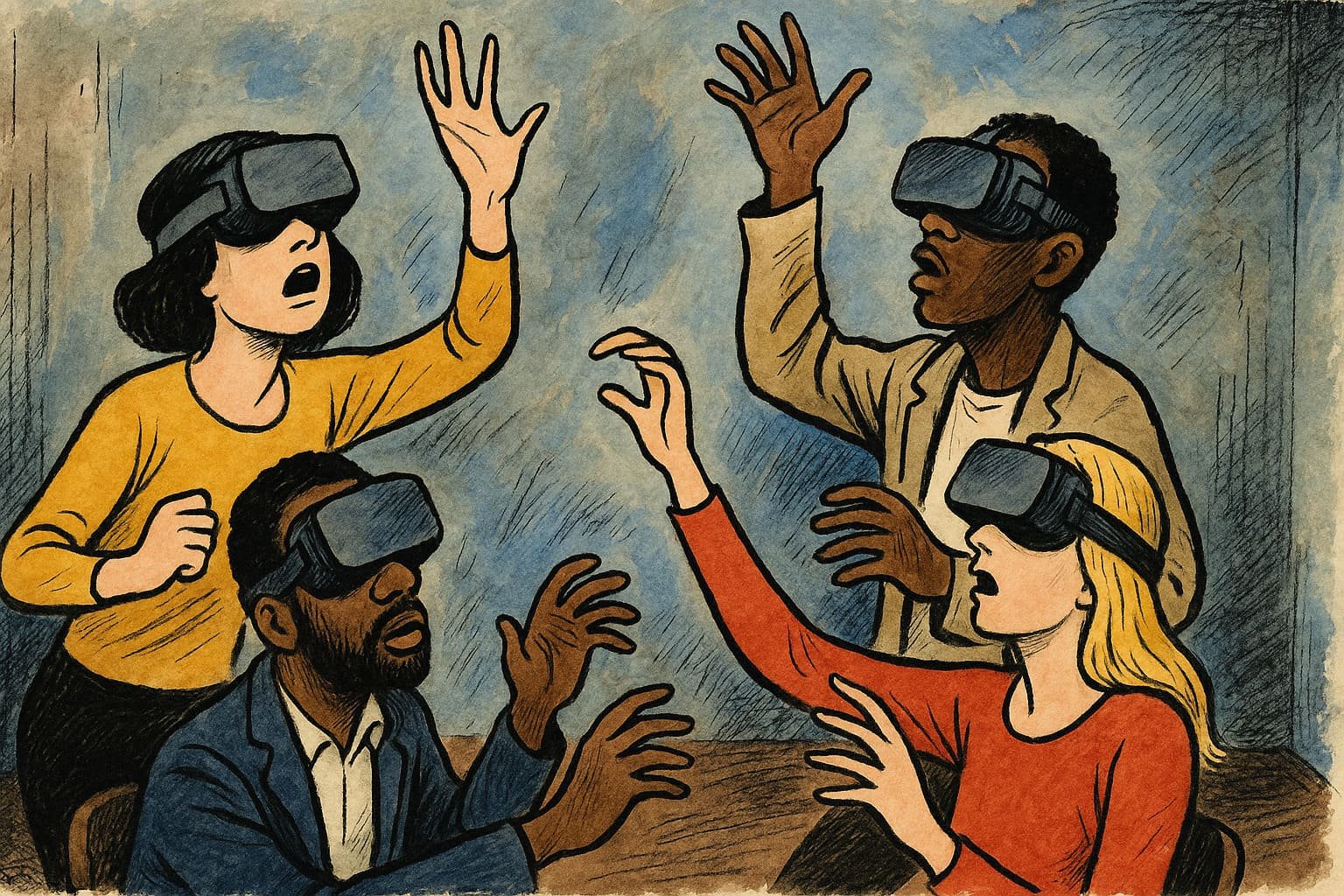
Imagine peeling back the thin veil of the ordinary, only to discover a world bursting with new colors, secret doors, and infinite possibilities. That’s the promise of augmented reality (AR) and virtual reality (VR). What was once dismissed as the stuff of sci-fi dreams is now the engine behind a profound transformation. Every time someone slips on a headset or points their phone at a mural, they’re opening a door to a world where fantasy is woven into the fabric of the everyday.
We’ve reached a moment when reality bends, stretches, and multiplies at the tap of a screen. The gap between digital illusion and lived experience is shrinking so fast that even the skeptics have to admit: adventure isn’t out there somewhere. It’s here, in your pocket and on your desk, ready to leap out and change everything from how we shop and learn, to how we heal, play, and love. AR and VR aren’t just technologies they’re the paintbrushes of a new human canvas.
In this article, we’ll ride shotgun through this emerging universe, where businesses are reinventing themselves, classrooms become living museums, and everyday life starts to feel like an epic quest. Forget the old debate about what’s real and what’s virtual. The future belongs to those who can master both.
Quick Notes
- AR and VR Blend Imagination and Reality Like Never Before: The merging of digital and physical realms creates new ways to see, feel, and interact with the world, driving creativity and connection to unprecedented heights.
- Real-World Case Studies Show Radical Shifts in Business and Society: Industries from healthcare to retail and entertainment are reaping rewards by embracing immersive tech, proving AR and VR aren’t hype they’re catalysts for genuine value and change.
- Personal Experiences Drive Emotional Impact and Empathy: Immersive stories and environments are helping people learn, heal, and grow by making every experience deeply personal and powerfully memorable.
- Barriers Fall: Access, Inclusivity, and Transformation Expand: Affordable hardware and clever apps are smashing down old walls, bringing immersive adventure to wider audiences and closing the digital divide.
- We’re Only Scratching the Surface-Ethics and Identity Await: As virtual and augmented experiences become part of daily life, profound questions about trust, authenticity, and human nature demand new wisdom and responsibility.
Beyond The Hype: When Virtual Meets Real, Adventure Begins
You don’t have to look far for a real-world magic trick. A mural comes alive with dragons on your smartphone screen, a living room transforms into a space station, and kids use AR textbooks to summon ancient mammoths right onto the coffee table. Companies like Niantic, the minds behind Pokémon GO, didn’t just build a game they built a playground layered over the world, blending nostalgia with new discovery. Overnight, millions were chasing digital creatures through parks, alleys, and city squares, blurring the line between quest and commute.
The real revolution isn’t about gadgets it’s about new forms of connection. Classmates separated by oceans now team up for science experiments in shared VR labs. Museums, once quiet and dusty, become portals to the past where history can be touched, spun, and even argued with. A retired pilot named Henry, unable to fly after a stroke, discovered new joy in soaring virtual skies, connecting him to his passion and his community in ways his physical body no longer could.
No one industry owns this adventure. Retailers launch AR try-ons so you can see new shoes on your feet without ever stepping into a store. Fitness apps reward real jogging with digital treasures and scenic detours through magical forests. Even architects and builders walk their clients through VR homes before a single brick is laid. Suddenly, what was once “impossible” is only a download away.
Yet, there’s a deeper transformation: our understanding of presence and place. A gamer in Brazil can stand next to a developer in Sweden, building worlds together in real time, language barriers dissolving as they point, gesture, and laugh. The technology is stitching humanity into a tapestry of shared story and purpose.
We’re entering an age where reality is elastic, not fixed; a living canvas for each of us to paint and explore. The winners? Those curious and bold enough to take the first step through the looking glass.
Industry Earthquake: How AR and VR Are Reshaping Business and Culture
The business world saw the first tremors and quickly realized it was standing on a gold mine. Take IKEA’s AR app, which lets customers drop virtual sofas and lamps into their living rooms, erasing buyer’s remorse and boosting confidence. What began as a novelty soon became an industry standard. Now, fashion brands offer AR mirrors, allowing people to try on clothes virtually, while car dealerships walk buyers through interactive showrooms without anyone ever grabbing the keys.
Healthcare isn’t being left behind. Surgeons practice difficult procedures in VR before ever lifting a scalpel, building skill and confidence. Therapists use AR overlays to treat phobias, gently exposing patients to fears in a safe, supportive way. Patients who once faced long, lonely recoveries now join group rehab sessions in VR, finding camaraderie and support that speeds up healing and lifts spirits.
Entertainment, of course, is a playground for AR and VR’s wildest ambitions. Music festivals go virtual, with fans from all over the world dancing together as digital avatars. Escape rooms blend physical puzzles with AR clues, creating layered experiences that test both mind and muscle. A teenage artist in Seoul paints in three dimensions, livestreaming her creations to a global audience who cheers her on in real time.
The education sector is riding this wave, too. Classrooms are transformed as teachers summon solar systems and medieval castles, making learning visceral and unforgettable. A sixth-grader named Lucas, bored by history, became a time traveler thanks to his school’s VR lab; suddenly, facts became memories.
Businesses that ignore AR and VR are missing out on more than a trend. They’re turning away from deeper engagement, better training, and a shot at lasting loyalty. It’s not just the bottom line that’s at stake, but the soul of customer experience.
Storytelling Supercharged: Personal Adventure Meets Emotional Impact
Stories used to happen on the page or screen, but now they happen all around us. The narrative leaps off the surface and wraps us in a cocoon of sight, sound, and touch. Filmmakers and journalists wield AR and VR to build empathy. War zones become immersive, first-person encounters, and historical injustices get relived, not just read about. One reporter, while covering refugee crises, let audiences walk the camps in VR, bridging the empathy gap in ways words never could.
Personal milestones become shared adventures. Couples host VR weddings for distant friends, while families scattered across continents gather for birthdays in virtual gardens. Grandparents unable to travel walk beside grandchildren through digital museums, creating new memories despite physical separation. These aren’t just video calls; they’re togetherness, made tangible and unforgettable.
Therapy and healing enter a new dimension, too. People struggling with trauma use VR scenarios to regain control over memories, rewiring the brain through controlled exposure and support. Burnout-prone doctors recharge in VR nature retreats, using digital sunlight to spark real relaxation. It’s not escapism; it’s empowerment.
Gaming, always an early adopter, has become a testing ground for emotional narrative. Indie developers spin personal stories that make players cry, laugh, or confront their deepest fears, all in spaces designed for exploration and transformation. A gamer named Zoe overcame her social anxiety by playing as a heroic avatar, building confidence that eventually seeped into her offline life.
These adventures are powerful because they’re personal. They reshape not just what we see, but how we feel, learn, and grow. The most valuable journeys are the ones that change us from the inside out.
Breaking Barriers: From Exclusive Gadget to Everyday Tool
Once, AR and VR were toys for the tech elite; expensive, clunky, and intimidating. That era is over. Lightweight, affordable headsets now sit beside smartphones in millions of homes, and clever AR apps run on devices you already own. A barista in Nairobi uses AR to design latte art for social media fame. A community theater in Nebraska stages Shakespeare with virtual backdrops that would make Broadway jealous.
Access means more voices and fresh perspectives. Indie creators can now share their stories with global audiences without studio backing or massive budgets. A young artist in Peru invites the world to explore her digital murals, while a disabled veteran in Canada finds purpose guiding VR nature tours for kids who can’t travel.
The biggest change isn’t just who can use these tools, but what they can do with them. Home improvement stores teach DIY with step-by-step AR overlays, helping first-timers conquer power tools with confidence. Language learners swap flashcards for AR word hunts, turning the city into a playground for vocab discovery. Suddenly, learning and creating are as easy as pointing your phone or donning a headset.
Accessibility is a game-changer. For people with limited mobility or chronic illness, AR and VR offer independence and agency. A teacher named Maya, housebound with severe allergies, built a thriving online school in VR, connecting with students worldwide in real time.
The line between user and creator is vanishing. As tools get cheaper and more intuitive, the adventure of building new realities becomes everyone’s game. This is how digital divides are bridged not with more gadgets, but with more imagination and access.
New Dilemmas: Ethics, Identity, and the Road Ahead
With new power comes new responsibility. As AR and VR adventures go mainstream, questions of privacy, consent, and identity loom large. Who owns the digital layers we paint on the world? What happens when “real” and “virtual” start to blur so much that telling them apart is impossible? It’s not just science fiction; it’s today’s dilemma.
Deepfakes, altered memories, and manipulated environments raise new risks. A fashion brand’s virtual ad might hijack your cityscape, while a fake video could ruin a reputation in seconds. That’s why new codes of ethics are emerging, championed by industry leaders like Randi Zuckerberg, who insists on “digital dignity” and clear lines of consent.
Identity is becoming fluid, both exhilarating and challenging. An introverted teen can reinvent themselves as a confident avatar, gaining courage that lasts long after the headset comes off. But the temptation to escape into fantasy can be strong, and society must grapple with how to balance digital empowerment with real-world engagement.
The wisdom of Maslow’s hierarchy, which places belonging and self-actualization at the top of human needs, feels more relevant than ever. AR and VR can deliver both but only if used mindfully, with intention and care. Parents, teachers, and leaders must teach digital literacy alongside reading and math.
There’s also the opportunity for social good. Virtual town halls let citizens gather without fear or barriers. Activists hold immersive rallies for climate action, turning empathy into movement. A new breed of global citizenship is emerging, built not just on shared data, but shared experience.
Are we prepared for a world where reality is no longer a fixed point, but a spectrum? That’s the ultimate question. AR and VR will keep pushing us to answer it.
Strap In: The Real Adventure Is Just Beginning
The adventure has only just begun, and the greatest stories are yet to be written. AR and VR are smashing the boundaries between the real and the imagined, giving ordinary people the power to play, heal, build, and connect in ways once thought impossible. Each day, new tools, creators, and experiences rise up; bold, vibrant, and ready for anyone willing to say yes.
Those who dismiss immersive technology as a passing fad will be left blinking as the world races by, faster and more thrilling than ever. The pioneers and the dreamers, meanwhile, will keep painting, coding, teaching, and exploring. They know that adventure doesn’t wait for permission. It only asks that you show up, ready to be changed.
So what’s next for you? Will you be a tourist in this brave new world, or an architect of the future? Will you use AR and VR to escape or to build something lasting, meaningful, and astonishing? The boundaries of reality are up for grabs, and every choice you make writes another line in the story of our time.
Dare to take the leap. Because in the universe of virtual adventure, the only limit is how far you’re willing to go. And with AR and VR taking over, one thing’s certain the adventure isn’t just coming. It’s already here, and it’s waiting for you to make it your own.
Why scroll… When you can rocket into Adventure?
Ready to ditch the boring side of Life? Blast off with ESYRITE, a Premier Management Journal & Professional Services Haus—where every click is an adventure and every experience is enchanting. The ESYRITE Journal fuels your curiosity to another dimension. Need life upgrades? ESYRITE Services are basically superpowers in disguise. Crave epic sagas? ESYRITE Stories are so wild, your grandkids will meme them. Want star power? ESYRITE Promoted turns your brand cosmic among the stars. Tired of surface-level noise? ESYRITE Insights delivers mind-bending ideas, and galactic-level clarity straight to your inbox. Cruise the galaxy with the ESYRITE Store —a treasure chest for interstellar dreamers. Join now and let curiosity guide your course.