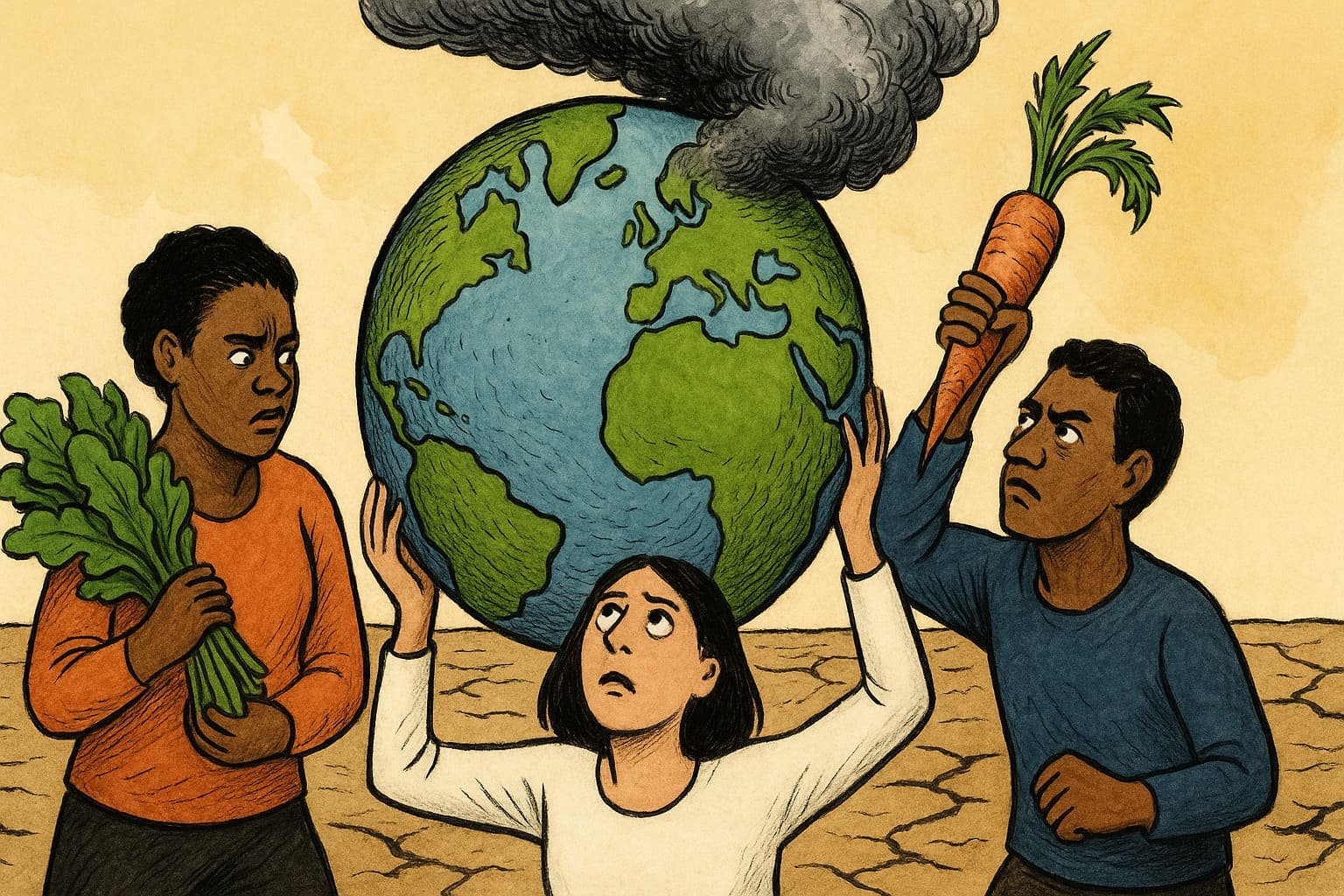
On any given day, you’ll find a fresh-faced vegan influencer on your feed beaming behind rainbow smoothie bowls, quoting climate stats, and hailing oat milk as the hero of our times. The plant-based boom is impossible to ignore. Cafés churn out coconut lattes, restaurants boast pea-protein burgers, and supermarkets push almond cheese so hard it’s almost suspicious. It’s a tidal wave of good intentions, with promises to rescue the Earth, heal our bodies, and, with any luck, make us all a little more enlightened.
But is the plant-based movement truly a magic bullet, or have we traded one environmental headache for another? Are we saving the planet, or are we just playing sustainability whack-a-mole? As the vegan trend rockets from niche subculture to global movement, its green halo starts to wobble. Real lives are shaped by the choices made in supermarket aisles, boardrooms, and on social media often with unexpected consequences. Today’s story cuts deeper than tofu slogans or eco-memes. It’s about the surprising paradox at the heart of the vegan revolution, and why the answers aren’t as easy or as tasty as they first seem. Prepare to have your beliefs challenged, your thinking sharpened, and your curiosity seriously piqued.
Quick Notes
- Vegan Hype Meets Hard Reality: The explosion of plant-based living offers big promises, but the movement comes with complex trade-offs, ethical questions, and environmental blind spots that rarely make it into glossy ads.
- Environmental Pros and Cons: Cutting meat reduces land use and emissions, yet large-scale mono-cropping for plant protein drives water shortages, pesticide overuse, and biodiversity loss; no easy wins.
- Social Justice and Food Inequality: Vegan choices, often seen as a privilege, risk widening gaps between communities who can afford premium products and those left behind, raising fresh questions about fairness.
- Industrial Innovation or Greenwashing? As Big Food pivots to vegan profits, genuine sustainability is threatened by corporate marketing, processed plant foods, and supply chains riddled with hidden costs.
- New Paths, Real Change: True sustainability goes beyond diet wars, demanding creative policy, local action, and consumer courage to push for systems that nurture both people and planet.
Green Gold Rush: The Meteoric Rise and Wobbly Halo of Vegan Living
Turn on the TV and you’ll find a parade of vegan celebrities: everyone from Lizzo to Lewis Hamilton touts plant-based living. Scroll through TikTok and you’re bombarded by “What I Eat in a Day” videos packed with rainbow salads and slick branding. The vegan movement has morphed from radical protest to billion-dollar trend. “Plant-based” is the new “fat-free,” and businesses are falling over themselves to cash in.
Supermarkets now feature entire aisles of alternative meats, dairy-free cheeses, and plant-powered ice cream. Silicon Valley startups promise lab-grown eggs and cultivated meat, pitching investors on the future of food. Impossible Foods and Beyond Meat hit Wall Street like rock stars, backed by promises to out-muscle Big Beef. Even legacy brands think Nestlé and Unilever launch vegan lines to chase the plant-powered dollar.
On the surface, this is a triumph for environmentalists and ethical eaters. Billboards tout stats about the water and carbon footprint of lentils versus burgers. Dining out is no longer an exercise in social awkwardness for vegans. Even McDonald’s has a “McPlant.” Yet, as veganism becomes mainstream, it risks losing the soul of the early movement; a rebellion against mindless consumption and animal exploitation.
Every movement rides a hype cycle. Early adopters, like activist Gene Baur, remember the days of tofu sandwiches and skepticism. Now, veganism is a status symbol, accessible in hipster enclaves but far from everyday reality in food deserts. The paradox is clear: as the movement scales up, it faces the same traps as Big Ag; industrial mono-cropping, long-haul shipping, and resource-intensive processing.
Pop culture is quick to celebrate individual victories but slow to wrestle with complexity. One viral story doesn’t tell you that your almond milk latte may be sucking rivers dry in drought-prone regions. Every product carries a shadow. The vegan gold rush delivers convenience but invites us to question: what are we actually buying into, and at what cost?
Environmental Trade-Offs: Mono-Crops, Water Wars, and the Eco-Footprint Nobody Sees
The marketing story is simple: swap steak for soy and save the world. The reality, though, is much messier. It’s true that livestock farming devours land, water, and grain, while belching out greenhouse gases. That alone should make us reconsider our dinner plates. Yet, the vegan alternative is not a perfect solution; it’s just a different set of trade-offs.
Fields of almonds in California’s Central Valley stretch to the horizon, fed by irrigation systems drawing down precious aquifers. Avocado groves in Mexico replace rainforests, straining ecosystems and driving conflicts with local communities. Soy and pea protein, the backbone of many plant-based products, are often grown as industrial monocultures, doused with pesticides and fertilizers. These vast single-crop systems hammer biodiversity and pollute waterways.
Real-life farmers like José in Spain wrestle with new pressures. He switched from livestock to almond farming, hoping to cash in on demand from vegan consumers. Soon, his neighbors began to feud over water rights as wells ran dry and costs soared. The world’s hunger for new vegan superfoods, from quinoa to coconut, pushes local prices up and sometimes squeezes out traditional growers.
The paradox sharpens as you look closer. Intensive plant-based farming delivers low emissions per calorie, but its footprint expands when scaled up. Even oat milk, the darling of climate-conscious cafés, can be made in factories powered by fossil fuels and shipped halfway across the globe. No product is free of consequence; every food choice shapes supply chains, landscapes, and lives.
Daniel Pink’s theory of “autonomy, mastery, and purpose” offers a fresh lens. People want to make a difference, but the world rarely offers clear answers. The vegan paradox is this: good intentions are essential, but outcomes depend on context, scale, and the will to question what really works. True eco-sanity comes from seeing the shadows and acting anyway.
Privilege, Power, and the Unequal Table: Who Gets to Go Vegan?
The plant-based revolution has turned dinner tables into battlegrounds of virtue and identity. For many, adopting veganism is a badge of progress. For others, it’s an unattainable luxury. The price tag of premium products: vegan cheeses, faux meats, organic tofu puts them out of reach for millions. The result: a new class divide shaped by diet.
Communities in low-income neighborhoods struggle to access fresh produce, let alone niche vegan alternatives. Stories like that of Gloria in Detroit bring this divide to life. She works two jobs to feed her family and dreams of healthier food but finds only processed snacks and fast food on local shelves. Vegan options exist but often in distant stores or at premium prices.
Food banks, nonprofits, and activists battle this reality every day. The well-meaning push for plant-based eating sometimes ignores the deeper issues of poverty, food deserts, and systemic injustice. Those with privilege get to choose the greenest options. The rest are left with what’s cheap, filling, and available regardless of the carbon footprint.
The global story is even starker. In countries like India, much of the population already eats little meat, not for environmental reasons but because of tradition and cost. Export-driven demand for vegan staples like quinoa or chia seeds can drive prices up, making life harder for those who’ve relied on these crops for generations. The benefits of the vegan boom often flow north, while the burdens pile up elsewhere.
Maslow’s hierarchy reminds us: sustainability isn’t just about saving the planet. It’s about ensuring everyone’s basic needs, food, dignity, security are met. Until plant-based diets work for all, not just the privileged few, the movement risks deepening the very divides it hopes to heal. The true test isn’t what we eat, but whether our choices lift others up or leave them behind.
Greenwashing, Innovation, and the Industrial Vegan Dilemma
As demand for plant-based foods surges, Big Food gets creative. Processed vegan nuggets, dairy-free chocolates, and lab-grown meats promise all the taste, none of the guilt. Marketing departments go into overdrive, splashing green leaves and “cruelty-free” labels on everything from cookies to shampoo. But is the new wave of vegan innovation truly sustainable or just the next wave of corporate greenwashing?
Consider the Impossible Burger. Its launch made headlines, pitching high-tech pea protein as a cow-saving savior. Yet, the ingredient list reads like a chemistry set. Critics ask: Are ultra-processed, long-haul vegan foods really better for people and planet than local, less-processed animal products? Some nutritionists worry about additives and sugar, while eco-activists warn about supply chains hidden from public view.
Coca-Cola and Nestlé, companies once slammed for plastic pollution and rainforest destruction, now lead the plant-based charge. They invest in vegan lines, eager to win back conscious consumers. Yet, their core business models remain rooted in extraction and waste. Real sustainability, critics argue, means changing the system not just the packaging.
Not all innovation is hollow. Local co-ops, regenerative farms, and community-supported agriculture programs offer plant-based food that respects both land and labor. Chef Bryant Terry, a leader in the vegan soul food movement, champions meals that honor heritage, nourish communities, and minimize waste. When innovation puts people, not just profit, at the center, the vegan paradox starts to resolve.
The challenge is ongoing. As consumers, we must cut through hype, ask hard questions, and support brands that align with values, not just trends. The vegan boom could shape the food system for generations. Will we demand substance over slogans, or will we let Big Food lead us into another unsustainable trap?
Toward True Sustainability: Building a Better Plant-Based Future
The vegan paradox is not a call to abandon plant-based diets, but a challenge to rethink how and why we choose them. Sustainability is a moving target, shaped by culture, context, and conscience. If the plant-based movement hopes to deliver on its promises, it must go beyond personal choice and spark systemic change.
Policy leaders hold the keys. Progressive governments and cities support urban agriculture, fund school gardens, and reward sustainable farming practices. They tax wasteful industries, support food justice programs, and make fresh, plant-based options the default in public cafeterias. Policy shapes the food system far more than individual willpower ever could.
Communities lead the way. In Rotterdam, city farms grow vegetables in abandoned buildings, feeding neighborhoods and cutting transport emissions. Indigenous leaders in Brazil and Kenya share ancient wisdom for land stewardship, reminding the world that plant-based eating has always been part of sustainable cultures long before influencers claimed it.
Education remains the hidden superpower. When schools teach children how to grow, cook, and understand their food, they spark a lifelong respect for both health and the environment. Pop culture, too, can uplift change: documentaries, podcasts, and social media can inspire critical thinking, debunk greenwashing, and celebrate the complexity of real sustainability.
Each person has a part to play. Choosing local produce, supporting ethical brands, and sharing knowledge moves the world forward. Asking questions about where food comes from, who profits, and who pays the price fuels progress. The vegan paradox is not a dead end. It’s an invitation to think bigger, push harder, and transform the table into a stage for real, lasting change.
Unraveling the Paradox: From Plate to Planet, What Legacy Will You Leave?
The plant-based revolution is both an inspiring call to action and a warning against easy answers. Swapping meat for beans won’t save the planet alone but it can start conversations, shift cultures, and spark the systemic change our world craves. Each bite, each choice, ripples outward into supply chains, communities, and futures unseen. The vegan paradox is a mirror, reflecting both our dreams and our blind spots. The real challenge is not just to eat better, but to demand a food system that feeds everyone, heals the land, and keeps hope alive for generations to come. The next chapter isn’t written yet; will you help craft a future where plant-based means justice, health, and true sustainability for all?
Partnered. Provocative. Worth Your Scroll.
This is a Promoted Post by ESYRITE—yes, it’s paid, but never filtered. Our voice stays raw, real, and razor-sharp. We team up with bold ideas, game-changers, and stories that spark something real. If it’s here, it earned its place—no fluff, just impact. We don’t just promote—we provoke. Stay sharp. Dive deeper.
