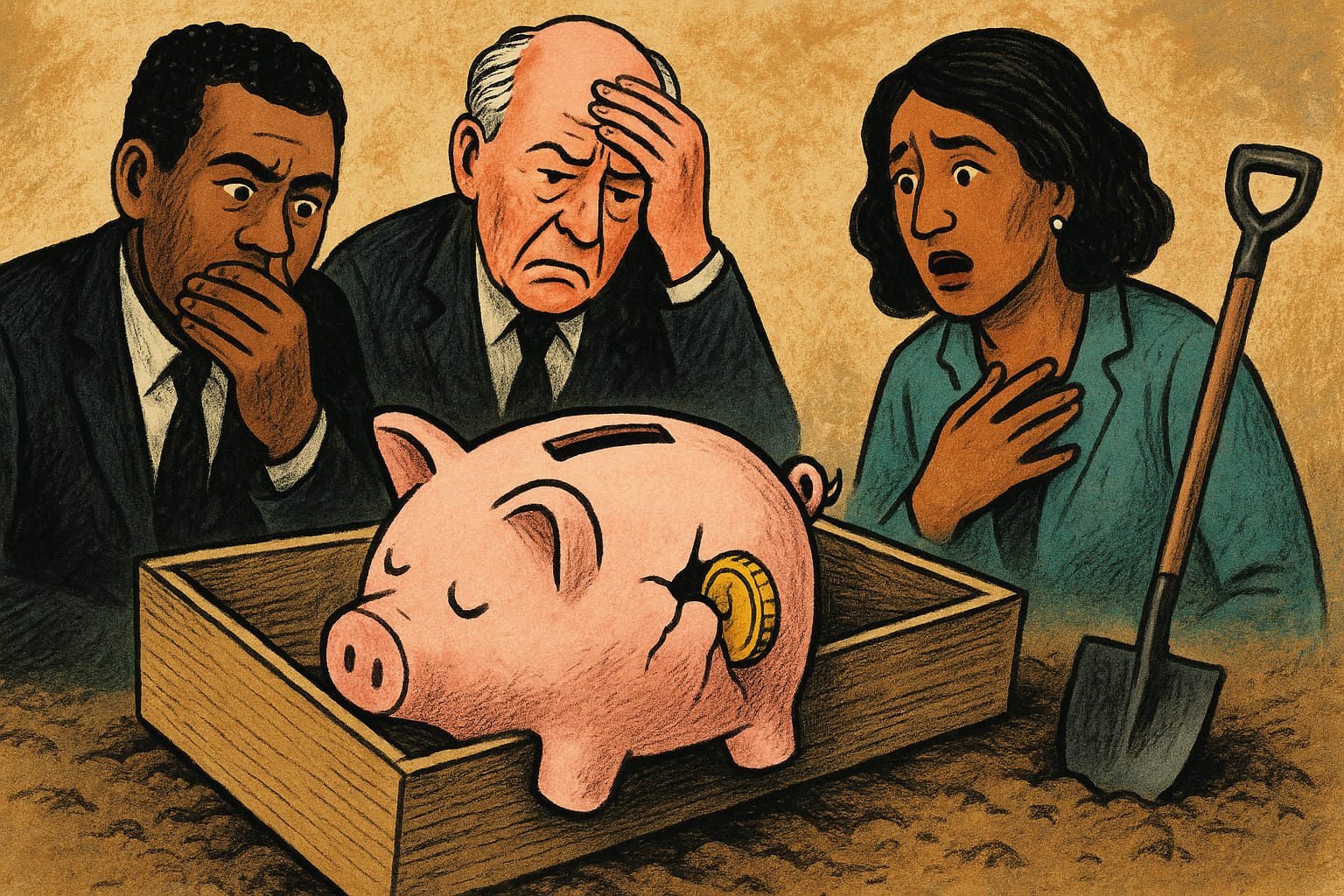
Try this for a horror story: You wake up, years from now, expecting the “golden” in your golden years, only to discover your retirement savings have turned to tin. The villains? Not hackers, not Wall Street sharks, not even greedy corporations. The culprit is something so mundane, so under-the-radar, you might have ignored it for years; cheap interest rates. The world has been lulled into thinking low rates are the cure for economic stagnation, the gentle hand guiding us through recessions and storms. But beneath that calm surface lies a ticking time bomb, a force quietly siphoning value from pensions, savings, and the dreams of every future retiree. This isn’t just a financial story; it’s an existential reckoning. When cheap money rules the world, who really pays the price?
For decades, easy money has been sold as the friend of homeowners, investors, and dreamers. Yet the ugly truth is emerging: the very policies meant to protect us may be the slow poison hollowing out our futures. Pension funds, once solid as stone, now wobble on uncertain ground. The “new normal” has upended what we thought we knew about saving, risk, and trust. While markets soar and credit is cheaper than ever, the quiet losers are everyday people betting their lives on a promise that’s getting more fragile by the day. Can anyone guarantee a safe landing, or are we riding a ghost train into the unknown?
If you care about your retirement or anyone else’s you need to see how this game is played, who wins, and why most of us never see it coming. It’s not a conspiracy. It’s not an accident. It’s just the biggest, quietest heist of our time.
Quick Notes
- The Hidden Dangers of Cheap Money: Low interest rates are sold as economic boosts, but behind the scenes, they erode the value of pension savings and threaten the dreams of millions.
- How Pensions Are Trapped: Traditional pension models crumble when investment returns vanish, pushing retirees into riskier bets and leaving many exposed.
- Real Lives, Real Losses: Stories from real people; teachers, nurses, and small business owners show how easy money policies can devastate families and futures.
- Philosophy of Security: Cheap rates reveal society’s collective fear of risk, but chasing comfort may lead to greater insecurity in the long run.
- Redefining Retirement: The solution isn’t panic; it’s rethinking what security really means, questioning the old models, and demanding a new approach to building future wealth.
Easy Money’s Dark Side: Why Cheap Rates Feel Good Until They Don’t
Central banks made cheap money the default setting. For years, interest rates have hovered near the floor, making credit cheap and asset prices skyrocket. The logic is simple: easy money fuels spending, keeps economies humming, and avoids crises. Yet like a party where nobody wants to leave, the hangover builds out of sight. Savers earn almost nothing, pension funds scramble for returns, and debt balloons everywhere.
It’s not hard to see the winners. Homebuyers lock in loans at rock-bottom rates, corporations borrow cheaply to buy back stock, and real estate bubbles inflate in every major city. Wall Street throws confetti as asset prices climb. Meanwhile, those relying on steady, risk-free returns; pensioners, long-term savers, cautious investors, find themselves left out in the cold. Their money works harder than ever, but the finish line keeps moving.
Take Mary, a retired teacher in Chicago. She planned for decades, trusting her pension would be enough. Each year, the returns shrank. The fund managers tried riskier bets, hoping to make up the difference. The anxiety crept in slowly until she realized her future was tied to forces she never voted for and never understood. Mary’s dream was never luxury just dignity and stability. Now, she wonders if either is still possible.
Low rates also warp behavior in ways most people never see. When safe assets yield next to nothing, even conservative pension funds start chasing risk, private equity, hedge funds and exotic real estate. The safety net turns into a tightrope. All it takes is one stumble, and lifetimes of work evaporate. The “promise” of a secure retirement becomes a high-stakes bet.
A deeper question lurks beneath the surface: have we traded true security for short-term comfort? Philosopher Daniel Pink talks about the power of autonomy and purpose. When we’re forced to play a game we never signed up for, it erodes not just wealth, but trust in the whole system. Cheap money doesn’t just shrink accounts. It shrinks hope.
Pension Time Bomb: Promises Made, Promises Broken
Pension funds used to be boring. They bought government bonds, collected steady interest, and paid out for generations. With rates at historic lows, those old formulas are broken. Pension managers have been forced to “innovate” which often means piling into riskier investments or cutting promised benefits. The foundation of retirement security now rests on sand, not stone.
Paul, a retired firefighter in Detroit, watched his pension checks shrink as the fund struggled. The city’s leaders blamed everything but the one thing no one could control: the math of low yields. Paul didn’t gamble, didn’t overspend, and didn’t ask for more than his fair share. Yet his savings fell short, and the blame game offered no comfort.
When returns evaporate, there are only three ways out: raise contributions, cut payouts, or gamble for higher returns. Few want to pay more, so the axe often falls on future retirees. Workers are told to “save more,” but their extra cash faces the same hostile climate. The promise of a safe retirement becomes a mirage in the desert, visible from afar, gone when you reach for it.
Mini-case: A tech company in San Francisco slashed its pension plan in favor of a 401(k). Employees, young and old, scrambled to adjust. The new plan relied on individuals to make investment choices; a game most had never played. Some thrived, most drifted, and a few lost everything in market swings. The old idea of “set it and forget it” was replaced by uncertainty and risk.
The philosophical wound runs deeper than numbers. When institutions break promises no matter how politely it breeds cynicism and disengagement. Society begins to fracture along generational lines. Young people resent the old. The old feel abandoned. The real loss isn’t just money; it’s trust in the idea of a future that can be planned and shared.
Real People, Real Pain: How Cheap Rates Hurt the Heartland
Financial policy is often painted as a game for economists and politicians, but its impacts land hardest on ordinary people. The low-rate era has created a world of unintended consequences, especially for the ones who played by the rules. Teachers, small business owners, and lifelong savers wake up to find their future at risk and their options shrinking.
Rita, a single mom in Ohio, poured her savings into a “safe” pension, counting on it to send her kids to college. As rates fell, so did her fund’s ability to keep up. Suddenly, the advice she trusted was outdated. Rita was forced to work longer, cut back on dreams, and explain to her children why plans had to change. The human cost of low rates can’t be measured in charts or spreadsheets.
Communities suffer, too. Pension fund shortfalls force cuts to local services, layoffs, and even city bankruptcies. When the safety net frays, it’s not just individuals who fall; it’s neighborhoods, schools, and small businesses. The ripple effect transforms an economic policy into a social crisis.
Pop culture has caught on. TV shows and films now feature characters whose retirement dreams go sideways; not from bad luck, but from systemic shifts no one warned them about. The reality is relatable: hard work doesn’t always guarantee security, and trust in old systems is no longer enough.
Philosophically, this is the collapse of Maslow’s hierarchy at its base. When basic financial security is threatened, it destabilizes everything above it; relationships, achievement, even self-worth. Society cannot thrive when its foundation is cracked by the very policies meant to protect it.
Security or Illusion? The Psychology Behind Chasing Comfort
Why do cheap rates persist, even as evidence mounts that they cause long-term harm? The answer lies in the psychology of risk and the politics of fear. Policymakers face enormous pressure to avoid short-term pain, even if it means long-term consequences. Cheap money is the easy answer; the sugar high that masks deeper problems.
James, a city administrator, remembers the heated debates when his town’s pension fund hit a crisis. Raising rates or cutting benefits would cause outrage. Keeping things as they were felt safer even if the math didn’t add up. The illusion of stability became more important than actual security.
This isn’t just a political failure; it’s a human one. People crave certainty, and low rates seem to offer it. But beneath the surface, the system grows more fragile. When risk is hidden, people make decisions that backfire. The comfort of easy money breeds complacency and sets the stage for sudden shocks.
Philosophy offers a warning. Ikigai, the Japanese concept of purpose, teaches that security must be rooted in reality, not wishful thinking. Societies that chase comfort at any cost often pay with greater suffering later. The lesson: lasting security comes from facing uncomfortable truths, not avoiding them.
The real tragedy is collective amnesia. We forget the lessons of past crises and allow ourselves to be seduced by temporary fixes. The longer cheap money lingers, the harder it becomes to break free and the greater the reckoning when reality returns.
Rethinking Retirement: A New Blueprint for an Uncertain Future
The solution to the pension crisis isn’t nostalgia or panic; it’s creativity and courage. Old models must evolve, not out of fear, but out of necessity. Individuals, institutions, and governments need to embrace new ways of thinking about retirement, risk, and reward.
Clara, a young entrepreneur, didn’t wait for policymakers to save her future. She diversified her savings, started a side business, and connected with peers facing the same uncertainty. Her approach wasn’t easy, but it put her in control. Clara’s story is a beacon for anyone tired of waiting for the system to fix itself.
Communities are experimenting, too. Some cities pool resources, creating new pension models based on collective ownership and local investment. Others explore innovative insurance and sharing-economy solutions, spreading risk in ways that don’t rely solely on interest rates. The new blueprint is about resilience, not just returns.
Institutions must regain trust by communicating honestly and adapting quickly. It’s time to acknowledge that yesterday’s solutions can’t guarantee tomorrow’s security. Transparency, education, and real engagement can rebuild the broken contract between savers and the system.
The philosophical breakthrough is simple: redefine what “enough” means. Security is no longer a one-size-fits-all number, but a balance of flexibility, community, and meaning. Daniel Pink’s ideas about purpose suggest that people thrive when they feel empowered not just protected. Retirement can be more than a payout. It can be a platform for growth and contribution.
The most profound change starts within. Future generations must learn to ask hard questions, build diverse skills, and value adaptability over guarantees. The world will never be risk-free, but it can be rich in opportunity for those who see beyond the illusion of easy answers.
Are You Still Counting on Luck or Ready for a New Game?
The world has been sold a fairy tale where cheap rates fix everything and pensions are untouchable. The real story is messier, scarier, and infinitely more urgent. Every day we wait for someone else to solve the problem, the silent heist continues. This isn’t about blaming central banks, politicians, or even the market. It’s about facing the uncomfortable reality that no one cares about your future more than you.
Your pension is your story, your legacy, your shot at a life on your terms. Don’t hand it over to the myth of easy money. Take back control by demanding truth, embracing uncertainty, and forging a new path to security; one built on resilience, not illusions.
No one’s coming to save you. That’s terrifying, but it’s also the greatest invitation you’ll ever get. Will you ignore the warning signs and hope for the best? Or will you step up, rewrite the script, and become the hero of your own future?
Reflective Challenge: What’s one bold action you can take today to secure your future, no matter which way the rates go?
Partnered. Provocative. Worth Your Scroll.
This is a Promoted Post by ESYRITE—yes, it’s paid, but never filtered. Our voice stays raw, real, and razor-sharp. We team up with bold ideas, game-changers, and stories that spark something real. If it’s here, it earned its place—no fluff, just impact. We don’t just promote—we provoke. Stay sharp. Dive deeper.
