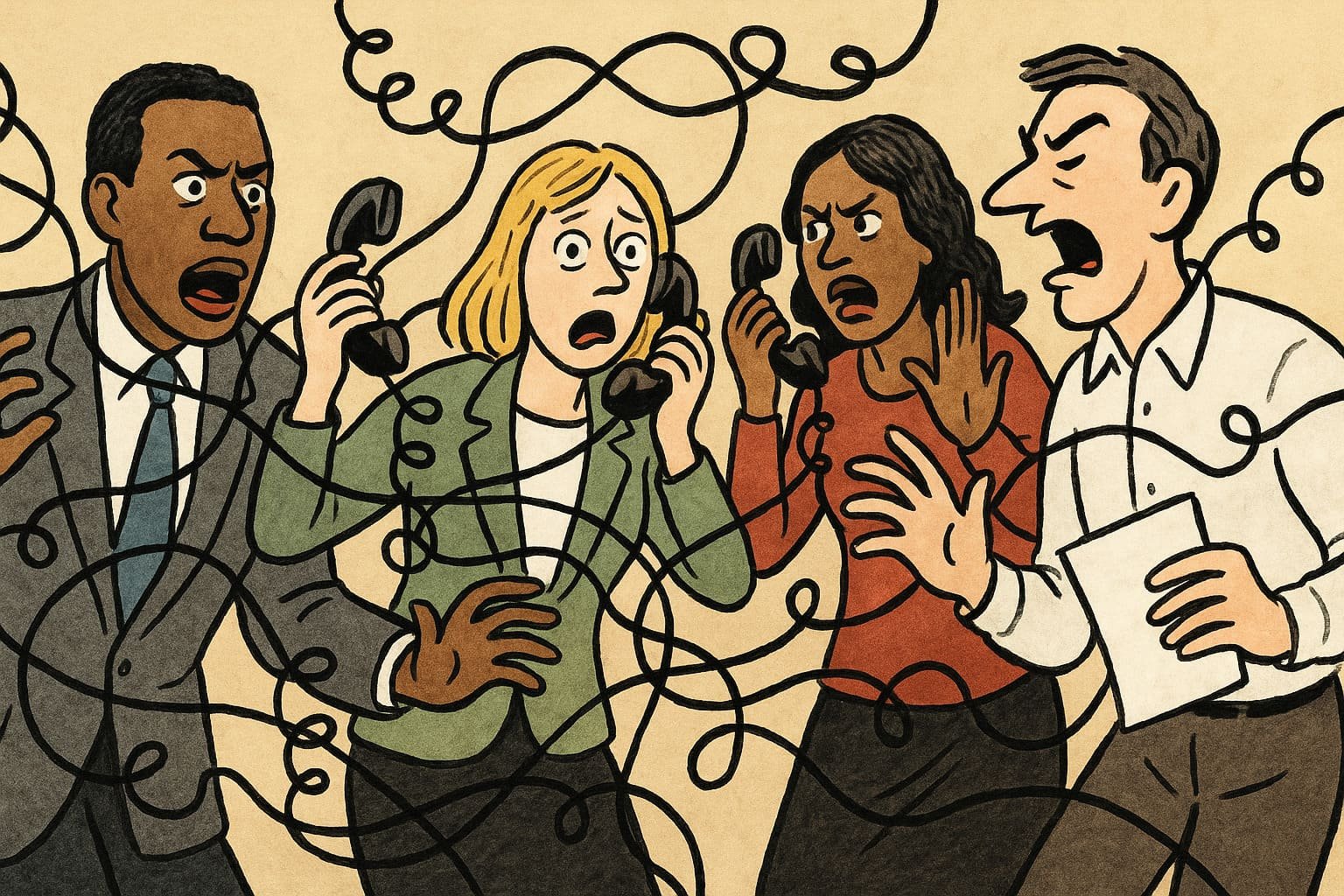
Every empire built, every love ignited, and every business deal sealed at its root is communication. But here’s the plot twist nobody told you: the very thing meant to connect us often wrecks us. That email you sent too fast? The meeting where no one knew what was going on? The heated message you thought was clear but landed like a punch? Communication isn’t a soft skill. It’s the battleground where trust is forged or fractured, relationships thrive or die, and companies sink or soar.
In boardrooms, breakrooms, DMs, and dining tables, communication missteps cost us more than typos and awkward silences. They cost credibility, loyalty, and sometimes, careers. Yet, most of us are flying blind, winging our words like they don’t matter until they do. This article is your radar, your manual, your brutally honest wake-up call. We’ll strip down five of the most damaging communication mistakes, expose their ripple effects, and equip you with field-tested fixes that will transform how you’re heard, seen, and remembered.
Quick Notes
- Assumption is the Silent Killer: Assuming others understand your context or intent without confirming it is one of the deadliest mistakes in communication, often leading to massive misunderstandings.
- Over-Talking and Under-Listening: Dominating conversations to assert control or prove worth backfires when listeners disengage or feel dismissed. Active listening wins influence.
- Vagueness is a Trust Erosion Tool: Unclear messaging breeds confusion and distrust. Precision and clarity are the cornerstones of credibility.
- Emotionally Charged Reactions Create Fallout: Reacting instead of responding; especially when emotional leaves irreparable dents in relationships and brand image.
- Ignoring Nonverbal and Digital Cues is Fatal: Your body language and virtual tone often say more than your words. Ignoring these channels leads to misalignment and misjudgment.
The Assumption Apocalypse: When Your Mind Fills in the Blanks
The moment you assume, you abandon clarity for comfort. People assume their team understands the vision because they mentioned it once in a slideshow. Leaders assume clients know what’s included because “it’s standard.” Spouses assume their partner is okay because “they didn’t say anything.” Assumptions are shortcuts that lead straight off a cliff. The damage they do isn’t loud or immediate; it’s silent, slow, and cumulative.
One overlooked detail in a project handoff can derail an entire timeline. One misread Slack message can spiral into office politics. Think of how many arguments begin with “I thought you meant…” The truth is, assuming is easier than clarifying, but also exponentially more expensive.
Take the case of an advertising agency that lost a six-figure client over a pitch email. The creative lead assumed the client understood the metaphors in the concept. They didn’t. They were confused, embarrassed, and eventually furious. It cost the agency a contract and a reputation.
Real clarity only comes when we check for understanding. That doesn’t mean over-explaining. It means verifying. Summarize, reflect back, ask: “Does that make sense?” Great communicators over-confirm, not over-assume.
Clarity is not the responsibility of the listener. It is the duty of the communicator. If your message can be misread, it will be. Say it clean, say it twice, and if it matters, put it in writing.
The Ego Echo Chamber: Talking Over People and Losing Them
There is a difference between being heard and being listened to. Often, we confuse talking a lot with communicating effectively. But if your listeners are nodding silently while plotting their escape, you’ve lost the room. Speaking over people, finishing their sentences, or always circling back to your story is not dominance; it’s disconnection.
Consider the executive who believes every meeting needs his voice to feel legitimate. He talks for thirty minutes straight, then wonders why nobody innovates. That’s not leadership; that’s performance art. People stop contributing when they don’t feel heard. When listening dies, so does team trust.
Listening is more than waiting your turn. It’s about mirroring, questioning, and holding space. The most powerful communicators say less, but understand more. Their influence isn’t built on noise but on nuanced attention.
Think of Oprah’s interviews. She doesn’t interrupt. She leans in. She makes the other person feel like the center of the universe. That’s why they open up. That’s why she gets the truth. Talking less often reveals more.
Want to build real authority? Master the pause. Let silence work for you. Ask questions that don’t lead, but listen. When people feel heard, they stop defending and start connecting.
The Vagueness Vortex: When Clarity is a Casualty
“Let’s circle back on this later.” “Keep me in the loop.” “Do your best.” These phrases are the linguistic equivalent of fog. They feel safe, polite, and noncommittal. But in the real world, vagueness is a virus. It spreads confusion, stalls action, and weakens accountability.
Managers who issue unclear directions often find themselves redoing tasks, rescheduling meetings, and dealing with underperformance. Not because their teams are incompetent but because the roadmap was drawn in invisible ink. Clarity isn’t micromanagement. It’s respect.
Vague communication stems from fear; fear of being too direct, too bossy, too responsible. But clarity doesn’t bruise egos. It builds structure. It liberates people to act without guessing games.
One startup CEO once gave a team the go-ahead on a product launch with the phrase, “Just make sure it’s polished.” Everyone interpreted it differently. The final rollout was a Frankenstein mix of half-done features, misaligned designs, and miscommunication-fueled panic. All because “polished” was never defined.
Replace ambiguity with precision. Say what done looks like. Give examples. Use verbs that demand action. Be specific, or be sorry.
Emotional Detonations: When Feelings Hijack the Message
We’ve all been there; the rage-typed email, the sarcastic jab in a meeting, the passive-aggressive silence after a heated debate. Emotions are inevitable. But when they drive the message, they wreck the meaning. Responding emotionally, especially in high-stakes settings, poisons the well for future communication.
A sales manager once sent a scathing email to a client after a delayed payment. The tone was aggressive, the accusations were pointed. The client never responded. They simply left. The frustration was valid. The delivery destroyed the bridge.
Emotions aren’t bad. They’re signals. But messages need processing time. A 30-second delay between reaction and response can save a relationship. Emotional regulation is the unsung hero of impactful communication.
Think of Nelson Mandela. Decades in prison. Injustice that could boil anyone with rage. Yet, when he spoke, he was deliberate, gracious, sharp. His calm wasn’t weakness. It was strategy. His restraint made room for reconciliation.
If you’re angry, pause. If you’re hurt, wait. Vent in private. Then draft, delete, redraft. Every word you choose when emotional becomes a permanent receipt. Make sure it’s one you’re proud to own.
The Body Language Betrayal: When Words Say Yes and Eyes Say No
Communication isn’t just verbal. In fact, much of what we convey happens beyond words. Your posture, tone, facial expressions, and even punctuation style on messages all broadcast meaning. The problem? Most people aren’t fluent in their own nonverbal dialect.
You can say, “I’m fine” in five different tones and convey five different emotional realities. Digital platforms make this even harder. Ever gotten a message that felt… cold? It might’ve lacked emojis, warmth, or even a proper greeting. Those micro-cues matter more than we think.
Nonverbal misalignment makes you seem dishonest, distracted, or disinterested. Crossed arms, lack of eye contact, flat voice? It kills trust. People read your presence faster than your pitch.
Consider a job interview where a candidate said all the right things, but looked away constantly and fidgeted throughout. The hiring manager walked away feeling uneasy. Not because of what was said, but what wasn’t aligned.
Great communicators master all channels. They sync their words, tone, and presence. In virtual spaces, they overcompensate for the lack of visual cues with clarity, warmth, and active engagement. How you show up speaks before you even speak.
The Words You Don’t Regret
The damage from poor communication doesn’t come from one explosion. It builds up like static; tiny shocks, day after day, until it snaps. But here’s the good news: Every conversation is a reset button. Every message is a chance to earn trust back. Every silence is an invitation to listen deeper.
In a world obsessed with going viral, the real power lies in going vocal; thoughtfully, consistently, courageously. If you can speak with clarity, listen with humility, respond with maturity, and align your words with your presence, you become unforgettable. Not because you shouted the loudest. But because you made others feel seen, heard, and safe.
So here’s the dare: audit your communication. Identify your default errors. Then fix them one sentence at a time. Because when you communicate better, you don’t just succeed; you elevate everyone around you. Now, go say something that matters.
Why scroll… When you can rocket into Adventure?
Ready to ditch the boring side of Life? Blast off with ESYRITE, a Premier Management Journal & Professional Services Haus—where every click is an adventure and every experience is enchanting. The ESYRITE Journal fuels your curiosity to another dimension. Need life upgrades? ESYRITE Services are basically superpowers in disguise. Crave epic sagas? ESYRITE Stories are so wild, your grandkids will meme them. Want star power? ESYRITE Promoted turns your brand cosmic among the stars. Cruise the galaxy with the ESYRITE Store —a treasure chest for intergalactic dreamers. Dare to enter ESYRITE.COM and step into a universe like no other. Ready to blast off?