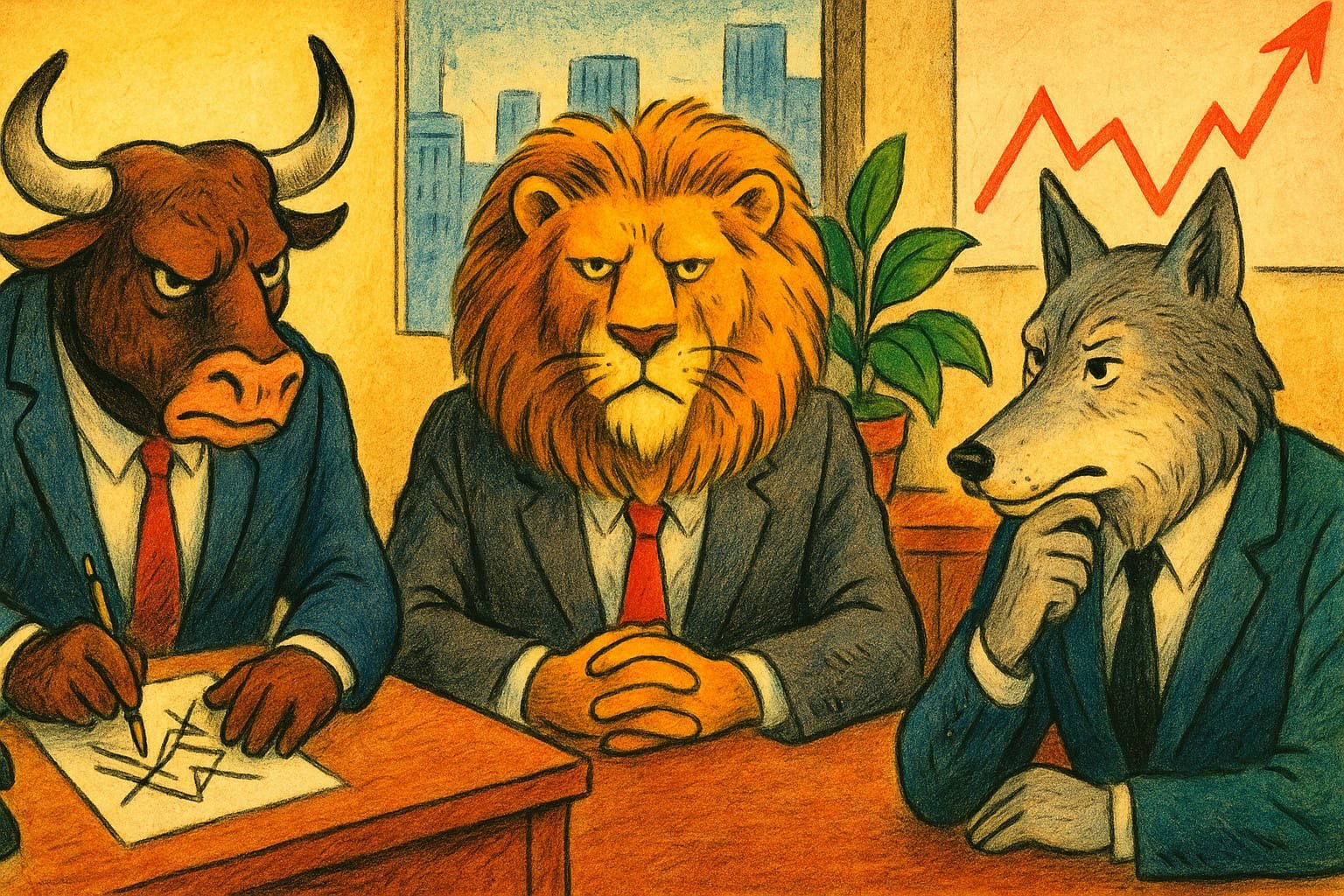
In every boardroom and startup garage, there’s an invisible jungle at play. While metrics and KPIs dominate the walls, what truly drives business is instinct, character, and the wild, untamed force of personality. Beneath every quarterly report lurks something deeper: a leadership animal guiding every decision, every pivot, every late-night email. You may not growl or pounce, but the way you lead, compete, protect, or strategize mirrors something primal. And once you recognize your inner beast, you don’t just lead better; you unlock a kind of intuitive intelligence that algorithms can’t touch.
This isn’t about comparing CEOs to cartoon lions. It’s about decoding the behavioral truths we carry into our businesses without even realizing it. Do you lead with quiet precision or charismatic domination? Are you a lone wolf, a nurturing elephant, or a hawk scanning the horizon? Your leadership animal isn’t just a metaphor; it’s a strategic edge. Understanding it might be the difference between building a team that merely functions and one that thrives. Welcome to the ultimate personality audit. Let’s find your beast.
The Lion Type: Commanders of the Corporate Savannah
Lions don’t ask for the spotlight; they claim it. These leaders are vision-setters, power movers, and culturally magnetic forces within any organization. Their strength lies in rallying people under a clear banner, often infusing teams with a shared sense of mission that transcends deadlines. They aren’t always the loudest in the room, but when they speak, the room recalibrates. Employees align, competitors hesitate, and investors lean in.
But lion leaders have a cost: they must constantly balance ego with empathy. In their pursuit of dominance and success, there’s a risk of steamrolling quieter voices. That’s where the real maturity of the lion shows; when they learn to pause, to listen, to protect their pride rather than just lead it. Sheryl Sandberg showed this in how she amplified others while holding her own power at Facebook. That’s lion leadership at its most graceful.
In chaotic environments, lions are anchors. They provide clarity through charisma, stability through structure. But they’re also not invincible. Their downfall often stems from an inability to adapt or a failure to recognize dissent before it becomes a crisis. The best lion leaders invest deeply in trust, not just direction.
Case in point: Steve Jobs. Revered and feared, he turned Apple into a kingdom. But even Jobs evolved. His second tenure was marked by more collaboration, a sign that the lion had matured into a leader, not just a ruler.
If you find yourself setting the tone, dominating market narratives, and inspiring loyalty that feels almost mythic; you may just be the lion. Own it. But lead with humility.
The Wolf Type: Pack Builders with Ruthless Loyalty
Wolf-type leaders don’t want followers; they want a pack. They’re master collaborators, adept at building tight-knit teams that operate with shared values and fierce internal loyalty. Trust is their currency, and betrayal is the ultimate sin. These leaders often emerge in startups, nonprofits, and challenger brands, where the team’s chemistry outweighs hierarchy. When a wolf leads, everyone moves as one.
Unlike lions, wolves don’t need to be the loudest. They lead through earned respect, consistent behavior, and a genuine concern for their people. Think Howard Schultz at Starbucks, whose leadership was shaped not just by vision but by an obsessive focus on employee wellbeing and team culture. He built a tribe that believed in more than just selling coffee.
Wolf leaders are adaptable and resilient. They’re excellent at navigating ambiguity, relying on intuition and real-time feedback loops from their pack. They’re not afraid to pivot or admit mistakes, making them unusually trusted during crises. But their strength can also become a weakness if they fear outside input or grow too insular.
Case Study: Patagonia’s former CEO, Rose Marcario, led with community-first instincts, fostering both internal sustainability and external brand activism. Her wolf-like approach helped transform the company into a values-driven powerhouse.
If your strength lies in deep relationships, creating safe but ambitious workspaces, and moving together rather than above; you’re likely a wolf. Build your pack. But keep your mind open to the world beyond the den.
The Owl Type: Strategic Introverts with Night Vision
Owls aren’t flashy. They watch, listen, and learn before making a move. Owl leaders are masters of timing and observation, often spotting market shifts, organizational inefficiencies, and cultural risks long before others. They work quietly but profoundly, and while they may not dominate headlines, their fingerprints are on every strategic success. Their superpower? Pattern recognition.
This type thrives in roles that require long-term vision: product development, strategic advisory, R&D, or transformation leadership. Owls often appear during times of transition; they don’t chase change; they guide it. Satya Nadella transformed Microsoft by quietly reshaping its culture and product focus. His leadership wasn’t a roar; it was a revelation.
The challenge for owl leaders is visibility. In a world that rewards showmanship, their contemplative style can be mistaken for detachment. But when backed by results, their wisdom becomes indispensable. Great owl leaders make strategic allies and prophetic advisors.
Case Study: Angela Merkel led Germany with calm, calculated decisions, steering through global crises with restraint and intellect. Her owl-like approach built stability in turbulence.
If you often hold back to assess before acting, if your power lies in asking the right questions rather than always having the answers, your leadership animal may very well have feathers and night vision.
The Dolphin Type: Empathetic Innovators Who Thrive in Flow
Dolphin leaders blend emotional intelligence with high adaptability. They navigate turbulent waters with grace, balancing play and productivity in ways that build high-performing, joyful cultures. They’re often the connectors in the room, sensing team dynamics and steering communication to calmer waters. Innovation comes naturally to them; not through force, but through flow.
These leaders thrive in creative industries, cross-functional teams, and transformation roles where agility and empathy drive success. They believe culture eats strategy for breakfast, and they prove it by creating environments where people feel seen, safe, and stretched. Think Arianna Huffington; her leadership journey across media and wellbeing reflects a dolphin’s blend of emotional depth and visionary energy.
Dolphin leaders are skilled communicators, able to soften hard truths and rally diverse groups around shared ideas. But their empathy can become a trap if they avoid conflict or prioritize harmony over hard decisions. Emotional labor must be managed like any other resource.
Case Study: Ed Catmull of Pixar built a culture of creative candor where feedback and friendship could coexist. His leadership philosophy, rooted in curiosity and care, let magic flourish.
If your best work happens when you’re connecting ideas, people, and purpose with joy and grace, then your leadership animal might just have fins and a smile.
The Elephant Type: Legacy Builders with Unshakable Presence
Elephant leaders don’t just run companies; they carry them. They possess deep institutional wisdom, long memory, and a commitment to intergenerational impact. These leaders often act as the conscience of an organization, prioritizing sustainability, ethics, and stewardship. They move slowly but decisively, and when they speak, it’s usually to say something that matters.
This type of leadership flourishes in mission-driven organizations, family businesses, and large-scale governance roles. They often become cultural icons within companies, not for flamboyance but for their steady, principled presence. Warren Buffett is the quintessential elephant; slow, thoughtful, deliberate, and trusted through storms.
The greatest strength of an elephant is patience. They don’t need immediate applause. Their eyes are on legacy, not the next quarter. But this long-view mindset can also make them resistant to risk or reluctant to change. The key is balancing wisdom with the courage to evolve.
Case Study: Paul Polman at Unilever pioneered a vision of business that worked for people and the planet, not just shareholders. His elephant-like commitment to legacy reshaped the industry’s moral compass.
If your leadership instinct leans toward care, continuity, and conscience; if your name evokes trust more than disruption you’re likely leading with tusks and heart.
The Power of Leading from Your Nature
No animal leads the jungle alone. Each brings a unique rhythm, strategy, and wisdom that contributes to the ecosystem. The same goes for business. We don’t need more generic leaders. We need authentic ones who understand their instincts and wield them with purpose. When you lead from your nature, your leadership stops being a performance and starts being powerfully human.
Don’t try to become someone else’s spirit animal. That’s how burnout begins. Instead, dig into your own wild logic. Learn it. Use it. Lead with it. Because your team doesn’t need a perfect boss. They need a real one.
So ask yourself: Are you building a business that follows the herd or are you ready to roar, run, soar, or swim your way into something far more meaningful?
