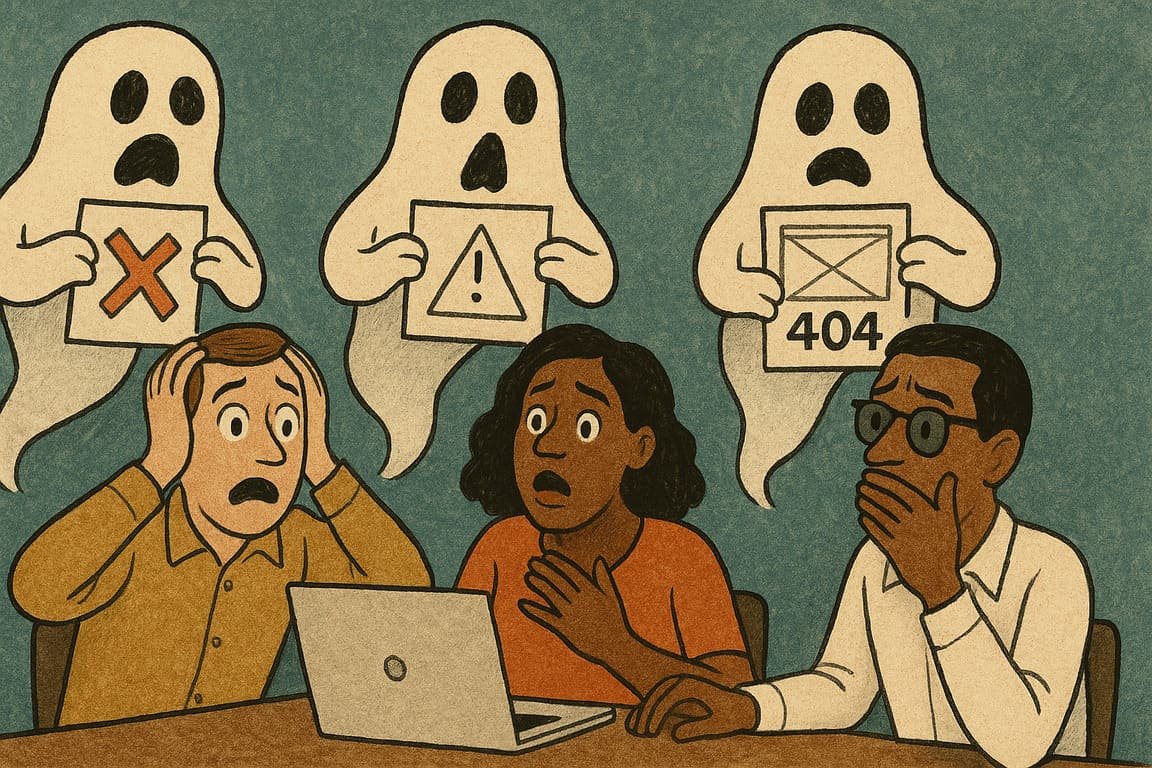
A cavernous office sits in the chill glow of early morning, empty but for a blinking server rack and a single forgotten coffee mug. It is here that the echoes of UX disasters linger, long after launch parties fade and KPIs fall silent. The worst mistakes do not roar; they creep, multiplying in silence, quietly siphoning away loyalty, revenue, and trust. By the time most teams notice, the damage is written into the code, the culture, and the bottom line. In the haunting aftermath, every decision—rushed, overlooked, or shrugged off—returns for its reckoning.
Ask anyone who has weathered a real UX crisis: the warning signs are rarely obvious. Sometimes a critical payment page crumbles under pressure, freezing customers mid-purchase, like a supermarket locked just before dinner rush. At other times, a dazzling homepage drives new users away with too many choices, overwhelming rather than guiding. There is nothing dramatic in the moment—just a click, a sigh, a closed tab. But over weeks and months, these tiny misfires snowball into a full-blown disaster.
You know this pain if you have watched good intentions go sideways. A bank’s attempt to streamline login—removing a “forgot password” link—triggers a flood of calls from locked-out customers, jamming support lines for weeks. An e-commerce brand swaps familiar icons for trendy new glyphs, only to realize shoppers cannot find the checkout button. UX disasters often come dressed as clever ideas, celebrated in a kickoff meeting and cursed in the feedback forms that follow.
It is tempting to think such failures are rare, reserved for careless teams or inexperienced startups. But the opposite is true: the bigger the brand, the more subtle the risk. Large organizations patch over problems with glossy redesigns, not realizing the old pain points just move to a new corner. A global streaming service, racing to release a “smart recommendations” update, accidentally hides entire genres, leaving angry users convinced their favorites are gone forever. Public apology follows, but the damage is done.
You see the aftermath everywhere—online forums filled with angry rants, social feeds boiling with sarcasm, user reviews reading like ghost stories. “This app used to work, but now I can’t…” “The update ruined everything.” In each, a real person relives the frustration that sent them searching for something better. The most expensive UX mistakes are not those that crash systems, but those that quietly nudge users away until nobody remembers why they left.
Disasters haunt from within as well. Demoralized teams second-guess every move, wasting hours chasing the wrong problems. Engineers and designers who once collaborated now argue over blame. Creativity withers under fear of making it worse. One team leader at a major travel site described the aftermath: “Every meeting started with a postmortem. We stopped talking about new ideas and only talked about what we were afraid would fail.”
These stories repeat because their root causes rarely change. Teams skip user research to hit a deadline. A loud executive insists on a pet feature. Feedback from edge cases is ignored, only for those cases to become the norm. The culture rewards speed, but punishes those who ask hard questions. UX disasters are not accidents; they are built, one overlooked detail at a time.
Yet the most haunting aspect is how easily disaster becomes normal. Metrics may dip, but the real loss is invisible: the loyal customer who never returns, the employee who checks out emotionally, the competitor who quietly eats your lunch. In the dark, silence multiplies. Recovery takes more than a patch—it takes a reckoning, a willingness to face the truth and own the cost.
But every haunted product offers a chance at redemption. One fintech company clawed back from disaster after users revolted over a confusing fee structure, rebuilding trust by holding live Q&A sessions and letting customers shape the redesign. The story spread, and what started as a blunder became a brand-defining turnaround. The path out of disaster demands humility, open ears, and relentless transparency.
Real resilience means expecting to be wrong, learning from every slip, and acting before the next ghost appears. Teams that survive learn to track the small signals, invite brutal honesty, and see every failure as an early warning, not a shameful secret. The difference between a product that haunts and one that heals is how bravely it faces its past.
A chill settles in the empty office as monitors go dark and memories linger—pop-ups that never closed, navigation traps, words misunderstood. Even as the night deepens, a faint pulse of possibility flickers in the silence. Not all disasters end in loss. For those willing to look unflinchingly at what went wrong, to ask and to listen, there is always a way forward.
The lesson left behind by every haunted project: Will you let yesterday’s blunders multiply in silence, or will you break the cycle, turning today’s mistakes into tomorrow’s breakthroughs?
