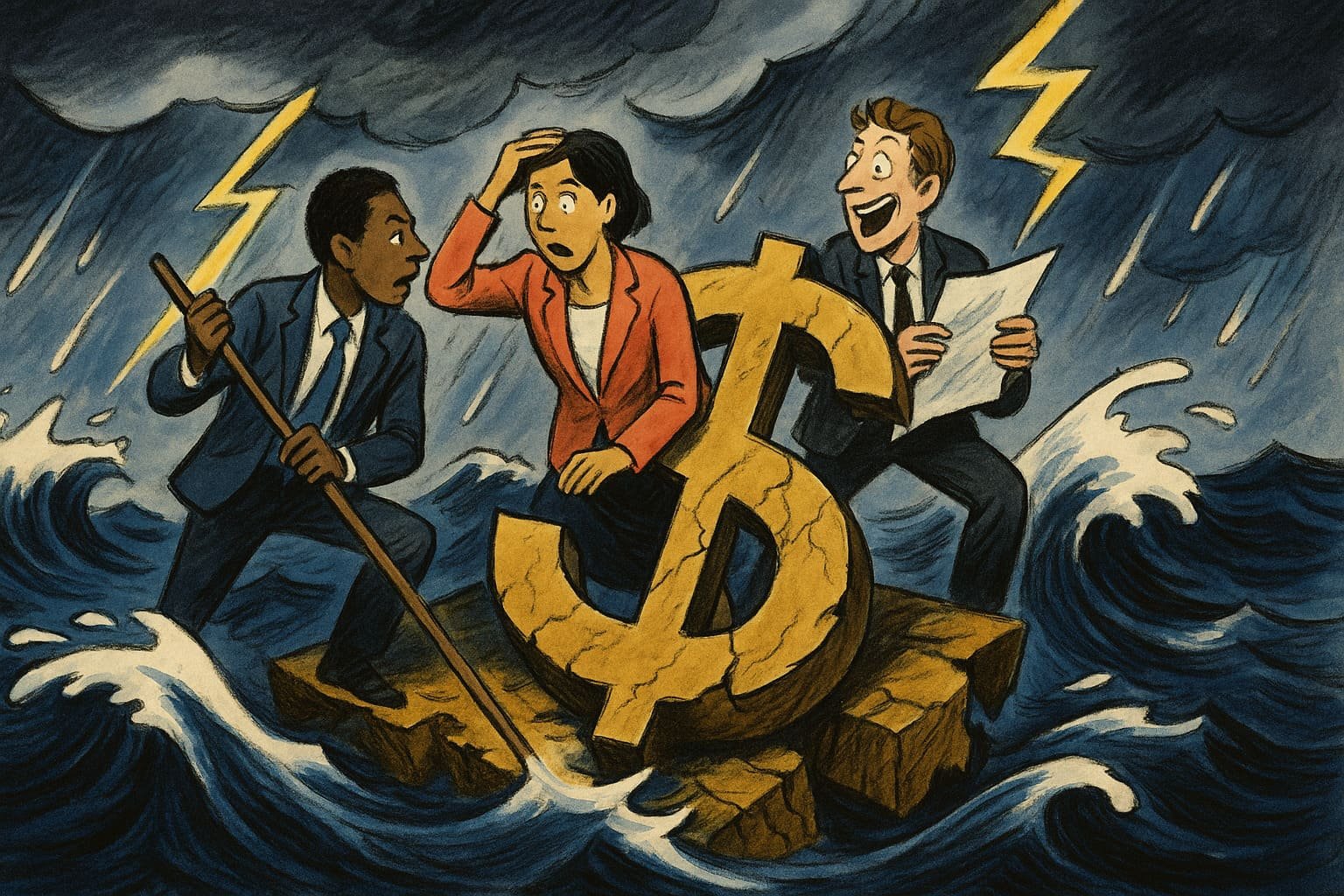
Economic chaos doesn’t knock. It kicks down the door and drags everyone into its whirlwind. Stock markets spiral. Prices yo-yo. Boardrooms erupt in panic. All the old “safe bets” suddenly feel like Russian roulette. Yet somewhere, behind closed doors, a handful of leaders sleep soundly, clutching the one tool that turns crisis into conquest: research. When storms rage, data is the compass, curiosity is the engine, and truth is the secret code that cracks open new fortunes.
Forget the tired mantras of “weathering the storm.” This isn’t about survival. This is about thriving when everyone else freezes. The world’s most resilient organizations and boldest thinkers have a wild card up their sleeve. They outthink, outlearn, and outmaneuver rivals by making research their guiding light. From pandemic shocks to supply chain breakdowns, history’s winners didn’t guess; they investigated, experimented, and adapted with surgical precision.
This is your wake-up call. Whether you’re a founder, policymaker, or just someone who refuses to be a victim, the time to unleash research secrets is now. We’ll decode the playbook used by legends to turn turmoil into triumph. Expect insider stories, practical hacks, and the most controversial take you’ll read all year: chaos is the ultimate opportunity; if you know how to read its signals.
Quick Notes
- Research is Your Lifeboat: The difference between sinking and soaring in economic chaos? Organizations that prioritize data and insight adapt faster, smarter, and more profitably.
- Curiosity Unleashes Opportunity: Every crisis hides new markets and revenue streams. Relentless research uncovers hidden needs, reveals emerging trends, and paves the way for reinvention.
- Failure Is a Goldmine: The greatest lessons and pivot points come from analyzing what went wrong; brands that dissect their losses turn breakdowns into breakthroughs.
- People Power Research: True resilience isn’t about tech stacks; it’s about teams wired to question, challenge, and learn. Cultures built on inquiry outperform, outlast, and outsmart the rest.
- Action Beats Anxiety: In chaos, waiting is deadly. Research-driven decisions; quick, flexible, and fearless, transform risk into rocket fuel.
The Chaos Decoder: Why Research Is the Only Safe Haven in a Storm
When panic sweeps through the markets, most people chase headlines, looking for lifelines in a sea of noise. A rare few switch off the news, sharpen their pencils, and start asking the right questions. Research, not luck, shields the best from ruin. During the financial crisis, Toyota outperformed competitors by launching “kaizen” research sprints; mapping vulnerabilities, gathering customer fears, and innovating in real time. Instead of slashing budgets blindly, they doubled down on understanding, cementing their place atop the industry.
Case in point: during the COVID-19 pandemic, companies like Zoom and Shopify rocketed ahead while rivals stumbled. Their secret wasn’t superhuman foresight; it was listening, tracking, and pivoting relentlessly. Shopify’s CEO, Tobi Lütke, led daily data huddles to parse new user behaviors, instantly updating offerings. Every tweak traced back to research: what new needs were bubbling up? Where did old models fail? In the chaos, curiosity was king.
History rewards the brave and the curious. In the depths of the Great Depression, Procter & Gamble invested in consumer research instead of cutting back. By listening to struggling families, they invented radio soap operas becoming household staples and laying the groundwork for modern content marketing. While others folded, P&G grew into a juggernaut.
Economic chaos exposes the cracks in every business model. But for those who make research their north star, cracks become launching pads. Instead of dreading downturns, they welcome them as the ultimate test; an invitation to get smarter, faster, and more relevant than ever before.
If you’re scanning the horizon for safety, stop. Start digging for answers. Safety is built, not found.
Opportunity Hunters: How Curiosity Turns Crisis Into Growth
When everything familiar falls apart, new possibilities sprout in the rubble. Only those obsessed with research spot these shoots before they bloom. Netflix’s legendary pivot from DVDs to streaming wasn’t born from panic, but relentless curiosity about shifting consumer habits. As old models crumbled, Netflix turned chaos into a playground for experimentation, using research to ride a trend before it became obvious.
Uber’s rise in the wake of the 2008 recession was no accident. Founders Travis Kalanick and Garrett Camp mapped the pain points of frustrated commuters, struggling cab drivers, and tech-savvy millennials. Their research revealed a simple truth: people wanted frictionless rides, fast payments, and digital control. In a collapsing economy, Uber grew explosively by meeting new needs nobody else saw coming.
Economic chaos is a masterclass in unmet needs. Airbnb’s origin story began when founders Brian Chesky and Joe Gebbia realized that travelers, battered by recession, were searching for cheap, flexible lodging. Their “research” started with air mattresses and breakfast for strangers. That experiment uncovered a global hunger for trust-based hospitality and a multi-billion-dollar revolution was born.
The lesson is radical: every economic crisis hides a new customer, a new pain, or a new market. The curious dig, survey, test, and iterate, while the fearful freeze or follow. Curiosity isn’t just a trait; it’s a strategy.
The only guarantee in chaos is that yesterday’s playbook won’t work. Winners write new rules by asking better questions.
Gold in the Wreckage: Transforming Failure Into Future-Proof Strategies
Fear of failure paralyzes most leaders, yet the boldest see disaster as a goldmine. Research isn’t just about collecting victories; it’s about analyzing losses until they reveal their secrets. Blockbuster’s refusal to study Netflix’s model wasn’t a business blunder. It was a research failure, a blindness to what wasn’t working and why.
Starbucks nearly lost its soul in a rush for global expansion. When profits tanked and critics jeered, CEO Howard Schultz halted growth, sending teams to interview staff, customers, and partners. Their deep-dive research unearthed what customers valued: community, experience, and authenticity. The result? A powerful comeback, built on lessons learned in crisis.
Walt Disney’s first theme park launch flopped in Europe. Instead of covering up the debacle, Disney’s leadership treated it as a research lab. They surveyed guests, ran experiments, and tweaked every detail; from menu options to park hours. The humility to learn from failure, not just success, transformed Disneyland Paris into a thriving success.
Lululemon’s infamous recall of see-through yoga pants could have ended the brand. But deep-dive postmortems; interviews, supply chain audits, and quality checks turned disaster into a blueprint for better products and a more transparent brand.
The biggest wins often lurk in the aftermath of collapse. Only the research-obsessed take the time to unearth them. Failure isn’t fatal. Ignorance is.
The Power of People: Building Research-Obsessed Teams That Outlast Any Crisis
No algorithm can match the creative genius of a team trained to ask better questions. During economic freefalls, cultures that nurture curiosity, candor, and learning pull ahead of the pack. Google’s legendary “20% time” wasn’t just a perk; it was a research engine. Employees chased wild ideas, ran micro-experiments, and invented billion-dollar products while rivals played it safe.
The most innovative organizations democratize research. At Pixar, animators, writers, and even interns share observations, collect feedback, and refine ideas together. When Toy Story 2 almost tanked, a studio-wide “research rescue”; postmortems, candid debates, and late-night storyboards, saved the movie and set a new creative standard.
Amazon’s leadership principles don’t just pay lip service to research; they operationalize it. “Customer Obsession” and “Dive Deep” empower everyone to hunt for insights, not just analysts. During the 2020 chaos, Amazon’s rapid adaptation; one-day shipping, remote work tools, supply chain pivots, traced back to armies of employees feeding real-time research into decision-making.
High-trust cultures make failure safe and inquiry sacred. When people feel free to question, challenge, and experiment, every economic crisis becomes a breeding ground for innovation.
Resilient companies aren’t built on “yes men.” They’re built on rebels, questioners, and nerds with notebooks.
Move or Die: Why Speed and Action Turn Research Into Rocket Fuel
Speed separates winners from has-beens when markets melt. Research isn’t just about gathering data; it’s about acting on it fast. During the supply chain meltdown, Unilever surged ahead by launching “war rooms,” feeding frontline observations into rapid-fire pilots. They shifted resources, launched new packaging, and slashed bureaucracy all because they trusted their research and acted without hesitation.
Twitter’s rise from a side project at Odeo wasn’t slow or cautious. User research showed surprising engagement with status updates. Instead of endless debate, the founders pivoted in days, capturing a new social media wave while others argued in boardrooms.
The “fail fast” mantra isn’t about celebrating mistakes. It’s about closing the loop between research and action. Netflix’s “test and learn” culture means shows are greenlit, retooled, or canceled in record time, based on real viewer behavior not executive whim.
Toyota’s famous “Andon Cord” lets any employee stop the line and trigger instant research into a problem. By acting on insights in real time, Toyota avoids catastrophic recalls and outpaces rivals in reliability.
Speed wins in chaos. Research withers on the vine if it doesn’t fuel decisive moves. The market doesn’t care about your slides. It rewards your ability to move.
The New Map for a Wild World: Will You Read It or Rip It Up?
Economic chaos isn’t a test of strength; it’s a test of vision. Most freeze, clutching old maps, hoping the storms will pass. A rare few sharpen their questions, light up the dark with curiosity, and surf the chaos to new heights. These are the architects of tomorrow; armed with the research secrets that turn collapse into creation.
Every turning point in history, from Amazon’s rise to the rebirth of Starbucks, started with a single act: asking the next question. The difference between panic and power, between irrelevance and reinvention, is the courage to seek, study, and adapt in real time.
If you’re ready to ditch the fear, reject stale strategies, and build a future that laughs in the face of crisis, there’s only one way forward: unleash your inner researcher. Make curiosity your north star. Make action your trademark. The chaos is coming; will you wait for rescue, or write your own rescue plan?
The next economic storm is not your enemy. It’s your proving ground. Will you seize its secrets or let them slip away? The choice and the future belongs to the bold.
