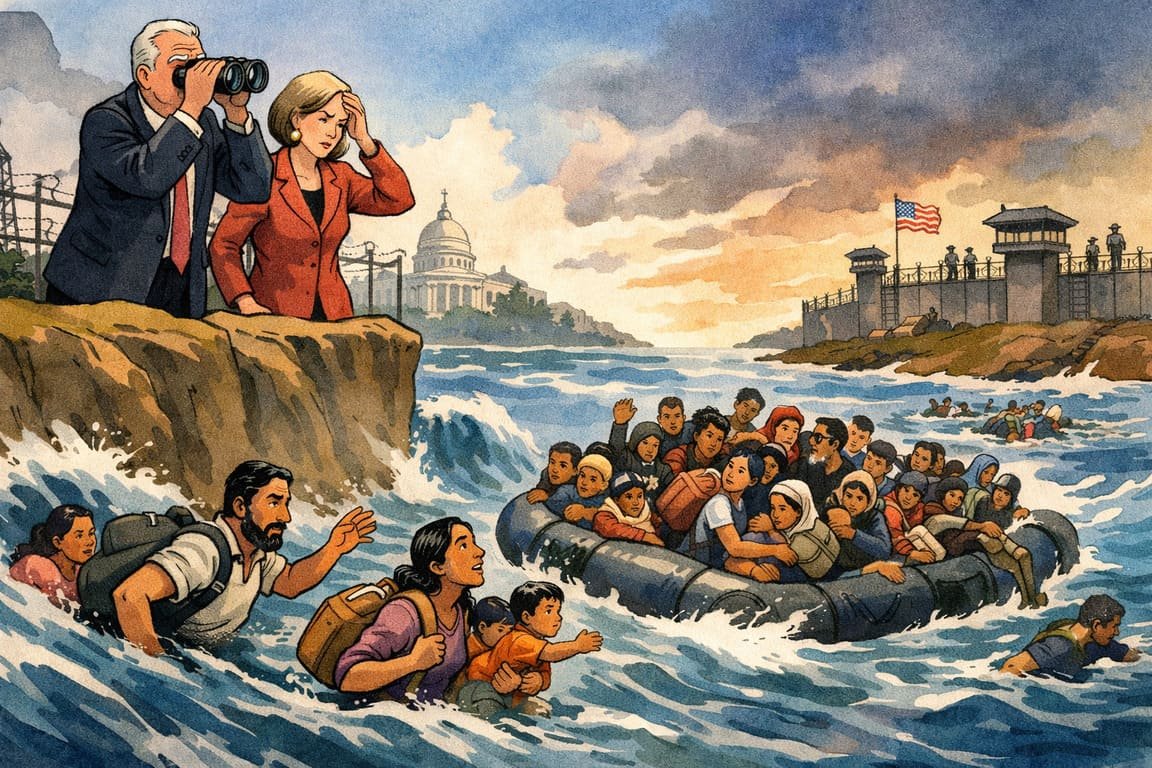
The terminal fills before dawn, not with shouting, but with the sound of waiting. Papers shuffle. Screens refresh. Officials exchange looks that reveal calculation rather than welcome. Outside, cameras angle themselves toward the most dramatic frame they can find. The refugees arrive tired and quiet, yet the real turbulence erupts elsewhere, inside political systems that react before they understand. Panic moves faster than people, and it rarely asks permission.
Nations insist they are prepared. They have agencies, protocols, contingency plans, and carefully worded statements ready to deploy. Refugee arrivals test all of it at once. Housing tightens. Schools stretch. Clinics feel pressure. Leaders sense vulnerability, not just in infrastructure, but in public mood. Instead of governing steadily, many slip into performance. Crisis becomes spectacle, and fear writes the talking points.
Public anxiety does not appear spontaneously. It is shaped. Amplified. Fed by selective images and compressed narratives. Headlines favor urgency over accuracy. Social feeds reward outrage. Political opponents smell opportunity. Refugees become symbols rather than people, framed as disruption instead of consequence. Once fear takes the microphone, nuance is drowned out quickly.
History repeats this pattern with unsettling reliability. Large movements of people have always challenged settled societies. What feels new is velocity. Information now travels instantly, often stripped of context. A rumor reaches millions before a policy explanation reaches a room. Governments chase sentiment instead of shaping it, reacting to emotional spikes rather than structural realities.
A fictional interior minister once admitted the truth behind closed doors. Capacity existed. Budgets allowed adjustment. Local governments were ready to coordinate. What failed was courage. Polling showed fear. Elections loomed. The choice narrowed to leadership or survival. Panic won, and temporary measures hardened into permanent scars.
Language plays a quiet but decisive role. Refugees become waves, floods, surges. Metaphors erase faces. Once people are described like natural disasters, containment feels reasonable. Compassion feels naive. Policy follows language more closely than data. This shift happens subtly, then suddenly feels irreversible.
Economics rarely supports the panic narrative. Over time, refugees often contribute more than they consume. They open businesses. They fill labor gaps. They stabilize aging populations. Panic ignores trajectory and obsesses over immediacy. Political cycles reward short term reassurance. Societal health depends on patience. The mismatch breeds decisions that feel protective but prove costly.
Institutions struggle most when communication collapses. Silence invites speculation. Vague assurances invite distrust. Clear explanation calms fear even when challenges are real. Panic thrives in uncertainty. Competence starves it. Leaders who speak plainly reduce tension without pretending complexity does not exist.
There are counterexamples that rarely dominate news cycles. Some cities respond with coordination instead of chaos. Community leaders are consulted early. Resources are distributed transparently. Residents see planning in action rather than rumors online. Tension eases when people feel included rather than ambushed. Panic recedes when competence is visible.
Philosophically, refugee panic exposes deeper insecurities. It reveals anxiety about identity, cohesion, and control. Nations built on ideals struggle when those ideals are tested by reality. Hospitality clashes with scarcity narratives. Human rights collide with political survival. Moments like these reveal values more honestly than campaign slogans ever could.
Media responsibility matters more than it admits. Sensational framing accelerates fear. Context slows it. When coverage humanizes stories instead of abstracting them, panic loses oxygen. Fear feeds on distance. Understanding shrinks it. The difference is editorial choice, not inevitability.
Solutions exist, but they require steadiness. Regional cooperation spreads responsibility. Legal pathways reduce chaos. Long term integration planning transforms arrivals into assets. None of this works under panic. Fear short circuits planning. It trades resilience for reaction.
Late at night, after cameras pack up and statements fade, decisions remain on desks. The numbers have not changed. The people have not vanished. Only the noise has quieted enough for reality to speak again. Displacement driven by conflict, climate, and collapse will continue. The unresolved question is not whether nations can handle refugees, but whether political systems can resist panic long enough to remember what leadership looks like when fear arrives first.
