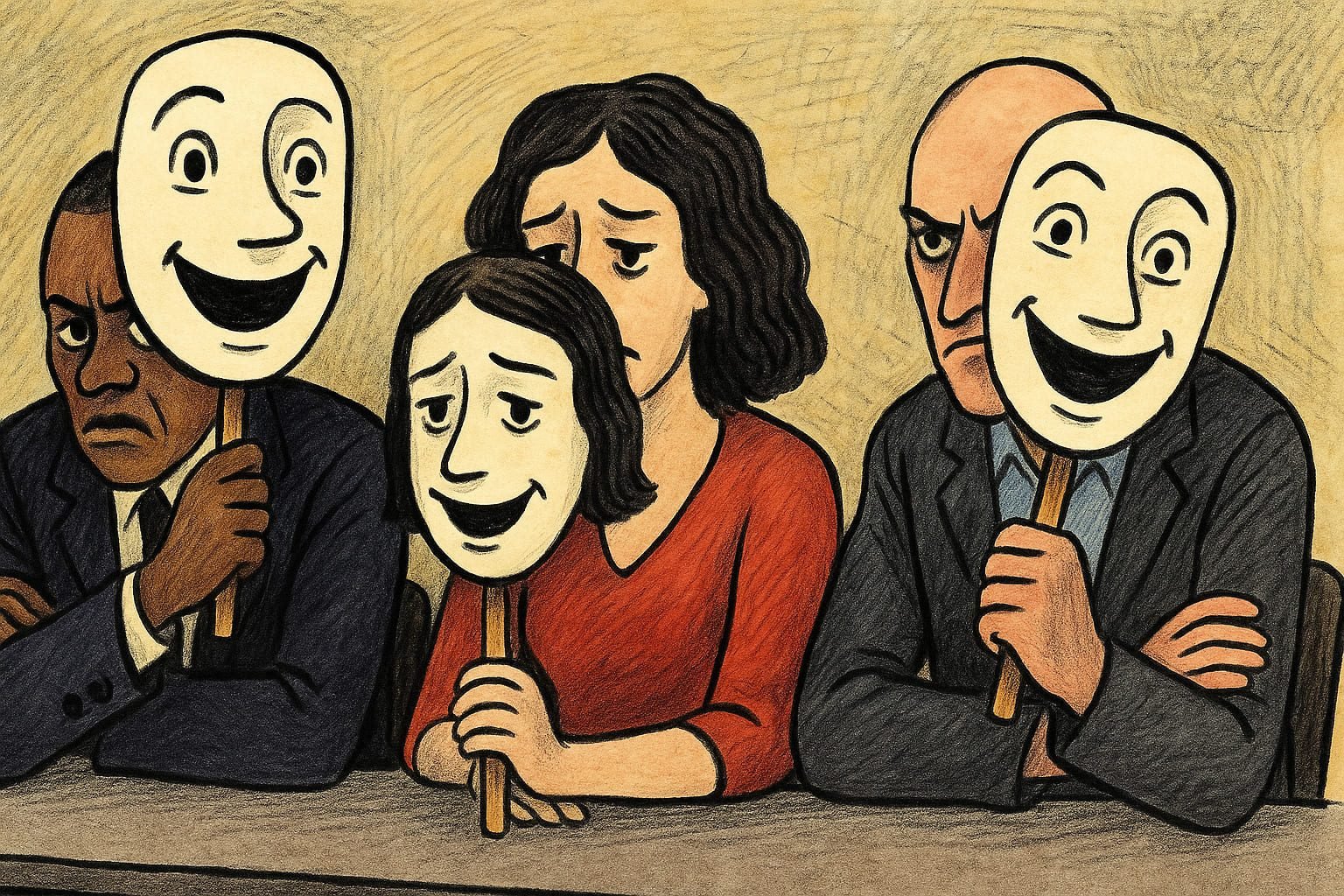
A lone spotlight cuts through the dust swirling in an empty theater. Velvet seats stand silent, haunted by echoes of standing ovations and forgotten applause. On the warped stage, footprints smear across the boards, tracing frantic dances and late-night breakdowns. Somewhere in the wings, an understudy presses a script to trembling ribs, wondering if the world will notice their truth or demand another flawless performance. Every beam of light exposes a new crack in the mask, daring the actor to stand as nothing but themselves.
Inside this theater, boardrooms trade PowerPoint slides for monologues, LinkedIn profiles for soliloquies. The world expects a show; a flawless rendition of ambition, resilience, and charm. Success, in this house, is measured by applause that sometimes roars for the mask and not the person wearing it. Every seat, whether filled by a skeptic or a devotee, wants authenticity until honesty cuts too deep. People are drawn to the hero’s vulnerability, but only if it’s the right kind of broken; scripted, photogenic, easily digested.
The orchestra pit is littered with broken batons and burnt-out stars. CEOs rehearse lines in front of mirrors, trying to perfect a smile that says “unbothered” when their inbox is bleeding. In this world, brands chase “authenticity” with the hunger of a method actor chasing an Oscar, forgetting that true selfhood is more scars than sparkle. Billie Eilish, in an interview, once joked that “authenticity” in music became so trendy that even faking it looked real. The joke lands because the pain is shared: everyone is told to “just be real,” but nobody explains how to survive the fallout when they finally are.
Realness is not a soft virtue here. It’s jagged, raw, and hard to look at in the harsh glare of performance metrics. When a leader fumbles on stage or a founder admits burnout, the collective gasp is almost audible. The show must go on, but the actor’s skin grows thin. Elon Musk tweets through breakdowns, founders live-stream failures, and the crowd goes wild for a minute. The price of honesty in a performance-obsessed world? Fame that flickers like a broken marquee.
Behind the scenes, the crew knows the real cost. Makeup wipes smudge the truth, wardrobe covers bruises, and the director’s voice cracks with exhaustion. At the afterparty, laughter is brittle. The bravest admit, usually in a whisper, that playing themselves is the hardest role of all. Here, the line between authenticity and performance grows razor-thin, and stepping into the light demands a sacrifice nobody warns you about: the luxury of hiding.
Quick Notes
- Curtains Never Drop on Truth: Every arena; corporate, creative or social demands both a mask and a naked soul. If you chase realness, expect the crowd to flinch when you drop the act. Genuine vulnerability scares even those who claim to crave it.
- Authenticity Isn’t a Slogan, It’s a Risk: The cost of being real is measured in lost friends, failed ventures, and viral criticism. Billie Eilish once said faking authenticity is a performance itself. She’s right: people want rawness, but they also want it beautiful, tidy, and not too uncomfortable.
- Success Rewards the Best Impostor: In modern work, the “realest” person is often the one who best performs humility and struggle without actually admitting defeat. CEOs, influencers, and artists all face the paradox “be yourself” but only if it sells.
- Every Mask Eventually Cracks: The relentless pursuit of flawless image leads to breakdowns behind closed doors. The pressure cooks quietly. A viral confession or a candid outburst becomes spectacle, not salvation. Remember, even heroes need an intermission.
- True Performance Means Surviving Exposure: Real growth happens after the applause dies. The world may cheer your vulnerability, but it rarely stays for your recovery. You’re left holding the script, rewriting the next act with fewer illusions and thicker skin.
Unmasking the Arena: Realness vs. The Show
Under the fluorescent buzz of a late-night office, reality feels heavier than any spreadsheet can measure. You sit at your desk, hands cold, mind racing with all the things you want to say but never do. Corporate culture shouts about “transparency,” but real honesty costs more than any broken NDA. One email, one slip, and the carefully curated brand you wear can unravel before you finish your coffee.
You’ve watched coworkers crumble after admitting they’re struggling. HR teams paste “well-being” posters in break rooms while expecting double output from every employee. Authenticity becomes a performance review checkbox: share just enough pain to look human, not enough to scare investors. You feel the contradiction. Maybe you’re praised for your “vulnerability” in a town hall, but the next round of layoffs still arrives without warning.
At Google, the “psychological safety” mantra took over meetings, but even there, a junior engineer who questioned the big vision found herself benched for weeks. Performance reviews are stages, and every “safe space” comes with hidden spotlights. One slip and the spotlight burns, not warms. People talk about bringing their “whole selves” to work, but the parts that don’t fit the brand get edited out in post-production.
The clash between showing up real and playing by the rules is universal. Look at Simone Biles stepping away from Olympic competition, risking public backlash for mental health. The world gasped, demanded answers, and then demanded more medals. “Real” is a risk that pays in applause, but the encore can be ruthless.
Sometimes, authenticity is messy. You remember the marketing manager who cried during a Q2 review, only to have their tears memed in a private Slack channel. Real emotion is contagious, but so is ridicule. The lesson sticks: vulnerability draws both empathy and knives. Authenticity is only safe when it doesn’t threaten the performance everyone else is selling.
The more you try to be real, the more you notice the world rewards those who fake it best. You see the LinkedIn posts about “radical candor,” but know the author edits out every genuine doubt. You wonder if the bravest act is not dropping the mask, but surviving after it falls. True authenticity is brutal: the world wants your story but not your scars.
Stoic Warriors in a Pop-Culture Colosseum
You stare at your reflection on a Zoom call, ring light flickering, as you practice the perfect “thoughtful nod.” Somewhere, Ryan Reynolds drops a sarcastic tweet about anxiety, and a thousand brands copy the vibe by Tuesday. Stoicism gets repackaged as a self-care hashtag, but the real deal feels nothing like the trend. It’s ugly, isolating, and not designed for likes.
You hear stories of founders who never break. The myth: relentless grit leads to unicorn status. The reality: anxiety medicine in the top drawer, broken sleep, and friendships sacrificed at the altar of “hustle.” Real stoicism isn’t a meme, it’s sitting through the awkward silence after confessing you don’t have all the answers. You remember a sales rep named Lila who once closed a major deal and then, shaking, admitted she felt nothing at all. That moment stuck in your head because nobody clapped, and nobody mocked her either. Just quiet.
Society wants a resilient hero. You want to believe it’s possible to stay cool when your world burns down, but the pressure to remain “unbothered” can break even the strongest. You start to realize that the true measure of character isn’t surviving the storm with perfect hair—it’s crawling out, muddy and unfiltered, and not pretending otherwise. The philosopher Seneca said, “We suffer more in imagination than in reality.” Today, it feels like we suffer most in silence, hiding wounds behind perfect social media filters.
Every movie about triumph skips the part where the hero eats cold takeout alone, doubting every move. The only people who see the mess are the ones in the wings, cleaning up the stage. The world only notices the comeback, not the cost. Authenticity in performance means letting people see you lose and refusing to cover it with a joke or a slogan.
You’ve read about “radical acceptance” and tried to practice it in meetings, but every slip feels like career suicide. The irony is brutal: the only way to win the game is to admit you’re tired of playing, but the audience rarely stays for that scene. Stoicism, in real life, is not glamorous. It’s an act of rebellion to say, “This hurts,” and still get up anyway.
You begin to crave spaces where the script ends and the real stories start. A WhatsApp group for burned-out founders, a 2 a.m. text from a friend who doesn’t need you to perform. Those moments are rare, but they save you. Real stoicism is not just surviving; it’s owning the scars and refusing to let them define your story.
Reputation Roulette: The Risk of Playing Yourself
Reputation is the coin of the realm, and every move you make feels like a spin of the wheel. You see it everywhere: the founder who confessed to cheating burnout, the artist who leaked a rough draft, the leader who cried on stage. Sometimes, the gamble pays off, turning raw honesty into legend. Other times, the backlash is swift, merciless, and viral.
You learn quickly that the cost of realness is rarely paid in private. The price tag is printed in retweets, meeting transcripts, and backchannel whispers. You remember a project manager named Kevin, who once confessed to failure in front of his whole team, expecting relief. Instead, his confession got repackaged as a “learning opportunity” by the company, turned into a case study, and discussed in leadership training. Kevin became both a warning and a meme.
Every time you think about opening up, you weigh the odds. Authenticity is a risk with long odds; sometimes you win praise, but often you earn suspicion or, worse, indifference. Netflix’s “Love Is Blind” thrives on the drama of people who show too much, too soon. The spectacle is addictive, but nobody wants to be the punchline.
Being real in public can feel like volunteering for exile. You recall when tennis star Naomi Osaka withdrew from a major tournament for mental health reasons. The headlines celebrated her “courage,” but sponsors and organizers quickly pivoted to safer narratives. The message is clear: realness is marketable only when it’s palatable.
Social platforms amplify every crack in the facade. A single tweet can end a career, but a viral confession can spark a movement. It’s impossible to predict which way the wheel will spin. You watch colleagues curate “relatable” breakdowns online and marvel at how carefully choreographed even the messiest moments have become.
Performance, you realize, is not the opposite of realness; it’s the frame that defines it. The world wants authenticity with a filter, realness with a script, and pain that ends in applause. The bravest act isn’t just being real, but surviving the consequences when the performance ends and the house lights come up.
Brutal Grace: Surviving After the Applause
You sit in the aftermath, your story no longer viral, your vulnerability replaced by tomorrow’s headlines. The crowd has moved on, but you still live with what you revealed. Realness is not a trend that fades; it’s a tattoo that never quite heals. You think of the manager who rebuilt her team after a scandal, slowly regaining trust, one conversation at a time. No audience watched that comeback, but it mattered more than any TED Talk.
You notice the quiet bravery in people who own their story, scars and all. A customer service rep named Sasha, once publicly shamed for a mistake, now mentors new hires on handling criticism. She jokes about her “15 minutes of infamy,” but her wisdom comes from the pain, not the performance. Every real comeback is stitched together in silence, away from the crowd’s gaze.
Surviving after the curtain falls takes a new kind of courage. It means refusing to let your worst day become your only story. You learn to care less about who’s watching and more about who’s still beside you when the lights are out. Real strength is found in the messy middle; the part nobody wants to film.
You remember the founder who lost everything but still invited the team for coffee the next week, laughter cutting through the awkwardness. That’s the brutal grace of being real: learning to live, and even laugh, after losing the spotlight. The pain doesn’t disappear, but it loses its power to define you.
In the end, being real means accepting you’ll never fully control your story. You can only choose to tell the truth, live with the consequences, and keep moving. The applause fades, but the person left standing is more whole than any mask ever made them feel.
No Applause Left: The Haunting Afterglow of Authenticity
Smoke curls through the empty theater, pooling where the actor once took a bow. The velvet seats, now bare, hold only the ghost of applause. In the silence, truth lingers, thick as midnight rain. Somewhere backstage, a script lies open, pages stained with coffee and regret. The final performance is over, but the echoes keep whispering: Realness is not a show; it’s the battle scars you keep, and the voice you reclaim in the quiet.
Outside, the city glimmers, indifferent and alive. Neon flickers across a cracked sidewalk as a lone figure steps out, shoes scuffed, heart still pounding. The stage is gone, but the world is watching, even if it pretends not to care. The mask lies forgotten in the dressing room, replaced by the slow, steady breath of someone who dared to be seen.
This is the secret the spotlight never tells: True performance begins when the curtain falls. The only audience that matters is the one who stays to help you sweep the stage. Out there, in the hush after applause, your real story starts.
So ask yourself: When the lights go out, will you be proud of the scars you showed, or haunted by the truths you hid?
Partnered. Provocative. Worth Your Scroll.
This is a Promoted Post by ESYRITE—yes, it’s paid, but never filtered. Our voice stays raw, real, and razor-sharp. We team up with bold ideas, game-changers, and stories that spark something real. If it’s here, it earned its place—no fluff, just impact. We don’t just promote—we provoke. Stay sharp. Dive deeper.
