The amusement park had closed years ago, yet its lights still flickered at night, illuminating rusted rides that once promised joy. People walked past without noticing, too busy checking phones that offered instant distractions but no lasting relief. From a distance, everything looked functional, even vibrant. Up close, the silence felt heavier. The machines still worked, but the magic had left. Modern life often feels like that abandoned park, full of motion without meaning.
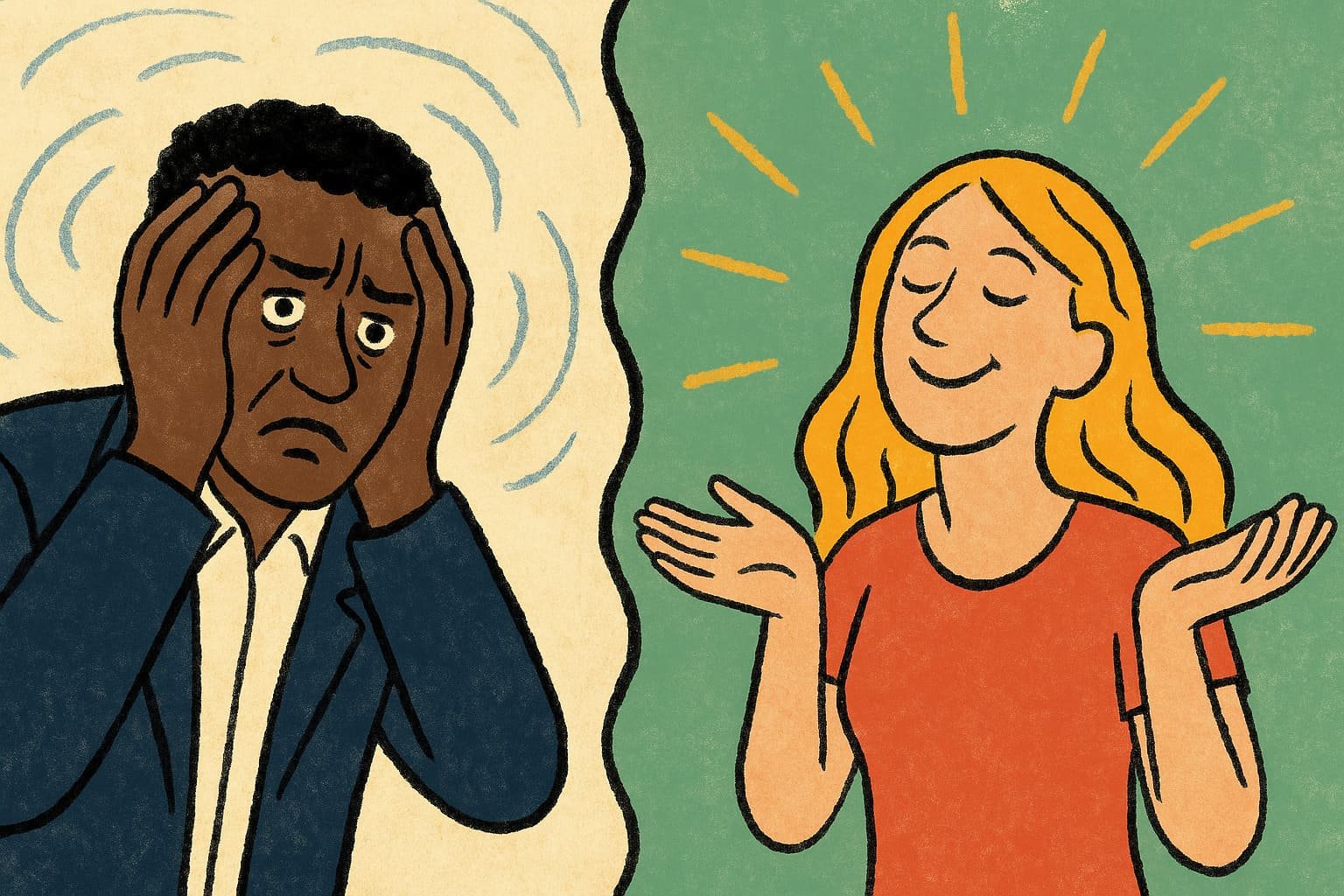
Many people quietly carry the thought that something is wrong with them for feeling unhappy. Society sells a glossy version of fulfillment, complete with curated lifestyles, motivational slogans, and endless self-improvement hacks. When reality does not match the image, shame creeps in. The problem is rarely personal failure. It is the gap between what people are taught to want and what they actually need. Bliss becomes a performance instead of a state.
You can see this pattern in how happiness is discussed. It is framed as a destination, a reward for achievement, a mood that should appear once the right boxes are checked. Career success, relationships, health, financial stability. Each milestone promises satisfaction, yet the feeling often fades faster than expected. The mind adapts quickly. Desire resets. The chase resumes. The cycle feels productive but quietly exhausting.
A social worker named Amara once described her breaking point as invisible. From the outside, her life looked stable and respectable. Inside, she felt numb. Days blurred together. Nothing was wrong, yet nothing felt right. Her therapist asked a simple question. When was the last time something felt genuinely alive? She could not remember. That absence became more alarming than any visible problem.
Philosophically, the idea of personal bliss has been distorted by consumer culture. Happiness is marketed as something to be purchased, upgraded, or displayed. Experiences replace reflection. Pleasure replaces purpose. The self becomes a project optimized for aesthetics rather than authenticity. This framework makes dissatisfaction inevitable. No product can resolve existential tension. No routine can erase the need for meaning.
Stoic thinkers argued that contentment emerges from alignment, not accumulation. They believed suffering often comes from wanting life to match internal fantasies rather than accepting its actual shape. This does not mean passive resignation. It means choosing values over impulses. The mind becomes calmer when expectations shrink. Bliss stops being a dramatic emotion and becomes a quiet stability.
A financial consultant named Jorge once admitted that his happiest year was the one he earned the least. He had left a high-paying firm to care for his aging father. The stress was real, but so was the clarity. Time slowed. Conversations deepened. The absence of constant ambition created space for presence. When he returned to corporate life, he noticed how hollow it felt. The money came back. The peace did not.
Culture encourages people to fix feelings instead of understanding them. Sadness is treated as malfunction. Anxiety is treated as disorder. Discomfort becomes something to eliminate rather than interpret. Yet emotions often carry information. Boredom can signal misalignment. Frustration can reveal unmet needs. Ignoring those signals delays growth. Bliss is not about feeling good all the time. It is about listening honestly.
Political systems also shape emotional landscapes. Economic pressure forces people into survival mode, leaving little energy for reflection. When basic needs feel unstable, long-term fulfillment becomes a luxury. People blame themselves for burnout that originates in structural stress. The personal becomes political, even when it is framed as private struggle.
There is also a cultural fear of stillness. Silence feels awkward. Idleness feels irresponsible. Yet many breakthroughs arrive during moments of pause. The brain needs rest to process complexity. Constant stimulation prevents emotional digestion. Bliss requires room to breathe. Without space, even pleasure becomes noise.
A writer named Celeste once described her ritual of weekly solitude. No devices, no schedules, no obligations. At first, the quiet felt unbearable. Thoughts surfaced that she had avoided for years. Over time, clarity emerged. She realized her dissatisfaction was not mysterious. She had built a life that looked impressive but ignored her temperament. Adjusting that reality required fewer goals and more boundaries.
Personal bliss rarely arrives through dramatic transformation. It grows from small, honest shifts. Saying no more often. Choosing depth over volume. Letting go of identities that no longer fit. These changes feel anticlimactic, yet their cumulative effect is powerful. The nervous system relaxes. Attention sharpens. Life feels less like a performance and more like participation.
In a small apartment overlooking a noisy street, a woman watched traffic lights cycle endlessly between red and green. Her calendar was full, yet her mind felt empty. For the first time, she considered the possibility that happiness was not missing. It had simply been buried under habits that no longer served her.
Bliss is not a prize waiting at the end of effort. It is a byproduct of alignment between values, time, and attention. It cannot be forced, purchased, or displayed. It emerges when people stop negotiating against themselves. The most unsettling realization is that fulfillment often requires subtracting, not adding. The question that lingers is simple and uncomfortable: are you building a life that looks good, or one that actually feels like yours?
