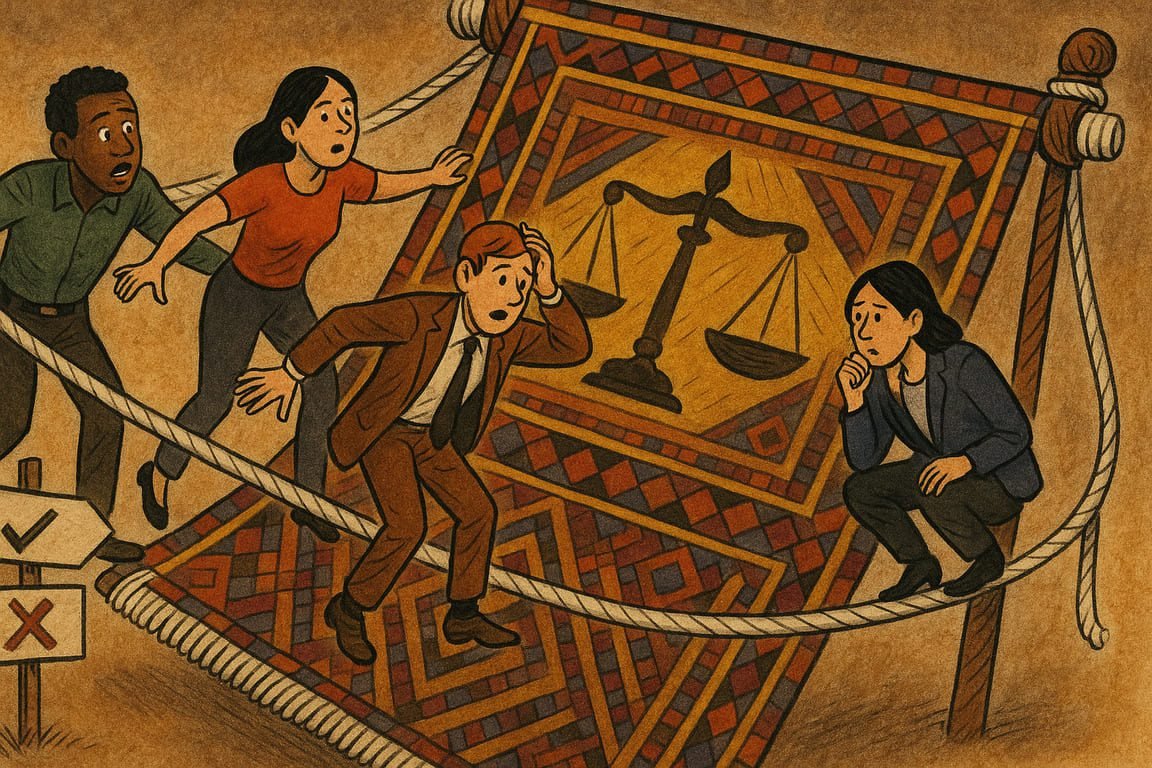
A single bulb casts a golden pool across the floor of an empty university hallway. Beneath its light, a researcher paces, shoes clicking on worn linoleum, shadow stretching against closed doors. Clutched in one hand, a folder thick with consent forms and interview notes. In the other, a phone buzzing with urgent messages: anxious participants, pressing funders, impatient supervisors. Every step is a negotiation, every decision a test of character. The work, once so clear, now weaves into something stranger—a tapestry of ambition, risk, and the ever-present question: What is the right thing to do when the stakes are real and the answers never simple?
You might expect ethics to be a checklist, a set of boxes to tick before diving into discovery. The reality? Ethics is an ongoing conversation, an inner voice that questions every shortcut and weighs every compromise. Today’s fast-moving research world tests you at every turn. You are not just gathering data—you are shaping futures, influencing policy, and, sometimes, upending lives. Research ethics asks: Will your quest for knowledge leave scars or plant seeds?
The hardest part isn’t the paperwork. It’s the moments when nobody’s watching—those quiet crossroads where cutting corners seems easy, where just one small fudge could make a theory shine. “The integrity of science is measured in the dark,” says Dr. Stella Akintola, a psychologist whose work on trauma demanded daily courage. Her field notes became legendary not for their insights, but for their honesty about what she could and could not promise her subjects.
Every study brings its own temptations. Surveys promise anonymity, but can you truly keep it? Interviews seem harmless, yet a poorly guarded transcript can ruin reputations. When researchers ignore consent or confidentiality, the consequences can echo for years, eroding trust not just in one project, but across whole communities. Think of the medical trial in a South Asian village where promises were made, then quietly broken—years later, villagers still avoid clinics, still fear researchers who come asking questions.
Yet, the world isn’t black and white. Sometimes, doing right means challenging the rules. A team mapping homelessness in Berlin bent the strictest privacy guidelines to protect their subjects’ identities, risking their funding in the process. Their refusal to expose vulnerable people was controversial, but their research ultimately changed city policy. Sometimes, courage means saying “no” to those who sign your checks.
Power is the silent thread in every ethical dilemma. Who gets to decide what is studied? Who benefits, and who is left behind? The strongest research asks these questions openly, inviting participants to shape the work, not just serve as data points. Collaborative projects in indigenous communities have redefined what counts as ethical by flipping the script—letting locals control the findings and approve publication. The result? Research that heals as much as it reveals.
Ethics is a moving target. New technologies, from AI to gene editing, throw up challenges nobody predicted. When facial recognition tech was tested on public streets, it was the researchers—often young and underfunded—who blew the whistle on its misuse, insisting that just because something can be done doesn’t mean it should be. In every era, progress presses against the boundaries of consent and respect. The only constant is the need for vigilance.
Transparency is your anchor. The best researchers own their limits, admit mistakes, and invite critique. When a London-based education team discovered their pilot program had harmed student self-esteem, they published their failure. Instead of disgrace, they gained trust, sparking a field-wide debate and new standards for youth research. Owning your errors is the foundation of credibility.
You’ll find that research ethics isn’t a private struggle. It’s a collective responsibility. Your decisions ripple through networks of colleagues, participants, and the broader public. Whistleblowers are rarely solo heroes—they emerge from teams willing to back each other up when the pressure mounts. The bravest labs make space for dissent, holding regular “red flag” meetings where anyone can question a decision, no matter their rank.
Still, the greatest risk is silence. Harm creeps in quietly, disguised as convenience or efficiency. Without a culture of openness, ethical lapses become normalized, and whole systems begin to rot from within. Building a culture of questioning is the single best defense against moral shortcuts.
Ethics will slow you down. That’s a feature, not a bug. Slowing down means noticing whose voice is missing, whose privacy needs extra protection, whose dignity must come before your deadlines. The work may take longer, but the results last longer, too.
In a silent archive deep beneath the city, a researcher slides a box onto a steel shelf, fingers trembling with relief and regret. Each document, each voice captured in ink or code, holds both triumph and risk. Above ground, the city rushes by, hungry for answers, impatient for news. But down here, in the hush, every choice hangs heavy, every shortcut echoes forever.
The true legacy of research is written not just in findings, but in the respect shown to those who made them possible. Shadows fade, and the next generation steps into the light, searching for the courage to do better.
What kind of story will your ethics leave behind?
