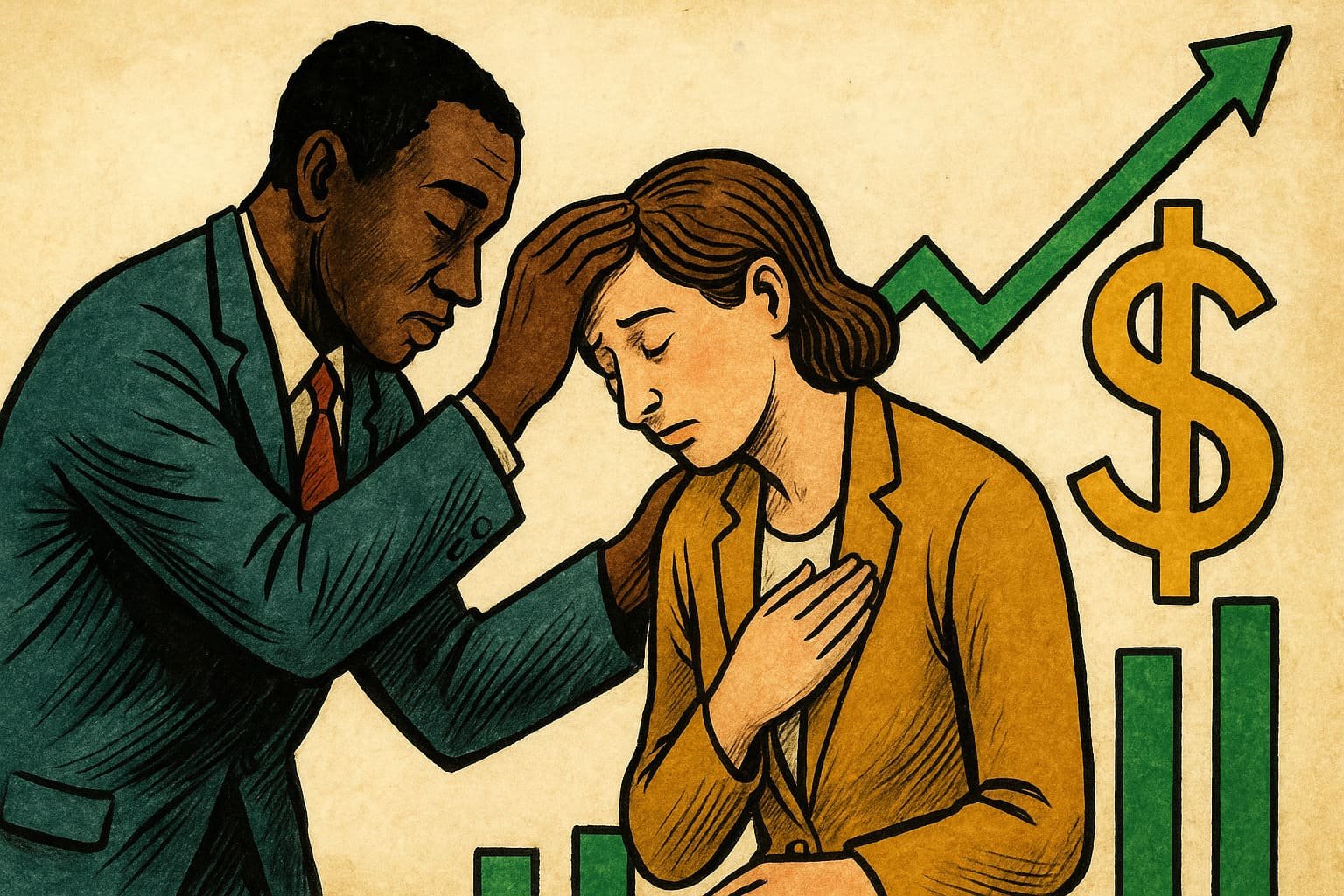
Beneath a haze of blue-white office light, a CEO sits silent, hands clasped on a desk littered with quarterly reports. Down the hall, an employee clutches her coffee, pulse thumping as she reads another curt email, her mind cycling through exit strategies. Somewhere in the building, the clock glows 7:52 p.m., casting shadows that grow longer with every unanswered question and missed birthday. These halls echo with invisible battles: pride versus vulnerability, performance versus burnout, silence versus the risk of simply asking, “Are you okay?”
Tension is the office soundtrack, thick as the air before a summer storm. On one floor, a new manager posts a quote about empathy on Slack, hoping someone reads it before another resignation hits her inbox. Below, an HR director scrolls LinkedIn, envy prickling at a viral post praising a rival’s “culture of care.” Elsewhere, a founder known for ice-cold logic remembers a time he laughed at the word “feelings.” He has since learned to count empathy as seriously as cash flow, quietly wondering which has more impact in the end.
Company branding tells a tale of happy faces and community, but the real drama happens in the gaps: hurried meetings where eyes dart away from suffering, forced smiles concealing silent storms, leaders secretly wishing for the courage to break the script. The bravest are not the ones who win applause in all-hands meetings but those who dare to ask the question everyone fears: What if empathy, not efficiency, is the real currency?
A story ripples across the team chat about a junior developer, Malik, who once paused a software deployment to check on a crying colleague. That ten-minute act of compassion averted disaster: an error caught, a breakdown prevented, a loyalty forged. The legend grows, unspoken, proof that caring is not the opposite of productivity but the root of something stronger.
Every workplace plays out this paradox: under the gloss of high-performance, empathy quietly decides who stays, who innovates, who burns out, and who builds the next unicorn. In boardrooms and breakrooms alike, the quiet revolution is not driven by perks or ping pong but by the messy, awkward, radical act of seeing each other fully. The old playbook is cracking, and the next chapter starts here.
Quick Notes
- Empathy as Competitive Advantage: When compassion enters the boardroom, high performers multiply, mistakes shrink, and morale soars. Forget the “nice guys finish last” myth; empathy makes leaders magnetic and businesses unbreakable.
- Productivity’s Secret Sauce: Listening with intent outpaces fancy project management apps every time. Your best workers won’t quit because of workload; they leave when they feel unseen.
- Profits Rise Where People Heal: Organizations that actually care see profits rocket because happy brains outthink tired ones. You can trace this straight from Starbucks baristas to elite consulting firms.
- Culture Can’t Be Faked: The internet’s full of “empathetic” slogans, but only the places that walk the talk retain their stars. If your mission statement is just wall art, expect a revolving door.
- The “Malik Effect” Is Real: When one person chooses kindness over indifference, the ripple boosts morale, invents solutions, and quietly crushes turnover. Empathy is viral; catch it or get left behind.
Beyond the Buzzword—Why Empathy Terrifies the Powerful
Corporate empires love to print “empathy” on recruitment posters, but most executives treat the word like a fragile vase: admired, rarely touched. There’s a reason the language of kindness sounds so alien in the corner office. Empathy demands leaders drop their armor, risking the exposure of their own flaws, failures, and hopes. When a manager like Rachel Patel, head of a high-performing sales team at a tech startup, finally shared her anxiety during a Friday check-in, the mood shifted. Team members who had been quietly battling burnout felt safe to ask for help.
The surface story reads simple: softer leadership leads to stronger loyalty. The hidden truth is more subversive. Teams led with real empathy become fiercely resilient, bouncing back from setbacks with surprising speed. This is what happened at an advertising firm where a junior designer, Ellis, faced public criticism for a botched campaign. Instead of punishment, the creative director, Julia, called Ellis into her office, handed him a cold bottle of water, and asked about his mental state. The next quarter, Ellis delivered an award-winning campaign, citing that single act of understanding as the turning point.
Yet, the resistance is fierce. Old-school managers who believe “toughness builds character” cling to outdated rituals, convinced vulnerability signals weakness. The paradox: leaders who never show care quietly bleed talent, as their best minds seek out cultures that nourish the whole person, not just the performer. One former investment banker, now a consultant, jokes, “I didn’t leave for money. I left because nobody cared if my father died.” Her words sting, yet they capture a silent epidemic.
Psychological frameworks back this up: Daniel Goleman’s work on Emotional Intelligence revealed that top leaders outscore peers in empathy, and that teams with high EQ outperform those relying solely on technical prowess. Not surprisingly, high-growth companies like Buffer or Patagonia openly discuss emotional health in leadership meetings, flipping the script on outdated models. The real shock: markets reward compassion more than cruelty.
Pop culture gets it, too. “Ted Lasso” isn’t just a hit because of soccer; it’s a management manifesto masquerading as comedy. Audiences crave a world where bosses care more about their people than quarterly goals. That’s not fiction. In the war for talent, empathy isn’t a soft skill. It’s the new superpower.
The Empathy Dividend—How Care Creates High-Performers
If productivity is the prize, empathy is the ticket in. Many leaders tout performance metrics, yet overlook the energy drain caused by toxic cultures. It’s not the spreadsheet that makes work unbearable; it’s the quiet dread that creeps in when employees know nobody’s watching out for them. The classic case is Angela Kim, an operations director who transformed a team with chronic turnover into a high-functioning unit by starting every week with five-minute “human check-ins.” Her move slashed absenteeism and spiked creative output, confounding skeptics.
The neuroscience behind this isn’t magic. When workers feel psychologically safe, the prefrontal cortex; the center for innovation lights up. Teams led with trust and care generate more ideas, spot errors early, and adapt to disruption faster. At Pixar, for instance, regular “candor meetings” foster an environment where fear of failure dissolves, leading to record-breaking creative runs. Legendary stories circulate about animators who, after receiving compassion from leaders during family crises, returned with renewed vigor, saving entire projects from the brink.
Skeptics argue that “too much empathy” leads to slacking. Reality tells a different tale. When leaders model compassion, employees self-correct, pitch in for teammates, and rally in crisis. At Zappos, customer service agents empowered to solve customer issues with empathy routinely generate viral moments like a rep ordering a pizza for a stranded traveler which spark loyalty and set the brand apart. Such stories aren’t anomalies. They’re strategy.
The ripple effect extends beyond KPIs. People who feel seen at work are more likely to mentor others, speak up with creative ideas, and challenge broken systems. Teams grow bolder, aiming higher, knowing support stands behind them. A contrarian view? It’s not lazy workers who tank productivity. It’s empathy-starved managers who drive away motivation.
The numbers may stay hidden, but the vibe is obvious. Walk into any team that laughs together, cares for one another, and you’ll find deadlines met, problems solved, and a feeling that work can be more than just a paycheck. It’s contagious. That’s the empathy dividend, and it pays out bigger than any bonus.
From Burnout to Breakthrough—Healing Brains, Healing Business
Across industries, burnout stories have become folk tales: the junior analyst sobbing in the restroom, the nurse hiding tears in a supply closet, the startup founder who built an empire, then vanished for months. When pressure mounts, the cost of ignoring humanity grows. Yet, where empathy walks in, breakdowns often become breakthroughs. A pivotal story comes from the team at GreenRoot Analytics, where CEO Arjun Rao installed “mental reset hours” after nearly losing his top scientist to exhaustion. Productivity soared and errors plummeted.
Science echoes the anecdote. Organizations that build in time for mental recovery see employees bounce back from stress faster. Google’s “20% time” was never just about innovation; it was a nod to autonomy, trust, and psychological restoration. Workers who feel supported take risks that fuel growth, knowing their safety net is woven from genuine concern, not empty perks. When Amazon’s warehouse employees protested brutal schedules, leadership’s delayed empathy cost millions in PR crises and employee turnover.
The secret is not just in policy but in lived practice. Genuine empathy means noticing the tired eyes before the mistake, the silence before the resignation, the small cracks before they become chasms. One real moment: Sarah, a mid-level manager at a logistics company, spotted signs of burnout in her star employee, Jerome. Instead of a write-up for declining numbers, she called a meeting, listened without agenda, and offered flexibility. Jerome returned weeks later, leading a record-setting project, his loyalty sealed not by bonus but by care.
Popular culture warns us what happens when empathy disappears. Films like “The Devil Wears Prada” or series like “Succession” depict brutal workplaces where high performance comes at the cost of human dignity. The message lands every time: profits built on broken minds soon crack. In a world of viral Glassdoor reviews, businesses that heal outperform those that ignore pain.
So the lesson is clear. Mental health isn’t a cost center—it’s the foundation. Teams that heal together, rise together. Sometimes the biggest innovation is a simple, human question: “How are you, really?”
Empathy Is Viral—How Compassion Moves Markets
Empathy spreads faster than memos. It leaps across teams, shaping culture in ways no handbook ever could. One story at Hive Studio sticks: an intern, Lucas, stopped a critical deadline to help a stressed colleague fix her laptop. The act rippled through the team, inspiring a string of spontaneous gestures. Within months, Hive’s culture shifted from tense to tenacious, attracting creative talent eager for a safe place to work.
Market leaders who nurture this “contagion” outperform rivals who lead by fear. At Salesforce, CEO Marc Benioff regularly takes a stand on social issues, sending a message that care extends beyond the company. Teams follow his lead, forging bonds that drive both advocacy and revenue. Customers notice, too. Brands that show up during community crises earn lasting loyalty, as seen when Lush Cosmetics publicly backed mental health awareness, earning both press and profit.
Doubters may sneer at “empathy as strategy,” but ignore the evidence at their peril. Compassionate cultures not only keep stars—they attract them. When Netflix revolutionized HR by focusing on trust and autonomy, they drew top talent burned by old-school micromanagement. The result? Industry-shaping innovation and viral loyalty that no ad budget could buy.
Empathy’s real magic is how it solves problems nobody saw coming. During the pandemic, a Boston restaurant chain faced mass closures. The owner, Maria Espinoza, kept every employee on payroll by crowdsourcing shifts and sharing the pain. Morale surged, customers rallied, and when restrictions lifted, the restaurant reopened stronger than ever. Compassion became the comeback story.
Empathy’s impact can’t be fully measured in dollars, but you’ll feel it in every morning greeting, every creative risk, every moment of true collaboration. In the world’s most resilient organizations, empathy isn’t an accessory. It’s the core operating system.
The Empathy Playbook—Turning Caring Into Competitive Edge
Building an empathetic organization is less about posters and perks, more about what leaders do when nobody’s watching. It starts at the top, with founders like Maxine Okoye of BrightWay Media, who reads every exit interview and personally calls employees who leave. Her reputation for listening drives a referral pipeline of talent her competitors envy.
Small gestures become rituals. When a mid-size consulting firm in Chicago instituted “Failure Fridays,” where employees share mistakes without fear, the culture shifted. Laughter replaced dread, teams collaborated, and even shy interns found their voice. Productivity soared, not in spite of vulnerability but because of it. Clients began requesting the team by name, not just the firm.
Transformative empathy is never a solo act. It’s woven into how meetings are run, how conflicts are handled, how wins and losses are shared. At fintech startup Beam, the CEO built “Gratitude Rounds” into weekly standups, spotlighting unsung heroes. One engineer, publicly thanked for mentoring a new hire, later filed a patent that put the company on the map.
Empathy even shields organizations from disaster. When a European retailer faced cyberattack, employees who felt trusted worked through the night, inventing solutions and safeguarding customer data. The only incentive: mutual care and a sense of shared purpose. As Beam’s head of HR, Darius Ray, put it, “Empathy is the only safety net that never wears out.”
True empathy disrupts more than management. It redefines ambition, making space for meaning and memory, not just money. In every industry, those who master the playbook win twice: hearts first, profits next. That’s a legacy nobody can fake.
The Silent Revolution: Where Empathy Rewrites the Ending
Under low golden light, a founder lingers in a quiet office, watching as teams linger after hours, laughter mixing with urgent keystrokes. Across the city, a team lead stands in the rain, umbrella forgotten, waiting for a struggling intern who needs someone to listen. The hum of elevators fades, but stories of care stick to the walls—proof that the work done here is deeper than what any spreadsheet can track.
There’s no music, no grand applause, only the quiet certainty that this is how real revolutions happen: one moment of kindness at a time. The legendary managers remembered aren’t those with the sharpest elbows but those whose courage was measured in care. Somewhere, a team gathers in a circle, raising coffee cups to the leader who made them feel like more than just a number.
Empathy is not a buzzword. It’s the only thing that endures when the profits cool and the headlines fade. The world waits for more organizations to trade bravado for kindness, to build empires that heal as they grow. Here, the myth ends and the movement begins.
Are you ready to make empathy your greatest legacy—or will you let silence shape your story?
