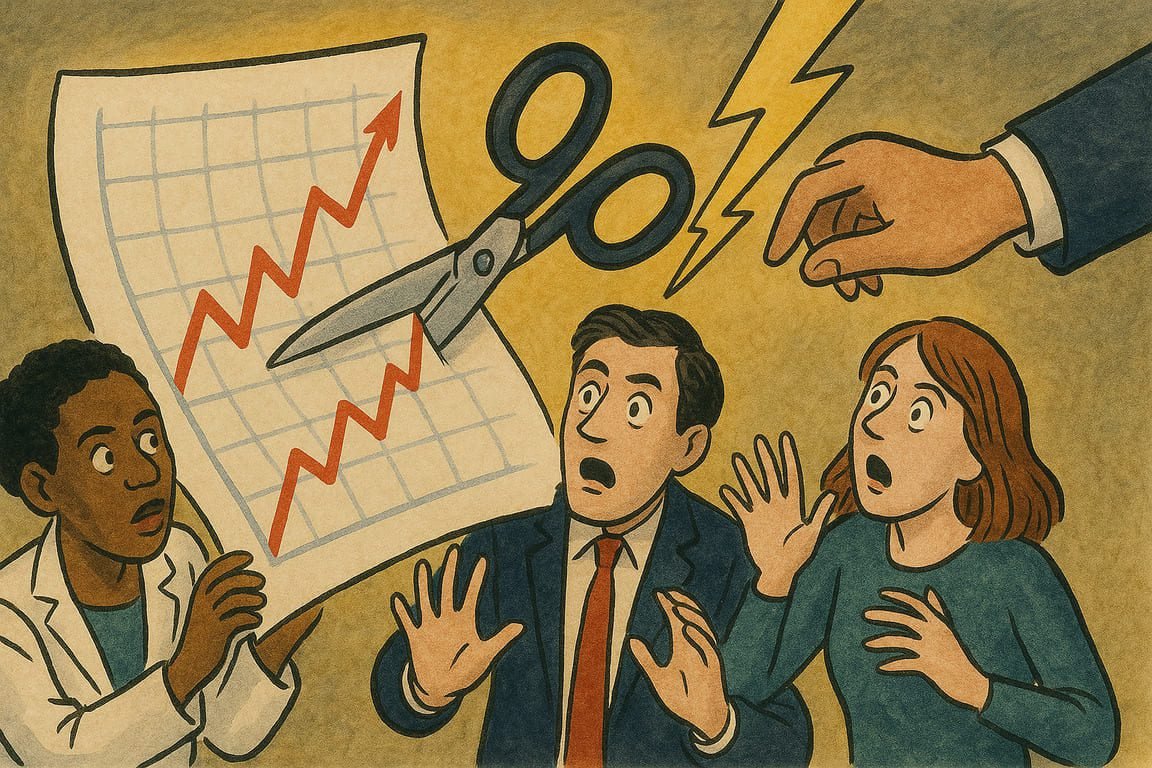
The hum of servers fills a glass-walled innovation hub, where neon reflections ripple across a floor littered with whiteboards and half-finished prototypes. A cluster of thinkers, designers, and skeptics gather around a holographic map, eyes wide as new data pulses into view. One research director, hands stained with ink and coffee, points to a blinking node. It’s the epicenter of a trend no one saw coming—a ripple that promises to shatter habits, industries, and expectations. Every eye in the room narrows, sensing that the next big thing won’t just tweak the status quo—it’ll flip it upside down. In the world of cutting-edge research, today’s whispers are tomorrow’s headlines, and the future belongs to those who listen hardest.
Forget the myth that research unfolds in slow, dusty journals. The new era is lightning-fast, global, and messy. Thinkers in Lagos, Seoul, Berlin, and Mumbai exchange findings in real-time, leapfrogging one another in the chase for impact. Old silos are collapsing. Machine learning models trained in Kenya predict crop yields in Brazil; blockchain pilots in Estonia reshape digital identities worldwide. The trend? Research is no longer just about finding answers. It’s about rewriting the rules of the game.
You already feel these shocks in daily life, even if you can’t name them yet. Remote health monitoring—once the dream of science fiction—now slips onto wrists as wearable devices track vital signs and flag risks before symptoms show. Companies like BioWatch and MedUp have turned real-time data into a public health revolution, catching illnesses early and saving lives. The line between consumer gadget and medical device has all but vanished, leaving regulators, insurers, and citizens scrambling to catch up.
Sustainability isn’t just a buzzword; it’s the engine of the next industrial revolution. Research into bio-based plastics, renewable energy grids, and closed-loop manufacturing is upending how products are made, sold, and recycled. In the Netherlands, a startup transformed seaweed into packaging that dissolves after use, eliminating waste and inspiring global giants to copy the model. Trends like these ripple outward, changing markets far faster than governments can legislate.
Artificial intelligence has crossed from code to culture, now influencing everything from hiring to music to criminal justice. A judge in Chicago consults an algorithm before setting bail. A designer in Tokyo collaborates with AI to compose symphonies that blend tradition and machine learning. The wildest trend isn’t just automation—it’s collaboration between human and machine, creating outcomes neither could achieve alone.
Mental health research is breaking long-held taboos. Apps deliver cognitive behavioral therapy at scale, offering support in rural villages as well as skyscraper offices. Schools now pilot emotional intelligence curricula, tracking results and iterating in real time. Companies like MindBridge and CalmSpace have shown that well-being is measurable, manageable, and—most shockingly—profitable. Trends in neuroscience, genetics, and digital health have merged, giving rise to new fields at the edges of old boundaries.
Privacy and data security, once footnotes in tech reports, now dominate headlines. As researchers develop ever-more-precise tracking tools, citizens push back, demanding new rules for consent and control. The General Data Protection Regulation in Europe set off a domino effect, with startups and governments worldwide scrambling to protect data as fiercely as any physical asset. The trend is clear: transparency and trust are the new currencies.
Interdisciplinary teams are driving the wildest advances. In Kenya, engineers, farmers, and AI specialists co-create smart irrigation systems, merging local knowledge with global tech. In California, artists and neuroscientists map how music influences brain chemistry, spawning new therapies for anxiety and trauma. The old solo genius myth is fading, replaced by networks that move faster, dream bigger, and refuse to respect borders.
Rapid prototyping has shattered the slow cycle of innovation. With 3D printing, synthetic biology kits, and virtual collaboration spaces, anyone can test a hunch, tweak a design, or build a company from a bedroom. The most successful trends don’t wait for permission—they scale before the ink on the old playbook dries.
Research ethics is becoming more proactive and inclusive. The days of “move fast and break things” are ending. Now, researchers invite communities, critics, and even future skeptics into the process. When the World Health Organization piloted new vaccine frameworks, they did so in open forums, broadcasting every doubt and answer. Transparency isn’t just a trend—it’s survival.
Lastly, the hunger for actionable insight, not just knowledge, defines the frontier. Startups like QBit and Polymath Analytics don’t just report findings—they distill them into choices, predictions, and next steps. The new research trend? Immediate, personalized relevance: answers tailored to you, in your language, on your timeline, at the speed of change.
In the stillness after the brainstorm, the research director stands alone by the glowing map. Each trend pulses like a heartbeat, restless and urgent. The city outside glimmers, unaware of how close it stands to the edge of something vast and wild. Here, at the frontier, the question is never “What’s next?” but “How fast will you adapt when tomorrow crashes through your door?” The only way to stay ahead is to keep listening, keep learning, and never let surprise become fear. You’re not just witnessing history—you’re shaping it, trend by trend.
Will you race ahead with the brave, or get left behind while the future rewrites the script?
