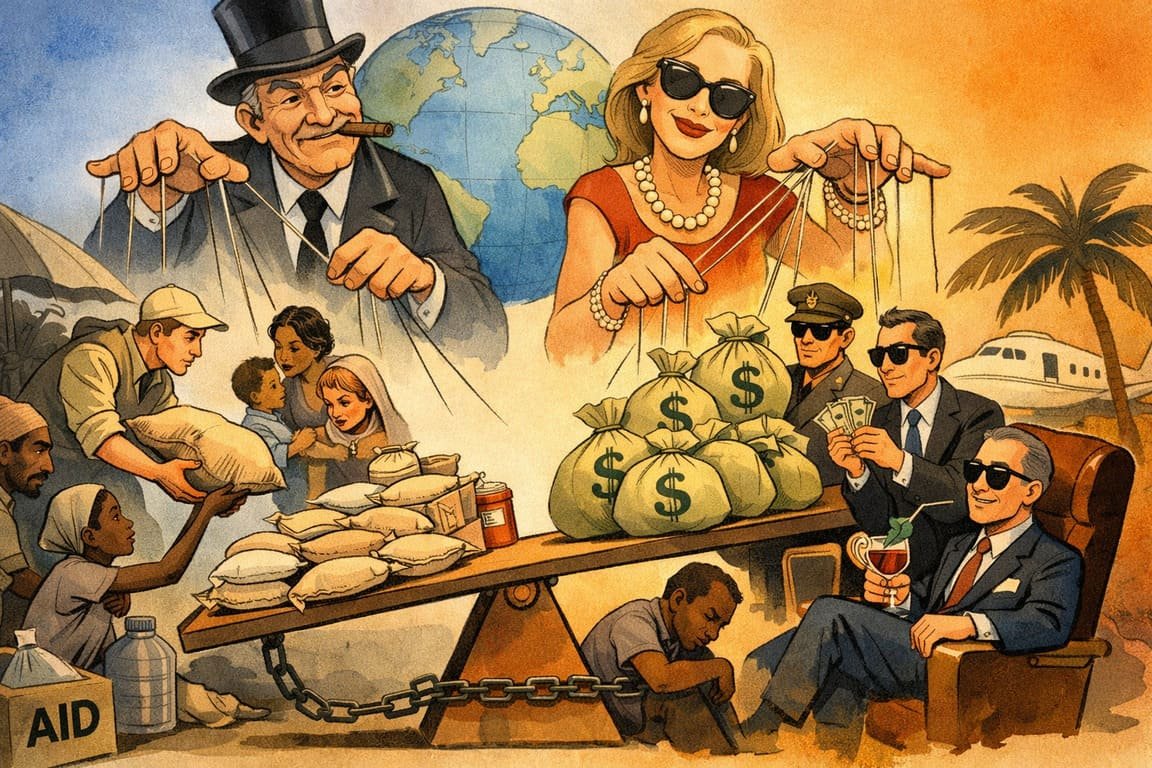
The convoy arrived at dawn, trucks rolling in with banners stretched tight against their sides, symbols of generosity printed large enough to be photographed from the air. Volunteers moved with purpose, clipboards in hand, voices steady with conviction. From a distance, it looked like relief. Up close, it felt more complicated. Aid rarely announces the power it carries, yet power travels with it all the same.
Charity tells a story people want to believe. Resources move from abundance to need. Compassion bridges distance. Suffering meets solution. That narrative sustains donations, institutions, and a sense of moral order. Reality resists such clean arcs. Aid enters places already shaped by politics, memory, and hierarchy. Help does not land on empty ground. It collides with systems that decide who receives, who waits, and who becomes visible.
States understand this instinctively. Aid functions as diplomacy without uniforms. Funding shapes alliances. Relief opens doors negotiation cannot. Conditions follow quietly, framed as guidance or reform. Trade policy shifts. Security cooperation deepens. The transaction remains polite, yet unmistakable. Assistance becomes leverage softened by gratitude.
Large organizations face their own contradictions. Structure protects accountability, yet slows adaptation. Success requires measurable outcomes, yet recovery defies neat timelines. Programs designed far away often miss local logic. A village leader named Amina once watched a well installed precisely where no one gathered water. The report celebrated completion. The community walked elsewhere.
Competition distorts intention. Nonprofits vie for attention in a crowded moral marketplace. Stories compress complexity into digestible narratives of rescue and redemption. Donors reward hope, not ambiguity. Projects bend accordingly. Visibility outranks durability. Aid succeeds on paper while dependence grows quietly beneath the surface.
Corporate philanthropy layers another tension. Brands align with causes, gaining trust alongside goodwill. Some efforts genuinely help. Others function as reputation insurance, insulating companies from scrutiny. The boundary between responsibility and strategy blurs easily. Outcomes matter more than intent, yet intent often shapes design.
Recipients navigate aid actively, not passively. Communities adapt, negotiate, resist. Access becomes power. Those who distribute gain influence. Those outside networks fall further behind. Assistance meant to reduce inequality can deepen it by reshaping local hierarchies invisibly. These shifts rarely appear in glossy reports, yet they define daily life.
Aid workers themselves feel the weight. A program officer named Lucas once admitted frustration at meeting targets that satisfied headquarters while missing lived reality. He depended on funding cycles as much as recipients depended on supplies. Control traveled both directions. Dependency wore different faces, yet bound everyone to the same system.
Culturally, persistent aid risks eroding dignity when people are framed as permanent recipients. Skills go unused. Initiative dulls. Pride thins quietly. True support strengthens agency. It listens before acting. It trusts local leadership. This approach moves slower and attracts fewer headlines, yet builds resilience rather than reliance.
Philosophically, the divide rests between intent and impact. Kindness alone does not neutralize harm. Control wrapped in care remains control. Ethical aid demands humility, patience, and willingness to relinquish authorship. It asks helpers to accept critique without retreating into moral defensiveness.
Models that work better exist. Cash based support respects choice. Long term investment prioritizes education and infrastructure. Local partnerships elevate context over assumption. These approaches redistribute not only resources, but authority. Power resists that shift instinctively, even when evidence supports it.
Aid also reflects global inequality honestly. Charity fills gaps created by structural imbalance, yet rarely questions why those gaps persist. Emergency becomes permanent because permanence feels manageable. Addressing root causes threatens systems built to respond, not to dismantle.
The trucks eventually leave. Banners fold. Gratitude lingers. What remains is the quieter measure of aid, whether communities stand stronger when assistance fades, or simply wait for the next delivery, because the line between charity and control is not drawn by intention, but by who still holds the power once help is gone.
