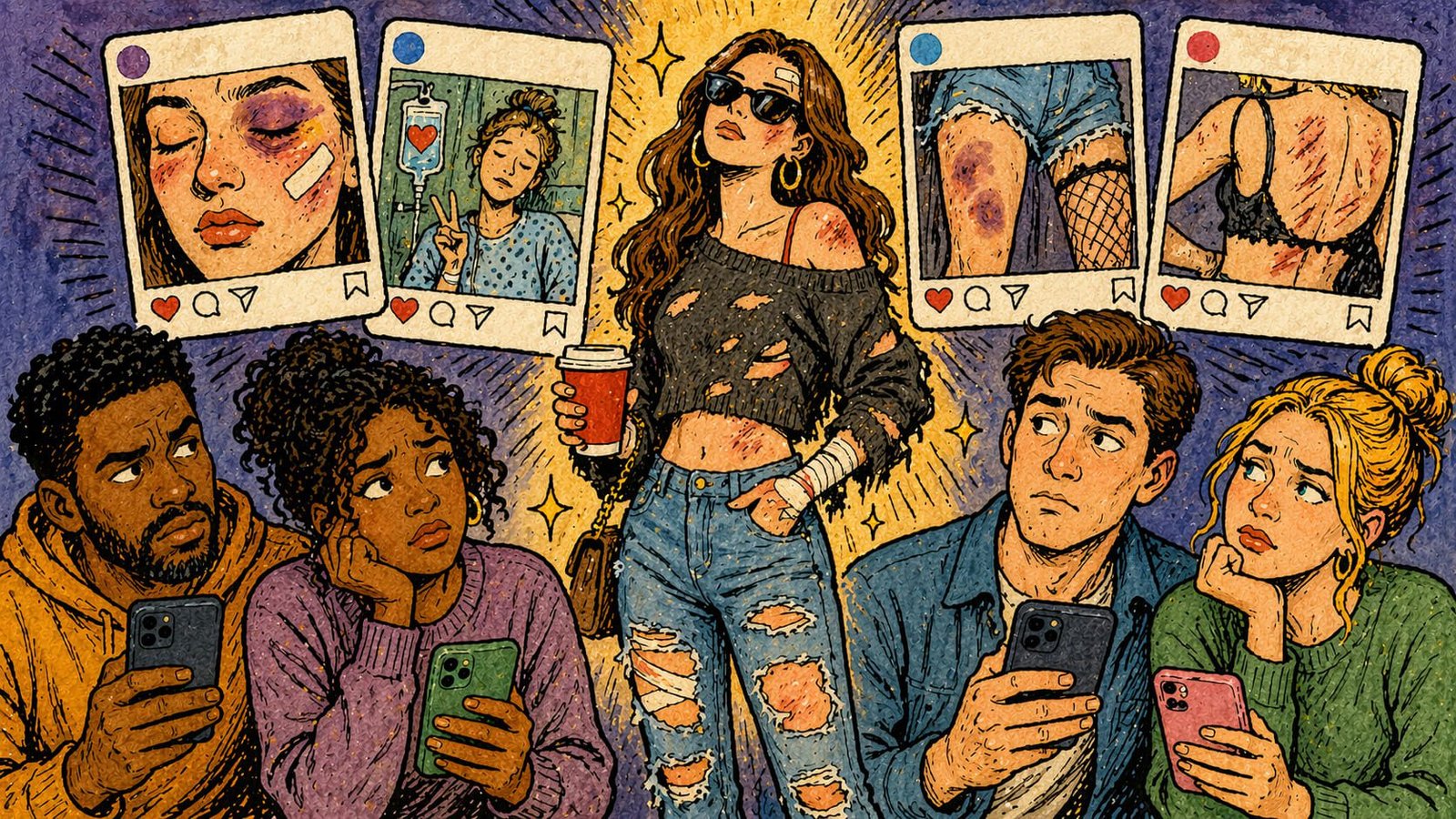
A dimly lit room hums with the quiet glow of a phone screen. A post appears. A story of exhaustion, sacrifice, quiet breakdown. The comments fill with admiration. Not sympathy alone, but something closer to reverence. Strength is measured in how much one can endure without collapsing in public. The image lingers. Suffering has been reframed, not as something to escape, but as something to display with a strange kind of pride.
Modern culture has developed an unusual relationship with pain. It no longer sits only in the shadows. It steps forward, styled, filtered, narrated. Stories of burnout, heartbreak, relentless work, emotional strain are not hidden. They are shared, curated, sometimes even admired. The shift feels subtle, yet it changes how suffering is understood. It becomes not just a condition, but a signal. A way to demonstrate depth, resilience, even worth.
A young consultant named Ibrahim once noticed this shift during a late-night scroll. His peers posted about long hours, missed meals, constant pressure. The tone was not purely complaint. It carried a hint of pride, as if endurance itself had become a badge. Ibrahim began to mirror the pattern. He worked longer, shared more, framed his exhaustion as commitment. It gained attention. What started as expression slowly turned into performance. Pain had become part of his professional identity.
There is a cultural logic beneath this. In environments where achievement is highly valued, visible struggle can function as proof of effort. If success is uncertain, suffering becomes evidence that one is trying hard enough. This creates a feedback loop. The more visible the struggle, the more it is validated. Over time, the line between authentic experience and curated display begins to blur. People learn not only to endure, but to present their endurance in ways that resonate.
The fashion industry offers a striking parallel. A designer named Elodie once built a collection around themes of emotional fragility. The pieces were intentionally imperfect, distressed, layered in ways that suggested wear and history. Critics praised the work for its honesty. Consumers embraced it as a reflection of their own inner states. What was once considered broken became desirable. The aesthetic of suffering moved from metaphor into material form.
This pattern extends into storytelling. Characters who endure extreme hardship often receive the deepest admiration. Their pain is framed as transformative, a necessary path to growth. While this can offer meaningful insight, it also risks creating a narrative where suffering is not just inevitable, but desirable. The idea that one must struggle intensely to achieve significance becomes embedded, shaping expectations in subtle ways.
A startup founder named Noor experienced this tension firsthand. Her early journey was marked by relentless pressure, constant uncertainty, and personal sacrifice. When her company began to succeed, interviews focused heavily on her struggles. The narrative of hardship became central to her story. Noor later admitted that she felt compelled to emphasize those experiences, even when discussing future plans. The market seemed to value the story of suffering as much as the outcome itself.
Psychologists have noted that humans often seek meaning in difficult experiences. Pain, when framed as purposeful, becomes easier to bear. Culture amplifies this tendency by rewarding narratives that link suffering to growth. The danger lies in the extension of this logic. When suffering is consistently associated with value, it can begin to feel necessary, even when it is not. People may endure more than they need to, believing it is part of a larger narrative they are expected to fulfill.
A small creative team once explored this idea during a campaign brainstorming session. They debated whether to highlight the challenges behind their work or focus on the results. One member argued that audiences connect more deeply with struggle. Another questioned whether constantly foregrounding hardship might reinforce the idea that pain is a prerequisite for worth. The discussion revealed a tension that extends far beyond marketing. It touches on how value itself is constructed.
There is also a social dimension to this shift. Sharing experiences of difficulty can create connection. It signals vulnerability, invites empathy, builds community. These are powerful and positive outcomes. Yet when the sharing becomes stylized, when it follows recognizable patterns that attract attention, it can drift toward performance. The authenticity remains, but it is shaped by expectations. Pain becomes something to present as much as something to process.
A writer named Daniel once described this phenomenon in a quiet essay. He noted that people often feel more comfortable sharing their struggles once they have been resolved or reframed. The narrative becomes cleaner, more coherent, easier to communicate. Raw pain is messy. Curated pain is compelling. The distinction matters, because it influences how others perceive their own experiences. They may feel pressure to fit their struggles into similar narratives.
Somewhere in a small apartment, someone is drafting a post about a difficult day. The words are chosen carefully, balancing honesty with resonance. The intention is not to deceive, but to connect. Still, the act of shaping the story introduces a subtle layer of performance. The experience is filtered through what feels shareable, what feels meaningful to others. The result is both real and constructed, a blend that defines much of modern expression.
The glow of the screen fades, but the pattern remains. Suffering continues to circulate, gaining new forms, new meanings, new signals. It moves through culture, shaping how people interpret their own experiences, how they measure their effort, how they understand their worth. The shift is not absolute, but it is noticeable. Pain has not lost its weight. It has gained a new kind of visibility.
As the next story of endurance rises, framed with care and received with admiration, a quieter question begins to surface beneath the recognition it earns: are you healing from your pain, or learning to display it in ways that feel valuable?
