The stadium roars, a unified sound rising from thousands of voices that seem to move as one. Strangers embrace, eyes lock, bodies lean forward in shared anticipation. For a moment, the noise feels like belonging. It feels like proof that connection still exists in a world that often feels scattered. Then the game ends, and the silence returns faster than expected.
Team sports have always offered something deeper than competition. They create temporary worlds where identity expands beyond the individual. A person becomes part of a group, a rhythm, a shared intention that moves in real time. Wins and losses are felt collectively, not privately. That shared experience carries a kind of emotional weight that is difficult to replicate elsewhere.
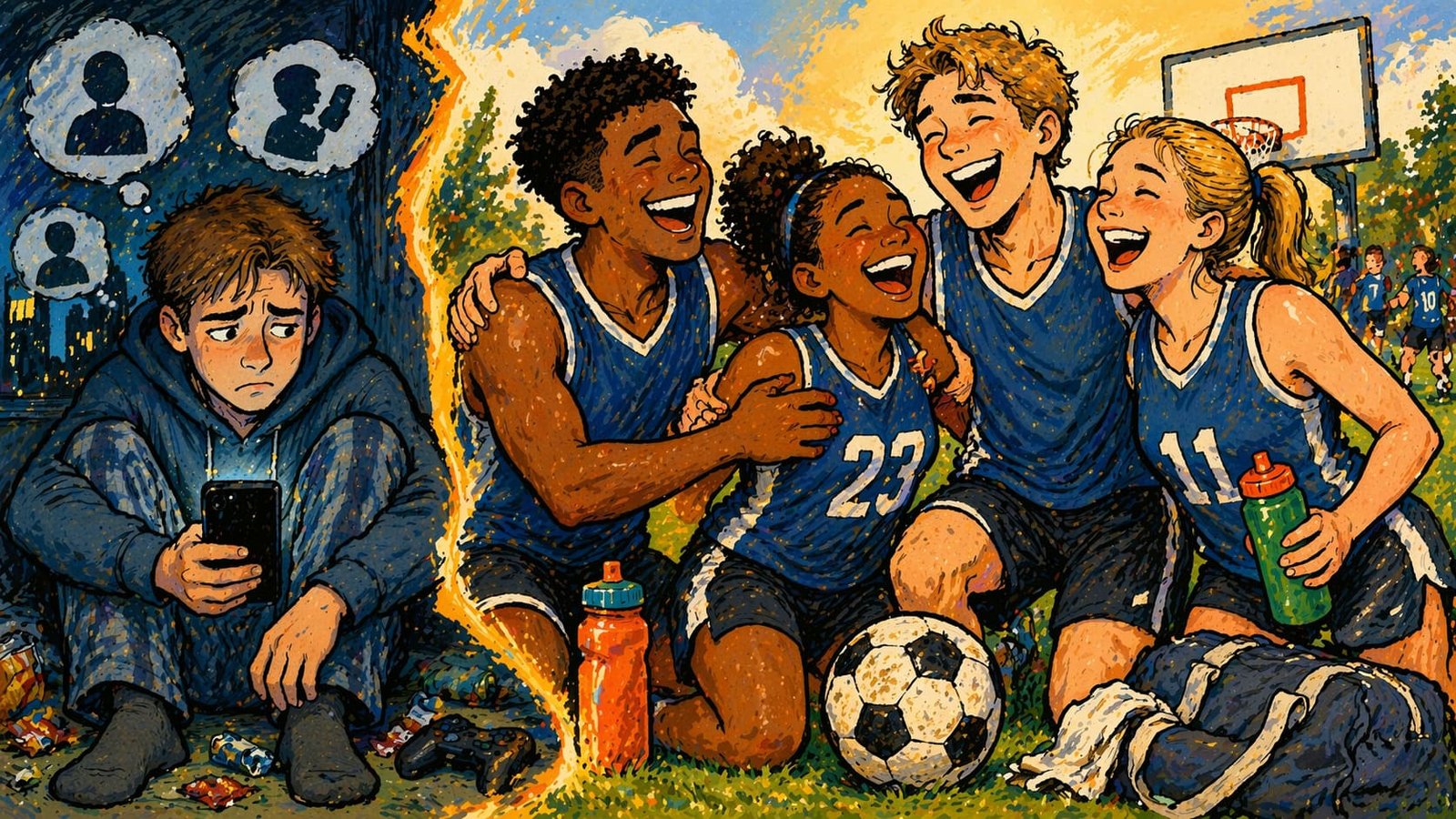
In modern life, where interactions are often mediated through screens, that immediacy feels rare. Conversations happen in fragments, relationships maintained through messages that arrive and disappear. The structure of daily life leans toward isolation, even when communication is constant. Being connected does not always translate into feeling connected.
A corporate analyst named Victor joined a local football team after years of working remotely. His days had been filled with calls, messages, and deadlines, yet he often felt detached from the people around him. On the field, something shifted. The coordination, the shared effort, the simple act of moving together created a sense of presence he had not experienced in years.
This is where team sports reveal their deeper value. They require attention that cannot be divided. You cannot scroll while anticipating a pass. You cannot disengage without affecting others. The structure demands participation, not just observation. It pulls people into the moment in a way that digital environments rarely do.
Yet even within these spaces, loneliness does not disappear entirely. It lingers in subtle ways, in the moments before and after the game, in the quiet walk home, in the return to routines that feel more individual than collective. The connection is real, but it is often temporary, contained within the boundaries of the activity.
A community basketball league once noticed this pattern. Players bonded during games, forming strong connections on the court. Outside that space, interaction faded. The league introduced small gatherings after matches, simple conversations that extended beyond the game itself. Over time, relationships deepened, not because of the sport alone, but because of what followed it.
The tension lies in how modern life fragments experience. Activities that once integrated seamlessly into daily routines are now compartmentalized. Work, social life, recreation exist in separate spaces, often disconnected from one another. Team sports offer a glimpse of integration, but sustaining that sense of belonging requires more than shared activity.
There are moments where the impact becomes clear. A player misses a game and notices the absence, not just of movement but of presence. The field feels like a place where something essential happens, something that cannot be fully explained or replaced. It is not just about the sport. It is about being part of something that exists beyond the self.
Under the fading lights of an empty field, the echoes of earlier cheers linger faintly in the air. The space feels different without the movement, without the voices, without the shared energy that once filled it. The connection was real, yet it was also fleeting. And in that quiet aftermath, a question remains, steady and unresolved: if belonging only appears in moments, what would it take to carry it into the rest of life?
