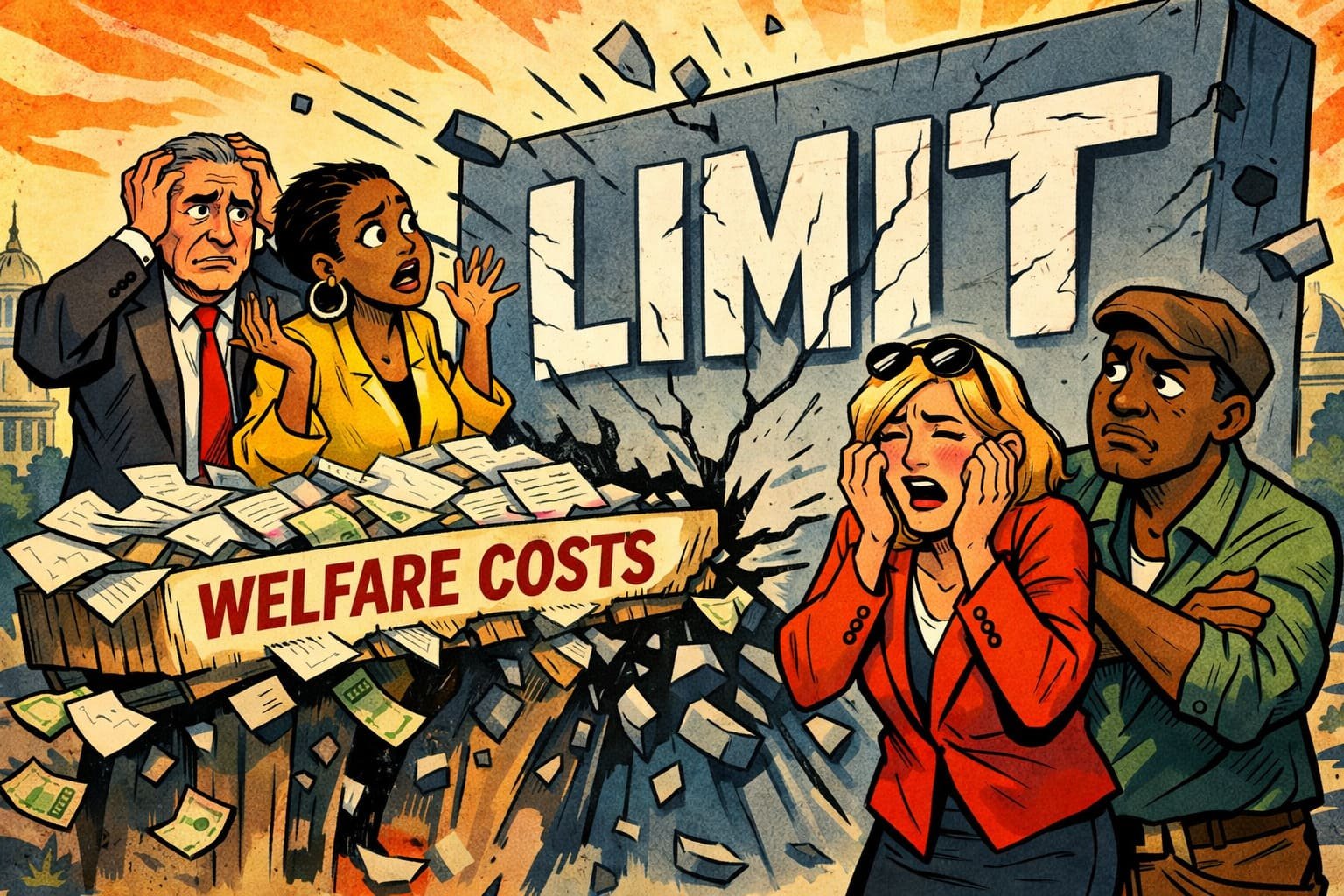
A modern welfare state is built on a beautiful promise and a brutal budget constraint. The promise says nobody should be left entirely alone when age, illness, disability, unemployment, or sheer bad luck punches through the floorboards of ordinary life. The budget constraint says compassion has a ledger. When welfare bills swell, those two truths stop being polite to each other. Governments hit limits not because care has lost moral value, but because demographics, expectations, and fiscal pressure collide in a way speeches cannot soften for long.
Welfare spending grows for reasons that are often humane and unavoidable. Populations age. Healthcare needs deepen. Housing strains worsen. Labor markets polarize. Families carry less slack than they once did. In many countries, long periods of weak wage growth and rising living costs have made public support more important, not less. This is not evidence of moral failure by citizens. It is evidence that modern economies can be both productive and unforgiving at the same time. Welfare fills the gap between those two facts, which is why the gap keeps growing.
The difficulty begins when welfare expansion meets slower growth, heavier debt service, and political systems addicted to promising protection without saying how it will be sustained. Pension obligations, disability support, health costs, housing assistance, and cash transfers all place demands on the state that can be justified separately and still become impossible collectively. That is the trap. Each program has a constituency, a rationale, and often a heartbreaking human story behind it. The treasury still has to fund the whole orchestra, not just the most sympathetic instrument.
Ageing is the clearest long-term driver. More retirees mean higher pension and healthcare costs, while the relative share of working-age taxpayers may not keep pace. This is not a scandal. It is arithmetic with a demographic accent. Yet politics often treats it like a temporary inconvenience that can be solved with optimistic speeches and one more review panel. It cannot. Welfare systems designed for one age structure strain badly under another. Pretending otherwise is like insisting an old bridge can carry modern traffic forever because nobody wants the detour.
A hospital administrator once described the tension with painful honesty. The waiting rooms were fuller, the staff more exhausted, the social care bottlenecks more severe, and every part of the system was passing pressure to another part like a hot pan nobody could hold for long. None of the needs were invented. None of the claims were frivolous. The limit was real anyway. That is how swollen welfare bills feel inside a government. Not like charity gone mad, but like genuine obligations piling up faster than the system can absorb them.
There is a nasty habit in public debate of turning this issue into a morality play between cruel reformers and saintly defenders, or between disciplined taxpayers and lazy dependents. Both scripts are shallow. Welfare states are neither purely heroic nor purely decadent. They are complex insurance systems embedded in societies that are older, costlier, and often lonelier than they used to be. Serious reform does not begin by insulting claimants or worshipping every program as untouchable. It begins by admitting that a support system can be morally essential and fiscally strained at the same time.
This is where design matters more than ideology. Universal benefits can create solidarity but become expensive. Highly targeted systems can save money but generate stigma, cliff edges, and administrative complexity. Pension ages, eligibility rules, work incentives, childcare support, disability assessments, healthcare access, and housing policy all interact in ways that can either strengthen or weaken the whole structure. Badly designed welfare states become simultaneously costly and cruel. Well-designed ones protect dignity while preserving incentives and fiscal legitimacy. That design problem is harder than most campaign slogans are willing to admit.
The contrarian truth is that a welfare state can collapse not only through stinginess, but through sentimental overpromising. Promise everything, reform nothing, and the system becomes brittle. Staff burn out. queues lengthen. Payments lose adequacy. Public frustration grows. Then cynics point to the mess as proof that welfare itself was the mistake, when the deeper error was political cowardice dressed as kindness. Durable care requires boundaries, reform, and clear choices. Endless rhetorical compassion without structural honesty is not generosity. It is deferred failure with better branding.
None of this means governments should slash support and call the pain liberation. That path produces its own damage, often in more expensive forms later. Underfunded care shifts burdens to hospitals, families, charities, and police. Weak housing support feeds instability. Poorly handled disability systems create needless hardship and legal conflict. The smart question is not whether welfare should exist. It is how to build systems that remain credible under demographic pressure and economic strain. That means confronting pension design, prevention, labor participation, health efficiency, housing supply, and administrative waste all at once.
The political challenge is enormous because welfare is intimate. These are not abstract expenditures. They are meals, medicines, care visits, rent support, and the fragile reassurance that life’s worst luck will not automatically become social exile. Governments hitting limits therefore face a cruel communications problem. They must describe constraint without sounding heartless, and reform systems without sounding as though vulnerability itself has become a budget inconvenience. Most leaders fail this test because they either speak in spreadsheets or retreat into sentimental fog. Citizens trust neither.
A great welfare state is not the one that promises the moon and quietly runs out of oxygen. It is the one that tells the truth early, protects the vulnerable well, and reforms before the system starts fraying in public. That requires more political courage than almost any other fiscal task because it means admitting that compassion is not measured by the size of a promise, but by the durability of the protection once bad times arrive. A thin promise is cheaper to announce. A lasting system is harder to build.
In the end, swollen welfare bills force a society to answer a question it would rather postpone. What does it truly owe one another, not in slogan form, but in durable institutional form? The answer cannot be nothing, and it cannot be everything. Somewhere between cruelty and fantasy lies the mature welfare state, generous enough to protect dignity, disciplined enough to endure. The haunting part is that governments usually search for that balance only after the limits are already pressing at the door, asking whether compassion was ever designed to survive reality, or merely to sound noble while it lasted.
