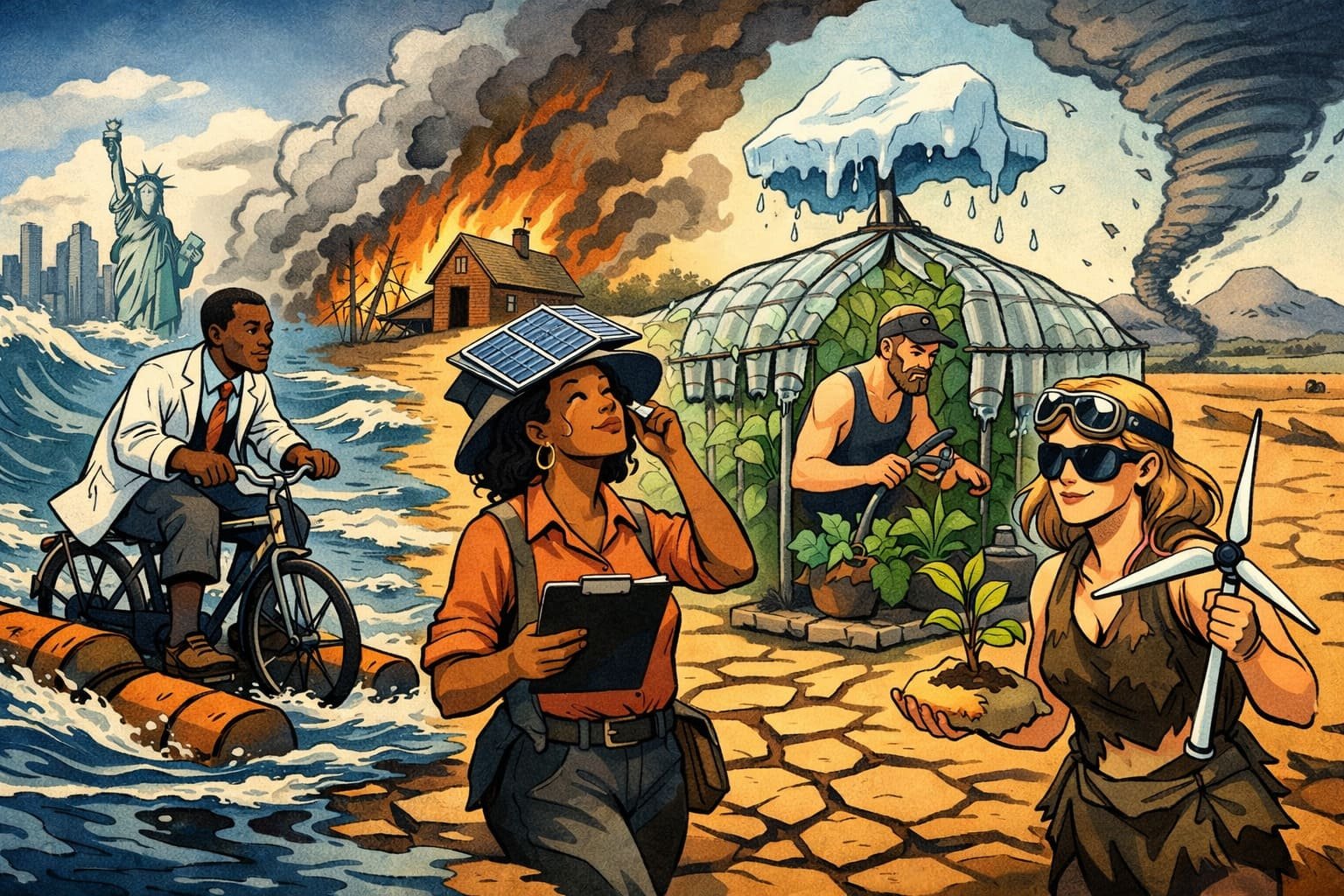
The storm arrived long before the rain. It gathered inside supply chains, insurance reports, boardrooms, and family budgets, quietly exposing assumptions that had guided businesses for decades. Factories stood ready, warehouses looked full, and financial forecasts appeared convincing. Then one climate event disrupted everything. A flooded transport route delayed vital materials. An unexpected heatwave strained power grids. A prolonged drought reshaped agricultural markets. Nature had not become more emotional. It had simply become less predictable, forcing organizations to admit that yesterday’s operating model was built for a different world.
Climate change is often described as an environmental issue, yet it increasingly behaves like a technology and systems challenge. Every modern business depends on interconnected digital infrastructure, logistics networks, energy systems, and global suppliers. When climate shocks interrupt one part of that network, the effects ripple far beyond the original event. Digital transformation now includes climate resilience because operational continuity depends as much on adaptive systems as physical assets. Resilience is no longer a sustainability slogan. It has become a competitive advantage hiding in plain sight.
The organizations adapting fastest are changing their mindset before changing their equipment. Instead of asking how to recover after disruption, they ask how to anticipate it. Artificial intelligence analyzes weather patterns alongside inventory levels. Digital twins simulate factories before physical changes are made. Smart sensors monitor equipment under changing environmental conditions. Cloud platforms connect suppliers across continents, allowing faster decisions when disruption appears. Technology cannot stop extreme weather, but it can reduce uncertainty and shorten the distance between warning and action.
The global logistics industry illustrates this evolution remarkably well. Shipping companies increasingly combine satellite imagery, predictive analytics, and real-time routing systems to navigate changing environmental conditions. Energy providers use intelligent grids that automatically balance electricity demand as temperatures fluctuate. Agricultural businesses employ precision farming technologies that monitor soil moisture, crop health, and irrigation needs with extraordinary accuracy. These systems do not eliminate climate risk. They transform fragmented information into coordinated decisions, allowing organizations to respond before small disruptions become costly crises.
A manufacturing executive named Idris discovered this lesson during an unusually dry season that disrupted water supplies supporting regional production facilities. Rather than expanding emergency reserves alone, his team invested in connected monitoring systems that tracked resource consumption across every operation. Hidden inefficiencies surfaced almost immediately. Small leaks, overlooked maintenance schedules, and outdated production routines consumed more resources than anyone had imagined. Months later another climate disruption arrived, yet operations continued with minimal interruption. Preparation had quietly replaced panic before anyone noticed the difference.
This transformation extends beyond technology into leadership itself. Climate resilience rewards organizations that embrace experimentation instead of rigid certainty. Traditional planning assumed stable environments where historical performance reliably predicted future outcomes. Today’s reality demands flexible systems capable of continuous learning. Businesses must combine environmental intelligence with operational agility, cybersecurity, workforce preparedness, and diversified supply chains. Reinvention becomes less about reacting to disasters and more about designing organizations that improve under pressure. Adaptability gradually becomes a measurable business capability rather than an inspirational aspiration.
Somewhere beyond the headlines, another generation of leaders is learning that survival rarely belongs to the strongest institution or the largest balance sheet. It belongs to the organization willing to evolve before necessity removes every alternative. Climate shocks have become relentless teachers, revealing weaknesses that annual reports often hide beneath polished language. Their lessons are uncomfortable because they expose dependence instead of strength. Yet hidden inside every disruption lies an invitation to redesign the future with greater wisdom, resilience, and imagination. The real question lingers quietly: will adaptation remain a strategy, or finally become a way of thinking?
