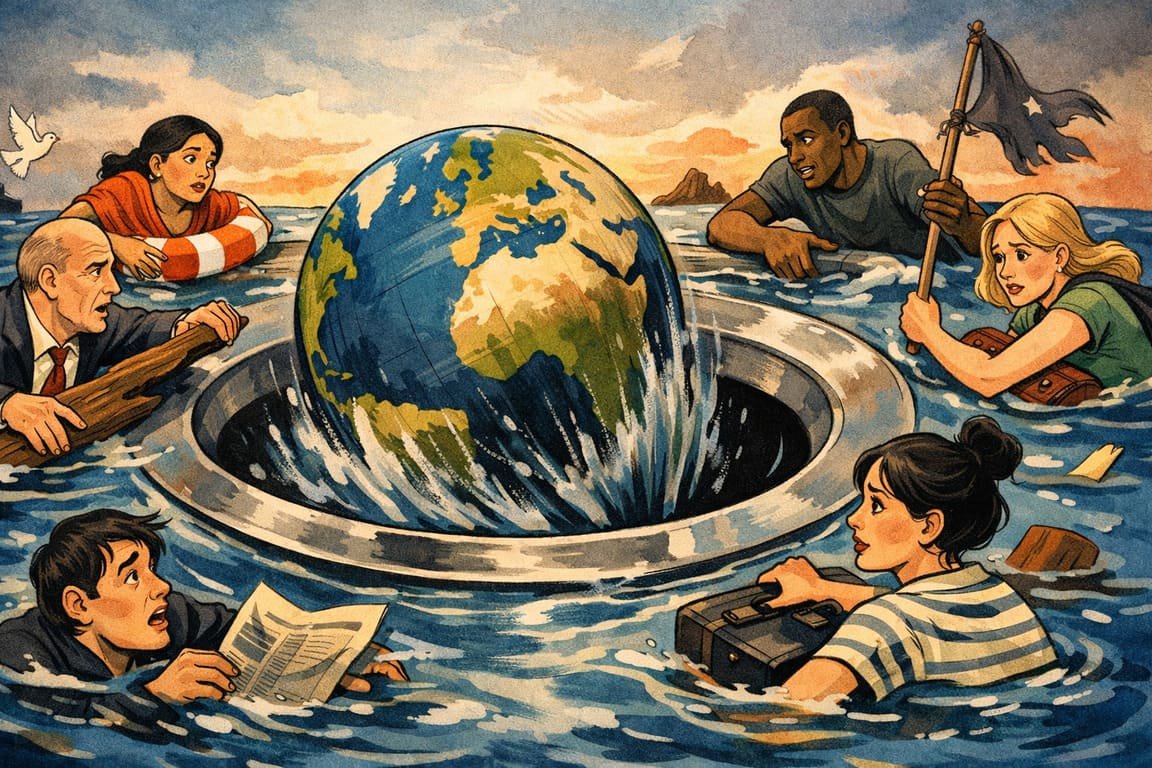
The square fills on schedule. Banners rise. Loudspeakers crackle with language about voice, dignity, choice. The ritual is familiar enough to feel reassuring, almost inherited. From a distance, democracy still looks alive. Up close, the energy leaks quickly. People leave early. Conversations harden. What remains is not defeat, but exhaustion, the sense that freedom has become something heavy to carry rather than something that lifts.
Democracy was never meant to be easy. It demands attention, tolerance, and restraint, qualities that thrive only when people believe effort leads somewhere meaningful. What has changed is the emotional cost of participation. Every issue arrives framed as existential. Every election feels terminal. Under constant alarm, freedom stops feeling empowering and starts feeling like a burden that never rests.
Choice, once democracy’s promise, begins to overwhelm. When every institution is contested, every outcome disputed, and every authority questioned, decision-making slows to a crawl. Policy becomes reactive. Leaders chase moods rather than build futures. The system still functions, but it does so breathlessly, as if permanently short on oxygen.
Economic reality sharpens this drain. When freedom exists formally but opportunity feels unreachable, belief erodes. Voting begins to feel symbolic. Participation becomes habit rather than hope. People show up, then watch their lives remain unchanged. Over time, cynicism replaces patience. Democracy continues, hollowed from the inside.
Technology accelerates the erosion. Platforms reward outrage over reflection, speed over accuracy. Political engagement turns performative. Everyone speaks. Few listen. The illusion of participation expands while the substance thins. People feel involved without feeling effective.
There is also a growing impatience with slowness. Democracies move deliberately by design. They are built to resist sudden swings. In a culture trained by instant feedback and constant updates, that pace feels broken. Authoritarian decisiveness begins to look efficient, not because it is humane, but because it appears to get things done.
Critics point to dysfunction as proof of democratic failure. Defenders reply that chaos is the price of liberty. Both miss the deeper problem. The issue is not disorder. It is decay of the habits that sustain freedom. Civic education fades. Local institutions weaken. Shared facts fragment. Freedom without scaffolding collapses inward.
Some societies respond by tightening control. Others cycle through populist surges that promise renewal and deliver disappointment. In both cases, trust drains further. The paradox deepens. Systems designed to distribute power struggle to generate shared purpose.
At its core, democracy assumes generosity of spirit. It requires people to believe opponents are wrong, not evil. That assumption is eroding. When politics becomes identity, losing feels existential. Compromise feels like surrender. Participation becomes emotionally dangerous rather than constructive.
Still, decline is not inevitable. Where institutions deliver competence rather than rhetoric, trust returns slowly. When local governance produces tangible results, belief stabilizes. Freedom regains weight when it creates outcomes people can touch, not just rights they are told to revere.
Late evenings in ordinary homes reveal the quiet consequence of the drain. Political conversations shorten or disappear. Curiosity gives way to sarcasm or silence. Democracy does not collapse loudly. It thins out, one disengaged citizen at a time.
Freedom, it turns out, is not self-sustaining. It demands maintenance, patience, and restraint, virtues currently out of fashion. Without them, choice becomes noise and voice becomes static.
And as ballots are cast again under familiar banners, the unresolved question lingers beneath the ritual: if freedom keeps asking more than people feel it gives back, how long before they begin to let it slip away?
