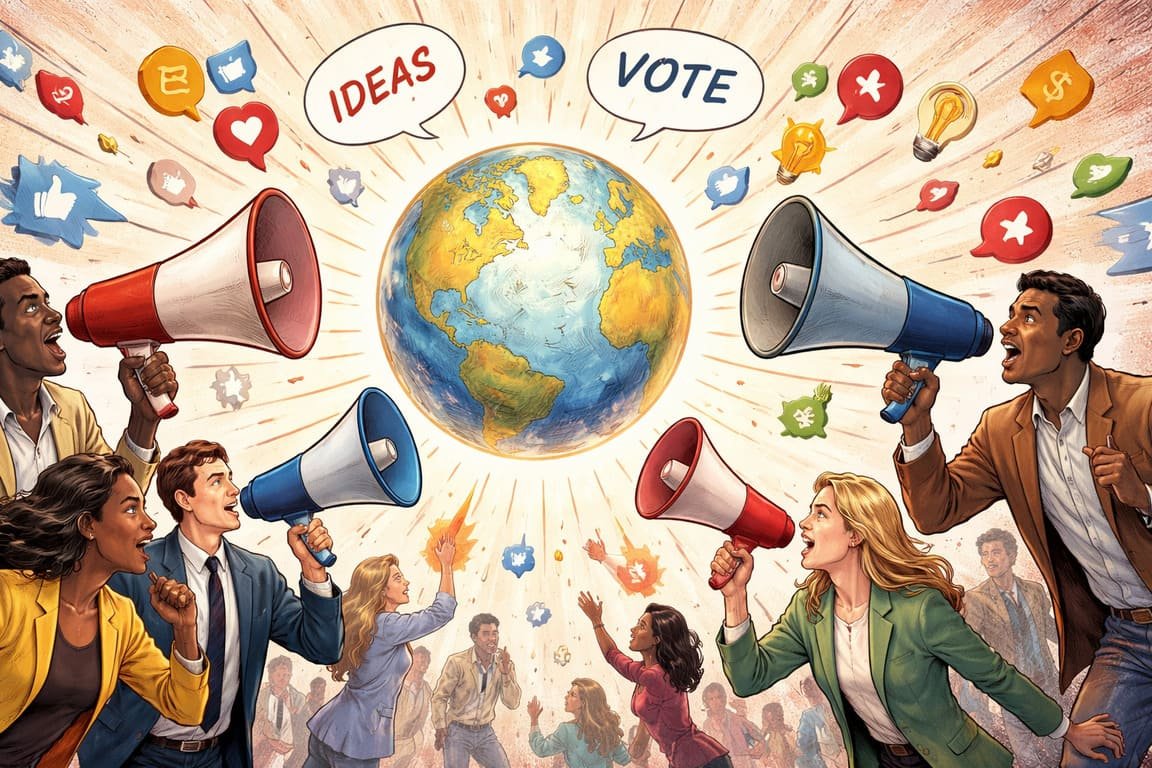
The auditorium is full, yet nothing physical is happening. No drills. No banners. No visible threat. Screens glow softly while phrases are tested, discarded, reshaped. Somewhere inside those sentences, momentum is forming. Modern conflict no longer waits for troops to mobilize. It begins when a narrative lands correctly, when a sentence travels farther than a missile ever could. This is the new army, invisible, persuasive, and already inside the room.
For most of history, power announced itself through force. Territory changed hands after blood was spilled. Authority followed whoever could impose will most effectively. That logic still exists, but it has been quietly outpaced. Today, nations gain advantage by shaping perception rather than seizing land. Influence has become strategic infrastructure. Words now do what armies once did.
This shift accelerated as trust in institutions weakened. People stopped agreeing on facts, then stopped trusting messengers. Media ecosystems fragmented. Attention became scarce and emotional. Governments noticed the change and adapted. Control no longer required censorship alone. It required saturation. Flood the space with competing interpretations until certainty dissolves. Confusion became leverage.
Social platforms transformed persuasion into a real time battlefield. Messages reached millions before diplomats reached podiums. Emotion traveled faster than verification. A well timed narrative could destabilize an election, calm a protest, or fracture an alliance. States built influence units that looked more like creative agencies than military divisions. Engagement metrics replaced body counts. Virality became intelligence.
A fictional foreign ministry memo once described the strategy plainly. Never argue the point directly. Reframe the context so the question dissolves. Instead of denying criticism, redirect attention. Instead of suppressing dissent, overwhelm it. The approach worked because it respected human psychology rather than brute logic. People do not adopt beliefs through force. They absorb them through repetition and familiarity.
The idea itself is not new. Sun Tzu warned that the highest form of victory required no battle at all. What changed is scale. Influence now reaches individuals directly, bypassing traditional gatekeepers. Each person becomes a potential vector, carrying fragments of narrative into conversations, classrooms, and voting booths. Power disperses through participation, often without awareness.
Culture amplifies this effect. Humor disarms skepticism. Music travels faster than policy. Memes outperform manifestos. Governments that understand cultural fluency gain traction. Those that rely on formal statements sound distant and slow. Authority increasingly belongs to whoever understands the emotional weather of the crowd rather than the letter of the law.
This new army raises uncomfortable ethical questions. Persuasion slides easily into manipulation. Where does strategic communication end and psychological coercion begin. Democratic societies wrestle with this line daily. Protecting free expression while countering hostile influence demands nuance, patience, and restraint. These qualities rarely thrive under electoral pressure.
The inward use of narrative tools complicates matters further. Governments shape domestic perception with the same techniques once reserved for adversaries. Economic pain becomes resilience. Surveillance becomes safety. Sacrifice becomes virtue. Over time, citizens struggle to distinguish genuine consensus from expertly guided agreement. The danger is not lies alone, but the erosion of shared reality.
Military budgets reflect this transformation quietly. Resources shift toward cyber operations, behavioral research, and strategic messaging. Linguists advise commanders. Psychologists sit alongside analysts. Conflict expands into classrooms, comment sections, and dinner tables. Defense no longer protects borders alone. It protects narratives.
Ordinary people feel this pressure intuitively. Conversations feel sharper. Trust thins. Many sense they are being nudged constantly, though the source remains elusive. Fatigue sets in. Suspicion grows. When everyone is influencing and being influenced simultaneously, certainty becomes rare and cynicism tempting.
Yet influence itself is not inherently corrupt. Clear communication saves lives during crises. Persuasion can mobilize cooperation and de escalate conflict. The same tools that mislead can unify. The difference lies in intent and accountability. Words reveal character when no one is watching closely.
As night falls over capitals glowing with screens rather than searchlights, messages are drafted that will ripple far beyond their origin. Some will calm. Others will divide. None are neutral. The age of brute force has not vanished, but it no longer rules alone. And as nations continue sharpening this invisible army, one unsettling thought lingers quietly in the background: in a world where words move faster than weapons, how often are beliefs chosen freely, and how often are they simply placed gently in reach?
