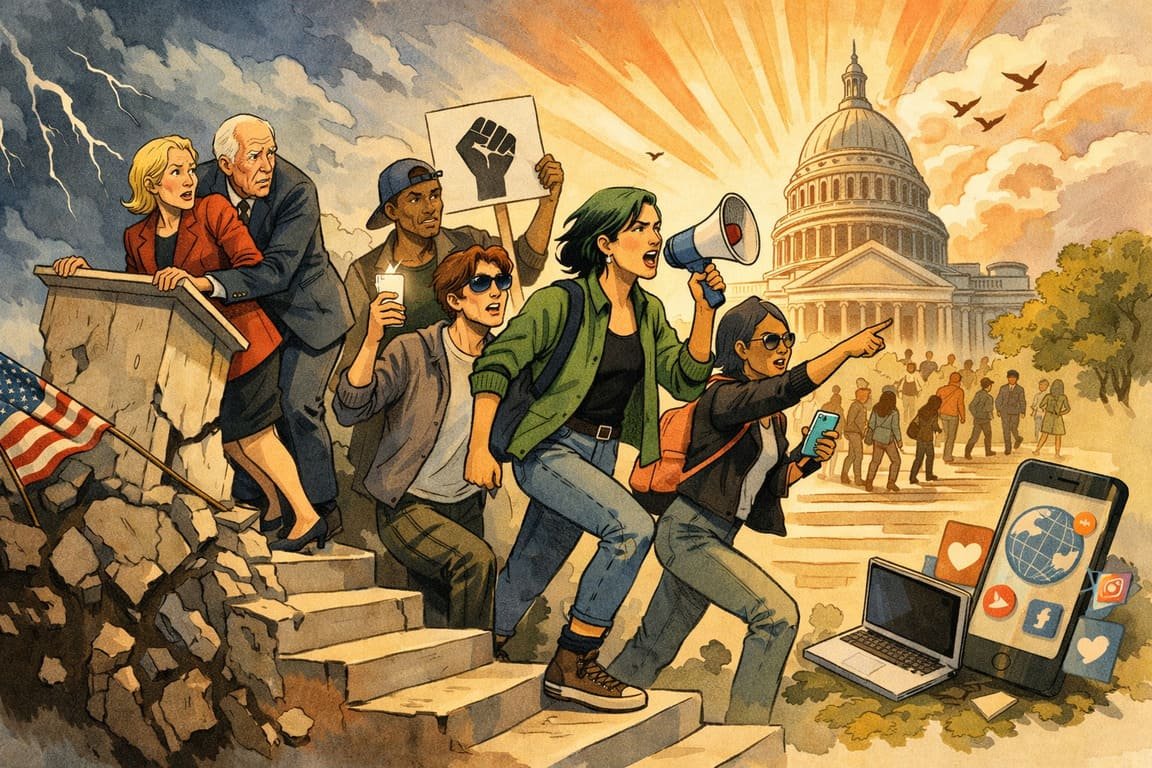
The room does not feel revolutionary at first. Folding chairs scrape concrete. Phones glow like nervous habits. Conversations skip between rent, climate dread, and exhaustion without apology. There is no single leader, no central slogan. What gives the moment weight is something subtler, a shared refusal to wait for permission. Politics, as this generation experiences it, is no longer a distant ritual. It is a daily negotiation with systems that feel expensive, fragile, and increasingly out of touch.
Gen Z did not grow up believing institutions were stable. Financial crashes, endless wars, climate alarms, and a pandemic unfolded during formative years. Authority arrived already cracked. Promises aged badly in real time. This background shaped a generation that is neither naïve nor detached. Idealism exists, but it is armored with skepticism. Politics feels personal because instability has always been personal.
Unlike previous generations, loyalty does not flow easily toward parties or labels. Identity is fluid. Participation is selective. Voting matters, but so do boycotts, strikes, online pressure campaigns, and mutual aid. Power is not something granted every few years. It is something tested constantly. Engagement appears where impact feels immediate and disappears when performance replaces substance.
Social media acts less like a megaphone and more like a courtroom. Receipts matter. Inconsistencies surface quickly. A single clip can undo years of image management. Critics call this chaos. Supporters call it accountability. For Gen Z, visibility equals responsibility. Authority must explain itself repeatedly, not just during election cycles.
Economic reality sharpens everything. High living costs, unstable work, and delayed milestones shape political urgency more than abstract ideology. Home ownership feels mythical. Career paths feel conditional. Policy debates about wages, housing, and healthcare are not theoretical. They define whether adulthood feels possible. When leaders speak vaguely about growth, the disconnect feels insulting rather than disappointing.
Climate anxiety sits at the center of this political identity, steady and unresolved. It is not a future concern. It is wildfire smoke, flooded streets, and summers that feel wrong. Environmental policy becomes a moral baseline, not a niche interest. Patience runs thin when timelines stretch beyond lifespans already marked by uncertainty.
Conversations about identity often dominate headlines, yet from within the generation they feel pragmatic. Race, gender, and mental health are treated as material realities that shape safety and access. Ignoring them does not feel neutral. It feels dishonest. The demand is not purity. It is acknowledgment paired with action.
There is a deep distrust of performance without substance. Corporate slogans, political branding, and empty virtue signals are spotted quickly. Gen Z grew up fluent in marketing language. Authenticity matters, even when imperfect. A leader who admits limits can feel more credible than one who speaks flawlessly while dodging responsibility.
A small local election revealed this shift clearly. Students bypassed a polished rally and hosted an unscripted town hall in a library basement. Attendance was modest. The questions were blunt. Housing, policing, tuition, and climate were raised without deference. The candidate left unsettled but later admitted it was the most honest exchange of the campaign.
Critics worry about fragmentation and impatience, and those concerns are not baseless. Online activism can burn fast and fade. Ideological rigidity can fracture coalitions. Yet every political generation brings excess alongside innovation. The difference now is speed. Mistakes spread quickly, but so do lessons and corrections.
Humor has become a political tool rather than an escape. Memes carry arguments. Satire punctures contradiction. Laughter exposes power more effectively than outrage alone. This unsettles traditional gatekeepers who equate seriousness with solemnity. Engagement no longer has to look old to be legitimate.
Institutions are already adjusting. Newsrooms shift tone. Campaigns rethink messaging. Workplaces respond to political values once considered private. These adaptations are uneven and sometimes cynical, but they signal recognition. Ignoring this generation is no longer possible when cultural influence outpaces formal authority.
This power shift is not a takeover. It is a negotiation unfolding in real time, marked by friction, creativity, and burnout. Gen Z does not claim to have perfect answers. It claims the right to ask why the old ones stopped working. As this generation moves deeper into leadership, the lasting impact will not be measured by how loudly it disrupts politics, but by whether it keeps refusing the comfort of broken rules long enough to build something that finally feels honest.
