A flickering neon sign casts blue-green shadows across an all-night diner, where strangers nurse their coffee and swap secrets between mouthfuls of pancakes. At the corner booth, a battered notebook sits between stacks of printed surveys, tangled headphones, and a pack of fluorescent highlighters. This isn’t a scene from a noir film—it’s the unsung reality of research, stripped of gloss. While the world obsesses over results, the true drama unfolds long before any headline. Underneath the surface, beyond polished charts and neatly summarized abstracts, the real work happens in those midnight sessions of method, mess, and meaning.
No one warns you that research methods are less about clean protocols and more about wrestling with chaos. You crave clarity, but life insists on ambiguity. Every great research project begins with a map but quickly detours through dead ends, hidden passageways, and rabbit holes that tempt you to give up. There’s humor in this maze: ask anyone who’s tried to replicate a peer’s experiment using only their published method section, and you’ll hear stories of frustration, accidental discovery, or near-mutiny among team members. The journey beneath the surface isn’t pretty, but it’s where real understanding grows.
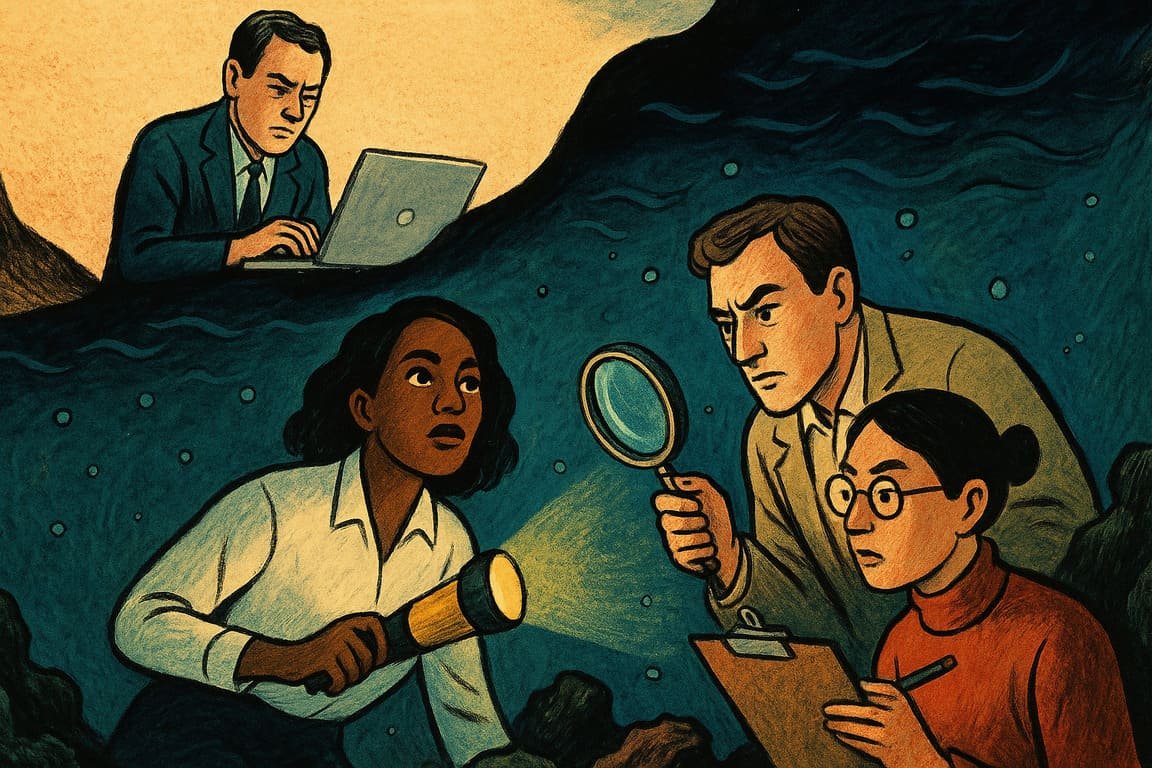
Peel back the layers, and you’ll find that every research method—whether a double-blind clinical trial or a messy ethnographic interview—asks you to become a detective. You track evidence, question motives, and assemble clues. Sometimes, the real culprit is bias, lurking in the margins. Other times, it’s the sly smile of random error, slipping past your careful controls. Veteran researchers like Dr. Priya Menon swear by pilot studies not for perfection, but for the art of embracing and managing chaos. She jokes that every breakthrough in her lab is “a marriage of stubbornness and lucky guesswork.”
As you dig deeper, you realize that no method works in isolation. The real magic begins when you mix approaches, letting qualitative nuance challenge the tyranny of numbers or allowing hard data to temper wild speculation. It’s a dance, not a formula. Cross-disciplinary teams find that friction breeds innovation. Remember the story of Leandro Baptiste, who teamed up with a novelist to run focus groups for mental health interventions? The novelist spotted what the psychologists missed, shifting the project’s direction entirely. The takeaway: mixing perspectives isn’t just a fad; it’s a method in itself.
Every method brings its own set of rituals and superstitions. There’s the statistician who taps their pencil before every t-test, the fieldworker who wears the same battered sneakers to every interview, the coder who refuses to run analysis on Mondays. These quirks might sound silly, but they’re survival strategies—tiny anchors in a sea of uncertainty. Methods aren’t just about logic; they’re about trust, routine, and the rituals that help us face the unknown day after day.
You soon learn that documentation is your secret weapon. The best researchers keep obsessive records—not because they’re neat freaks, but because memory lies. Your brain will edit out every misstep and mistake unless you write them down. Think of the viral post by Sofia Nguyen, who shared scans of her hand-written lab logs and sparked a global #MessyMethods movement. Her honesty reassured a generation that imperfection is not only normal but essential to progress.
Dive into any successful project, and you’ll find a secret: methods evolve. No blueprint survives contact with the real world. Deadlines slip, samples dry up, interviewees ghost you, funding dries up, and data morphs into unrecognizable patterns. Those who thrive are not those who follow the script, but those who rewrite it. The flexibility to pivot, adjust, and invent new rules is often the hidden skill that sets you apart.
If you’ve ever envied the seemingly effortless output of a famous research team, know this: the surface is an illusion. Beneath every elegant publication is a swamp of drafts, failed pilots, conflicting opinions, and late-night debates. True rigor comes from admitting what you don’t know and inviting others to poke holes in your plans. The strongest research is built on the shaky ground of humility, not the bedrock of certainty.
Look for the stories that never make the press release. The anthropologist who lived for months among street vendors and returned with more questions than answers. The startup founder who ran hundreds of A/B tests, only to discover the “winning” version alienated her core users. These are the stories that shape disciplines and move industries, even if the outside world never knows their names.
Pop culture loves a genius moment, but real insight happens in the unglamorous details: the hours coding a survey, the afternoons transcribing interviews, the soul-crushing doubt after a messy focus group. Every method is a mirror. It reveals not just the world, but the shape of your own determination. Lean into the mess. Cherish the rituals, the improvisations, and the moments when nothing makes sense.
One last secret: every method you use will someday be outdated, ridiculed, or replaced. That’s the price of progress. The goal isn’t to defend your tools, but to keep asking new questions, adapting, and letting each method lead you deeper into the unknown. Today’s breakthrough is tomorrow’s starting line.
A row of streetlights blinks across a foggy riverbank. On the edge, a solitary researcher stands in boots caked with mud, eyes fixed on the shifting tide. The city’s noise fades behind her, replaced by the whisper of data points waiting to be gathered, stories begging to be told. She pulls a crumpled protocol from her pocket, traces the water’s edge, and wonders what mysteries tomorrow’s tide will reveal. Somewhere out there, in the murk and the dark, new methods are already stirring, ready to be claimed by those bold enough to look past the surface.
You will never know everything, but you can always learn more—if you keep wading deeper.
