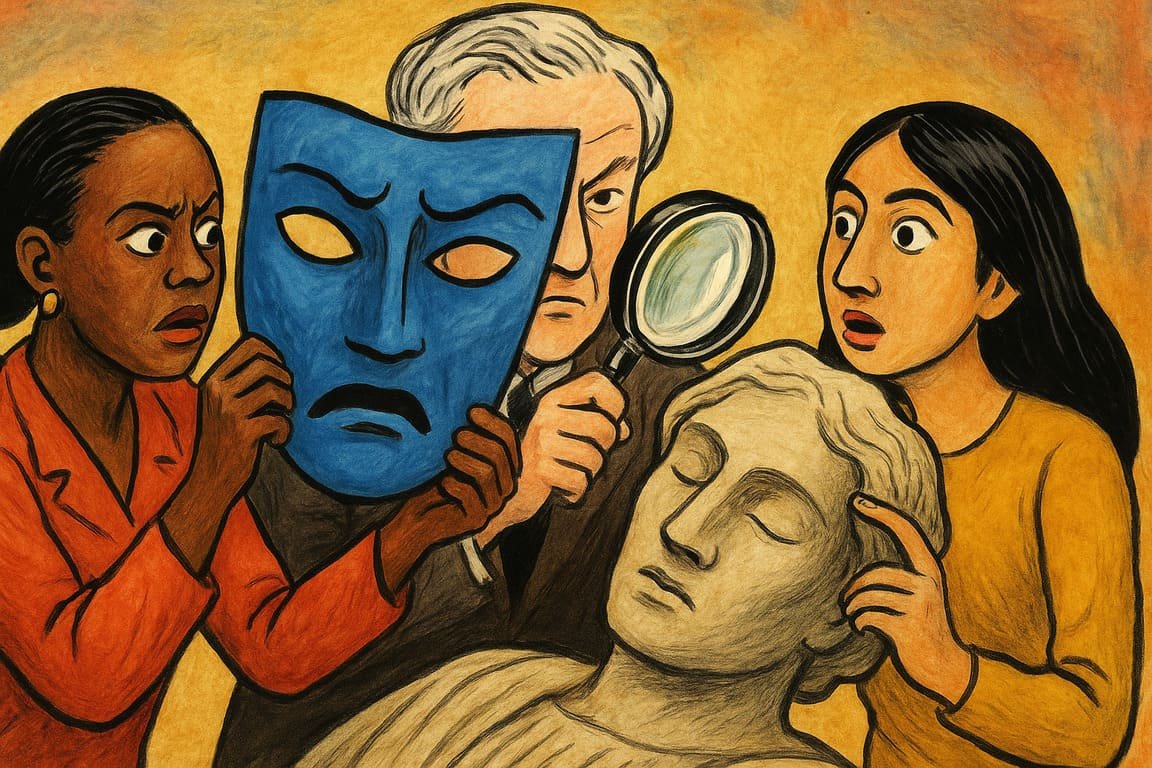
A lone bulb flickers above a concrete basement floor where dust floats like quiet ghosts caught in the light. A row of filing cabinets stands against the wall, each drawer packed with forgotten notes, raw data, and truths that never made it into press releases. A figure leans over a cluttered table, eyes fixed on a stack of handwritten observations that feel more alive than the machines humming in the corner. Outside, the world roars with noise and opinion, but here, silence carries weight. This room is not a laboratory. It is a vault where reality waits to be uncovered by anyone brave enough to follow the trail. Research begins long before the first question is written. It begins with the decision to see what others refuse to see.
Through every age, societies have spun myths to explain the unknown. Yet the moment someone decides to measure instead of assume, the world shifts. Research interrupts comfortable illusions. It forces us to hold up a mirror and look at what is really there. Scientists, journalists, analysts, and everyday seekers become detectives, sifting through clues that can reshape industries and rewrite cultural norms. The truth rarely shouts. It whispers through patterns, contradictions, and the stubborn details that refuse to be ignored. Those who chase it know the thrill and the terror of discovering something that demands action.
You begin to appreciate this once you realize how many decisions in your life rely on interpretations, not facts. Research invites you to slow down and examine the machinery behind your beliefs. When you revisit long held assumptions, you often discover cracks you never noticed before. Maybe you believed your team performed poorly because of laziness, only to learn later that unclear communication or unfair incentives were the real culprits. Research unveils these hidden layers and teaches you to approach challenges with humility instead of blame.
Every breakthrough story carries this same pattern. Someone decides to look deeper. Consider the rise of hybrid work. Companies initially resisted flexible models because they trusted outdated assumptions. When researchers began comparing employee productivity in office versus remote environments, the narrative changed. Those findings did not simply adjust work culture. They dismantled a century old design built on rigid schedules. That shift began with curious minds willing to examine what others ignored. Reality changed because research pulled the curtain back.
Case studies from across the world reinforce this truth. A small clinic in Cape Town once struggled with overcrowding and long patient waits. Leaders assumed the issue was a staffing shortage. After a research team observed the facility for several weeks, they discovered a pattern. Patients often waited for a single administrative step that could easily be moved online. Once that adjustment was made, the clinic’s efficiency improved almost overnight. The lesson was simple. When assumptions are replaced with investigation, solutions reveal themselves.
Research is not exclusive to academics with advanced degrees. The everyday choices you make can benefit enormously from the same discipline. You can test your own ideas at home, at work, or in business. If you suspect your marketing is underperforming, investigate past campaigns. If you doubt your fitness routine is effective, track your outcomes. Evidence can liberate you from guesswork. You stop reacting emotionally and start acting strategically. The shift feels empowering because it anchors your decisions in truth rather than impulse.
However, the search for truth is not always comfortable. Research can expose flaws, ego, and blind spots. It might reveal that your cherished plan is weak or that your favorite theory has no foundation. Many leaders avoid this discomfort and cling to their original beliefs. The courageous ones face the evidence and allow themselves to evolve. A story from a manufacturing firm in Mumbai captures this perfectly. For years, managers believed worker turnover came from poor discipline. When researchers interviewed employees privately, they found the real issue was a lack of growth opportunities. Once promotions and training were introduced, retention soared. Research did not shame leadership. It saved the company.
You might notice a pattern by now. Research is often the quiet hero behind transformations that look explosive from the outside. It is the hidden architect behind innovation at companies like Pixar, where teams spend months studying audience emotion before producing a single frame of animation. It is the invisible driver behind the political strategies that shape nations, the social reforms that shift history, and the technologies that become part of daily life. Without research, these breakthroughs would be guided by luck instead of clarity.
Your own life has similar turning points. Think about the moments when you realized something profound after studying your own behavior. Maybe you discovered that your stress spiked not because of workload, but because you never paused between tasks. Maybe you learned that a relationship struggled not from lack of love, but from poor communication patterns. Research happens in these moments too. It is not always about large datasets or complex tools. Sometimes it is about noticing repeated pain, repeated joy, or repeated mistakes and asking why.
The world moves quickly, and many people respond by rushing blindly. Research forces you to pause. It reminds you that reality has layers, and many of them are invisible until you study them with deliberate attention. Leaders who ignore this discipline will always be surprised by events they should have foreseen. Leaders who embrace it gain the freedom to choose their path instead of reacting to it.
As you look ahead, consider how much of your life runs on untested beliefs. Research offers the chance to rewrite your understanding of everything: your work, your relationships, your habits, your dreams. It is the bridge between uncertainty and clarity, between confusion and confidence. When you embrace it, the world feels less overwhelming and more navigable. You gain the power to shape your future instead of hoping for a lucky break.
In a quiet archive room at the back of an old library, a clerk slides a dusty folder across a long wooden table. The papers inside hold observations that once seemed insignificant but collectively reveal a hidden pattern. Outside, the city pulses with distractions, yet here, the truth waits patiently, untouched by noise or hype. A researcher flips through the pages, eyes widening with recognition as the pieces align. The room feels charged, as if time itself has paused to witness a revelation.
The folder closes, and the weight of knowledge settles like a stone warming under sunlight. Truth always sits quietly until someone is ready to carry it forward. Research unlocks that moment, handing you the key that changes how you walk through the world. And now the question hangs in the air, still and powerful: What truth will you uncover when you finally choose to look deeper?
