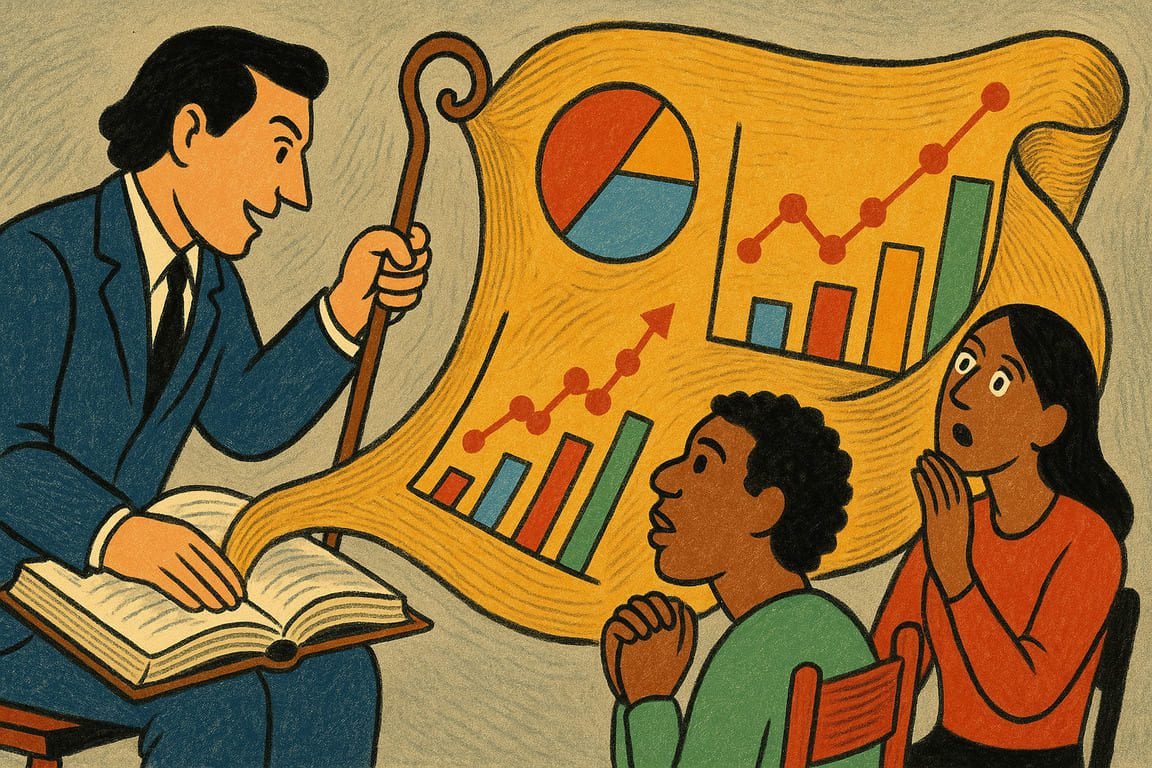
A faded lecture hall crackles with fluorescent light as rows of half-empty seats wait for something remarkable to happen. Onstage, a weathered professor rolls up his sleeves, tossing aside the standard script. No one expects much—just another slog through means and medians. But then, instead of formulas, a vivid story erupts from the chalkboard. He sketches a graph, then a pair of hands—one trembling, one steady—holding a lottery ticket. The numbers on the axis aren’t just statistics; they’re the difference between hope and despair. The room shifts. Suddenly, everyone leans in. This isn’t math. It’s a revelation.
Great storytellers don’t need fables—they need facts. Data isn’t dry. It breathes, pulses, sweats with anticipation. When told right, a story built from numbers leaves a mark deeper than any headline. Picture Daniel Kahneman and Amos Tversky, two Israeli psychologists who transformed psychology with experiments that proved our brains were wired to misjudge risk. Their statistics didn’t just live in academic journals; they shaped Wall Street, medicine, and even how armies plan their next moves.
You’ve probably felt the difference between raw data and a story that grabs you. Scroll through your favorite news site—what do you remember? Not the spreadsheet, but the headline about a small town where rainfall doubled and houses slipped underwater. It’s the same with business: the campaign that doubled revenue is less interesting than the people who dared to believe it could work.
Numbers are everywhere, but meaning is rare. That’s why Nate Silver—baseball stats geek turned political oracle—became a sensation. He turned probabilities into cliffhangers, politics into poker. His secret wasn’t accuracy alone; it was drama, rhythm, risk. You crave not just to know, but to feel.
Stories told through data change minds. In London, a public health researcher used colorful maps to show where air pollution hit hardest. That single visual didn’t just win awards—it triggered outrage, debate, and real reform. Numbers start the journey, but stories finish it.
When companies want to move hearts, they turn to data storytellers. Netflix, for example, curates recommendations not with bland categories, but with micro-genres and user journeys. It’s the difference between “Romance” and “Sweaty Palms: High School First Love.” The right numbers, told well, make you the hero of your own binge.
You might worry about getting lost in jargon. But the best stories come from simplicity. Think about Hans Rosling, whose TED Talks used bouncing bubbles to narrate decades of global progress. He made billions of data points feel like an epic quest. When you watch his talks, you don’t just learn; you believe.
Statistics are dangerous when stripped of humanity. The infamous case of p-hacking—when researchers twist data to get flashy results—reminds us of the thin line between truth and fiction. Every storyteller holds power, and with it, responsibility. A spreadsheet can spark a movement or crush a reputation.
The world’s best leaders wield numbers like wands. Angela Merkel, a scientist by training, soothed a panicked nation during a crisis by patiently explaining infection curves and risk. Her calm, honest charts made fear manageable and guided millions through uncertainty. Numbers in her hands became shields, not just signals.
There’s a fine art to choosing which numbers to highlight. In marketing, a single metric—say, the cost per click—can define an entire strategy. The master storytellers, like Seth Godin, know how to pick the stat that sings, framing it within a bigger narrative about trust, tribe, and transformation.
Sometimes, the most powerful story is hidden in an outlier. Consider the case of “Lifeline,” a fictional nonprofit that studied suicide prevention hotlines. One data point—a call placed at midnight from a remote farmhouse—helped redesign their entire system to save more lives. Numbers don’t just describe the world; they can change it, one detail at a time.
When you master statistical storytelling, you bridge two worlds: the cool logic of data and the hot pulse of emotion. You learn to spot patterns, sense urgency, and stir action. No hero stands taller than the one who can turn a million numbers into a single truth that inspires.
A lone projector beams its last slide onto cracked plaster, casting shadows that move as the story lingers. Somewhere in the darkness, an audience leaves changed—not by the count, but by the courage to care about what counts.
You’re holding numbers right now. Will you let them fade, or will you weave a story the world can’t ignore?
