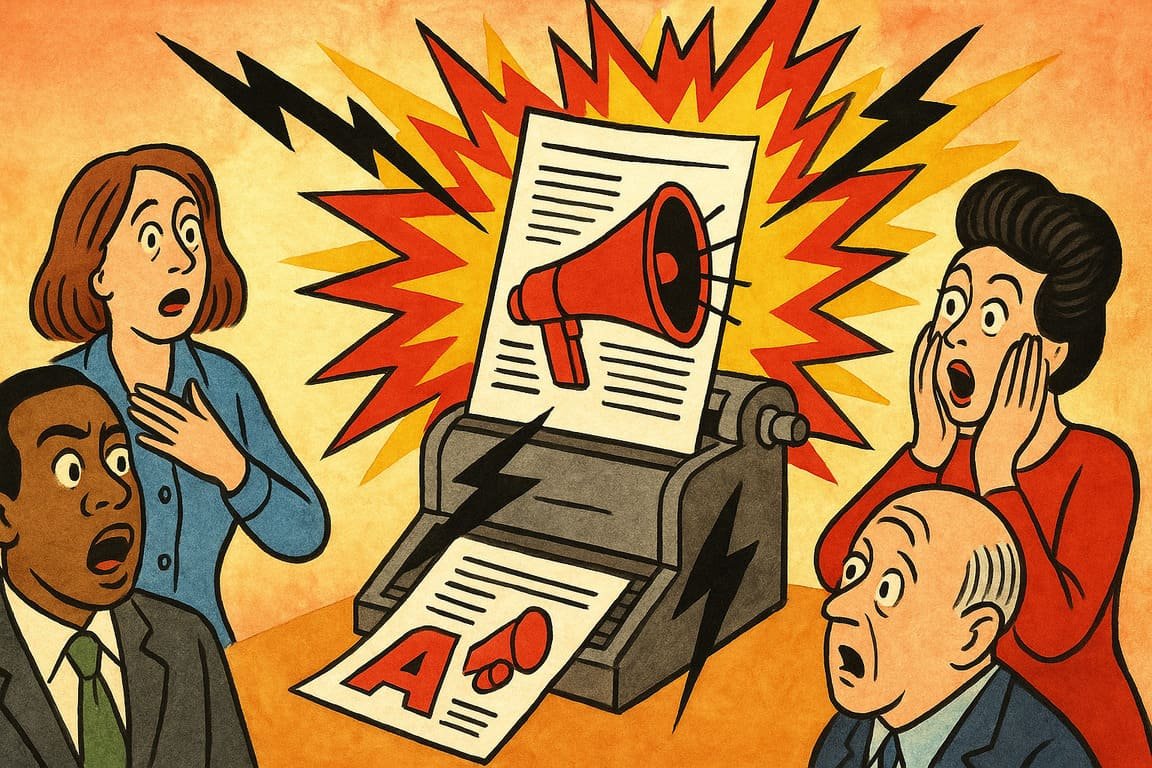
Thunder booms across an empty intersection as a battered delivery van screeches to a halt beside a graffiti-laced newsstand. The vendor’s hands—stained with ink—shuffle through fresh magazines and flyers, each sheet bristling with new energy. Under flickering streetlights, a teenager snatches a zine, eyes wide as headlines shout with riotous fonts and neon-soaked illustrations. Posters plaster cracked walls, their graphics so bold they seem to throb against the silence. This isn’t nostalgia. It’s a revolution. Print, once pronounced dead, now erupts with a vengeance. In the battle for attention, analog shocks the system awake. The world looks up from glass screens. Print bites back, vivid and defiant.
You sense the tension. Screens dominate your days, scrolling feeds until your mind fogs over. Yet something primal snaps to life when a heavy magazine lands on your doorstep or a wild poster appears overnight on your commute. Your fingers crave the texture of real paper, the drag of ink, the secret thrill of dog-earing a page. Brands have noticed. The ones grabbing your attention aren’t whispering. They’re launching visual fireworks on anything that doesn’t glow in the dark.
Print’s revival is not about nostalgia—it’s about impact. When Glossier dropped limited-edition stickers in their shipping boxes, a digital brand suddenly felt real. When Netflix filled Paris with hand-painted murals for a premiere, social feeds lit up not from paid ads, but from fans chasing the art across the city. The new print revolution blends surprise with spectacle. Suddenly, every magazine, postcard, or guerrilla sticker becomes a collector’s item and a status symbol.
Designers are pushing boundaries. A creative team at a London agency once left city benches covered in fold-out comics. By lunchtime, the stunt had gone viral, with hashtags driving traffic back to print subscriptions. The lesson: in a world addicted to swipes and taps, physical graphics stop people in their tracks. Even ad-weary crowds find themselves reaching out, tearing, saving, pinning, sharing. The best print shocks people out of autopilot.
You’re not immune to the rush. You’ve felt it—a jolt when a poster’s colors burn against the grey of your subway ride, a secret smile at a cheeky postcard slipped under your door. Print design goes for the jugular, wielding scale, surprise, and scarcity. Suddenly, the most powerful stories are the ones you can hold, crumple, or hand to a friend.
Print revolutionizes storytelling, too. Remember the viral Ikea catalog that became a meme? Or the New Yorker’s covers that break the internet for days? These aren’t accidents. Designers mix craft with rebellion, making graphics that demand more than a quick glance. You find yourself turning pages, pausing to reread, or framing a flyer because it feels like a protest or a love letter.
This shock therapy works because it wakes up the senses. Digital can do many things, but it cannot match the adrenaline of a magazine hot off the press, the rebel yell of a political zine, or the theater of a pop-up bookshop. Brands investing in print design know you’re starving for texture, for the memory of a world that was slower, louder, and less disposable.
Personal stories power the comeback. When a tiny bakery in Detroit wrapped every loaf in illustrated paper, lines snaked down the block. The wrapping became a calling card, more memorable than any Facebook ad. Or think of the street artist Maya who transformed subway ads into layered collages, her Instagram exploding as fans tried to find every new piece. These stories prove that print isn’t dead—it just had to evolve.
You want to be surprised. That’s why guerrilla posters, risograph zines, and limited-run art books now sell out in hours. Brands learn that print can spark movements, not just sales. When Patagonia mailed hand-stitched patches to activists, or when Apple filled the streets with QR-coded posters that unlocked AR worlds, attention shifted from passive to participatory.
The shock of print is not just visual. It’s a rebellion against forgettable design. When you find a hand-lettered envelope in your mailbox, you feel chosen. When a gig poster steals the show at a dive bar, the memory outlasts the music. Print dares to be permanent in a world obsessed with the fleeting.
Print’s new life is also about trust. You believe what you can touch. You’re more likely to remember, share, or keep a graphic when it’s real. Print gives brands authority and gravity. That gravity is irresistible when everything else floats away with the next scroll.
As dawn creeps over the city, the newsstand vendor locks up, ink-stained hands tucking away the last unsold flyers. Teenagers compare zines on the curb, their laughter ringing out, proof that shock can still cut through the noise. Somewhere, a creative stares at a blank page, itching for the next chance to jolt the world awake. Paper, ink, and nerve: the revolution will not wait. Will you?
