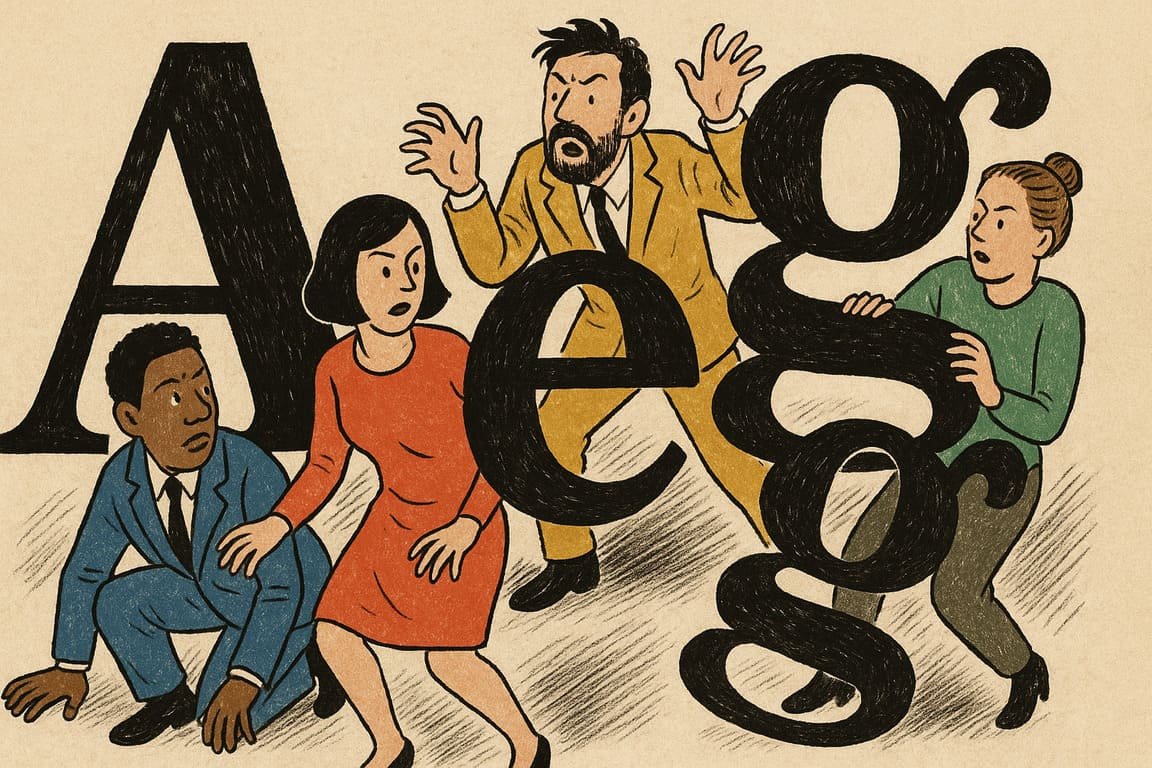
On a rain-streaked sidewalk outside the city’s main library, an art student crouches beside a poster half-torn by the wind. A single letter—jagged, bold, unforgettable—seems to pulse in the lamplight, pulling eyes from every passing stranger. Inside, shelves sag with books on type, but it’s the living, breathing typography out in the wild that shapes human behavior. Every headline, every sign, every menu becomes a tiny conductor’s baton, directing the rhythm of daily life.
Letters are silent architects. The curve of an “a,” the force of a “Z,” the soft hug of a rounded “o”—each influences what we feel and how we act. Great designers understand that font choice is more than taste. It’s psychology in motion. Consider how luxury brands use spaced-out serifs to slow the eye and signal exclusivity, while startups crank up sans-serifs for a burst of trust and approachability. Every letter is a micro-suggestion.
You don’t just read type—you feel it. The right font soothes, excites, warns, or invites, sometimes before you notice the words themselves. The next time you tap “Agree” on a popup, notice the font. Does it calm you? Urge you? The most successful apps and websites choreograph these micro-emotions, turning letters into guides through digital worlds.
Typography secrets aren’t just for the design elite. Anyone can harness their power with a bit of observation. Watch how kids react to playful, bouncy fonts on cereal boxes, or how a courtroom’s somber slab serif can silence a room. Every project, every client brief, is a new experiment in persuasion.
Case studies echo this truth. Maya, a community organizer, credits a 30% jump in event signups to switching her flyers from an intimidating all-caps block font to a handwritten script. The event felt more inviting, and the crowd proved it. Letters are invitations—pick the right ones, and people cross thresholds they’d usually ignore.
Typography wields special power in moments of crisis. When public health teams needed to calm a city during a blackout, they replaced cold, bureaucratic notices with clear, friendly type. Residents reported feeling less anxious and more trusting. Design, at its best, builds bridges when words alone can’t.
Secrets of great type are both ancient and ever-evolving. Old-school sign painters knew the trick: lean letters forward to urge movement, stretch headlines wide to suggest open space. Today’s digital wizards swap variable fonts and kinetic animations for even sharper control. You have more tools than ever—use them with care.
The most subtle typography choices often have the greatest impact. Ever noticed how prescription labels use high-contrast, blocky fonts to prevent mistakes? Or how meditation apps use gentle, rounded fonts to reduce stress? Each choice is a form of empathy—a way to care for strangers you may never meet.
Designers who master type become invisible influencers. Their work seeps into the culture, guiding decisions and shaping habits. A well-chosen font can even shift a movement’s energy, as seen when activists replaced angry stencil letters with softer scripts to attract wider support.
Don’t be afraid to experiment. Mix fonts, break grids, try a wild pairing nobody expects. The world’s favorite brands all took risks—think of Coca-Cola’s swoop, Google’s gentle sans, or Vogue’s powerful serifs. The rules are a starting point, not a cage.
The language of letters is universal, but mastery is rare. True pros see type as both art and science, blending intuition and intent. Every project is a chance to leave a mark, one letter at a time.
The future of typography is playful, personal, and bold. As screens shrink and new media rise, type must work harder, faster, and smarter. Your choices now will teach machines—and people—how to feel in a world where letters speak louder than ever.
A forgotten subway ad trembles in the midnight wind, its letters glowing against the grime. A designer stops to snap a photo, already imagining how to twist the font for a campaign no one’s seen before. The city’s pulse is written in type—its secrets waiting to be read, its invitations whispered by every curve and line.
The letters will outlast us all. Which ones will you choose to write your story?
