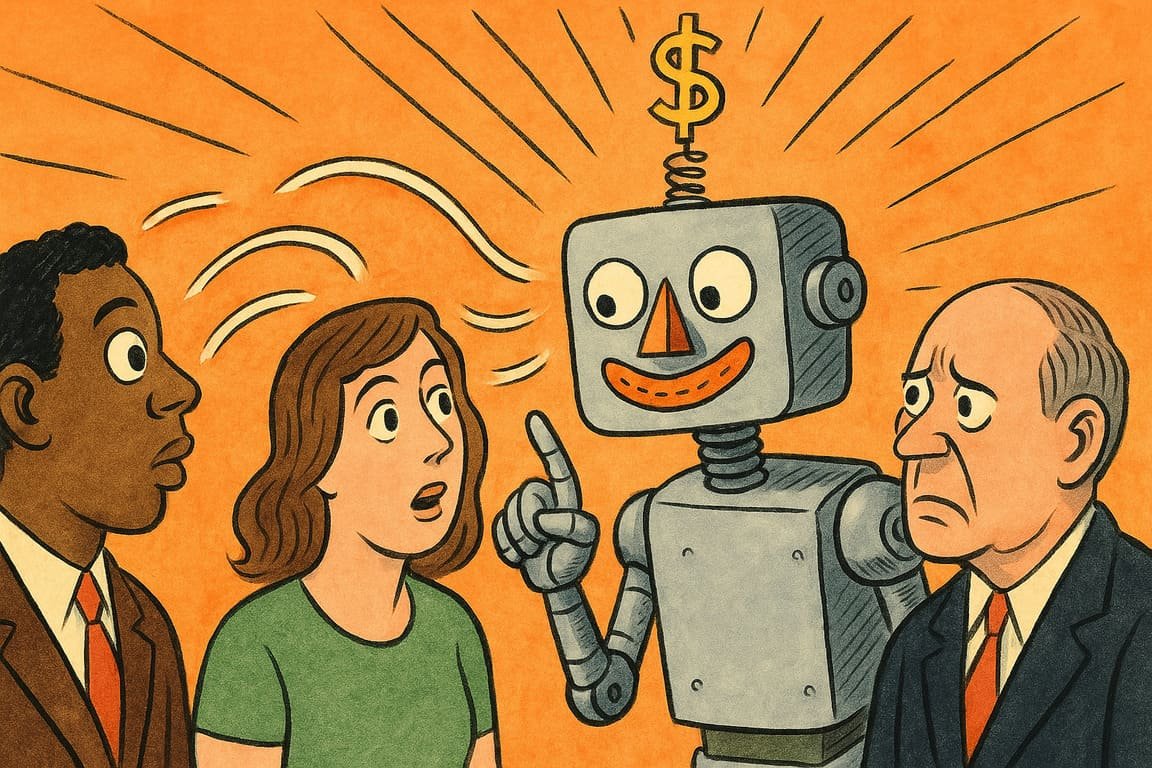
Spotlights cut across a packed arena, tracing rows of faces half-lit by the blue glow of phones. In the center stands not a rockstar, not a politician, but a voice—a voice with no body, made entirely of code, charm, and data. This is the new master of ceremonies: Artificial Intelligence, the ultimate persuader. It studies you in real time, learning your cravings, tracking every micro-expression, serving tailored messages with surgical precision. Where human marketers once guessed, AI knows. The game has changed and the stakes are higher than ever.
Shoppers wander aisles with invisible AI guides whispering, “Try this, you’ll love it.” Emails arrive with subject lines so personal they feel like secrets. Algorithms orchestrate pop-up offers that appear just as doubts creep in. A CEO in Tokyo confesses to a journalist that his entire product line is tested by neural networks before a single human eye ever glimpses the prototype. In a trendy Berlin café, a pair of influencers debate whether they’ve fallen for a product or for the AI that made them crave it. The air hums with anticipation, skepticism, and a dash of fear.
A digital strategist named Clarissa parks herself at a window seat, notebook open, watching people fall under the spell. She remembers a time when persuasion meant gut instinct, a hunch, a little psychology. Now she marvels as startups use AI to run thousands of experiments a day, twisting messages until they snap into place like puzzle pieces. It’s dazzling and unsettling. Everyone knows they’re being studied, but most just shrug and enjoy the ride.
Somewhere, a small business owner in Lagos uploads her handmade jewelry to a marketplace. By morning, her AI assistant has generated three dozen micro-targeted ads, each tuned to a different personality type. The orders roll in faster than she can package them. She grins, grateful and a little unnerved. This isn’t marketing anymore—it’s magic, a shape-shifting force that predicts, persuades, and provokes in ways no human ever could.
This is the world of intelligent strategy, where AI persuasion doesn’t just sell—it transforms, seduces, and rewrites what it means to want.
Quick Notes
- AI Charm Offensive Destroys Old Marketing Rules: The era of guessing is over. AI persuasion turns every message into a personalized arrow aimed at the heart.
- Customers Are Now Codebreakers—and Code: Shoppers are shaped by algorithms as much as by choice. The customer journey feels like a choose-your-own-adventure, but the story is being written as you live it.
- Emotion Engineering: AI Triggers Human Instinct: The smartest bots make people feel seen, special, and understood—sometimes better than real humans do.
- Ethics and Manipulation: Who’s In Control?: The line between helpful and manipulative blurs. Visionary brands fight to keep trust alive while pushing the edge of what’s possible.
- Transformation or Trap? The Human Stakes: AI persuasion creates possibility and peril, reshaping not just markets but identities. The real game is about who you become when machines know you better than you know yourself.
Algorithmic Seduction: Every Touchpoint Is a Trigger
You wake up, check your phone, and there it is—a notification that feels as if it read your mind. The song suggested for your commute is eerily perfect. The breakfast delivery app remembers your cravings and nudges you with a deal just as your stomach rumbles. Every click is a data point. The AI isn’t just following your habits, it’s learning your moods, mapping your subconscious, turning the wild chaos of desire into a predictable pattern.
A marketer named Victor tells his team, “We’re not selling products. We’re selling moments of certainty.” His AI dashboard glows with real-time feedback. Campaigns change mid-flight, shifting colors, slogans, and offers depending on who scrolls past. The old rules are toast. No more “spray and pray.” Each customer is a segment of one, their story written in code. Victor’s team jokes that their AI knows more about their audience’s breakfast habits than they do about their own families.
Shopper journeys used to be a winding path. Now they’re a loop, each step shaped by a new suggestion, a flash sale, a perfectly timed reminder. You pause at a product page and, seconds later, your feed fills with reviews, unboxing videos, and “people like you also bought” nudges. It’s like walking through a carnival where every sign is written in your favorite color and every prize feels just out of reach.
Mini-case stories pop up everywhere. A teen sneakerhead in Seoul is convinced to splurge after his AI-powered fashion assistant conjures a lookbook tailored to his gaming avatar and his TikTok history. Across the world, a grandmother in Rio is charmed into trying a new cooking gadget by a chatbot that recalls her favorite childhood dishes. Each touchpoint is a trigger, designed to move you one step closer to “yes.”
This isn’t manipulation in the old sense—it’s orchestration. The AI conductor blends data, psychology, and timing, playing human emotion like a finely tuned instrument. You’re still the lead actor, but the script is changing beneath your feet.
The New Psychology of Want: How AI Shapes Desire
You might think your choices are your own, but every preference is now up for negotiation. AI doesn’t just follow your lead, it shapes the path ahead. Product recommendations adapt before you even know what you want. Your Spotify playlist, your grocery list, your Netflix queue—all are curated not just for taste, but to deepen your engagement, stretch your curiosity, and keep you coming back.
A young entrepreneur named Serena shares her story on a tech podcast. Her vegan snack brand floundered until she fed her customer reviews into an AI engine. Suddenly, her marketing messages shifted tone, swapping earnestness for playful rebellion. Open rates tripled overnight. Customers who once scrolled past now lingered, charmed by messages that felt like inside jokes. Serena laughs, “It was like the AI unlocked a version of my brand I never saw before.”
Emotion is the secret sauce. AI learns to mirror your language, mimic your quirks, even slip in slang from your hometown. Bots use sentiment analysis to gauge when you’re frustrated or delighted, and adjust their approach instantly. A chatbot for a banking app, once cold and robotic, now cracks jokes and offers empathy when things go wrong. Customers report feeling more “heard” by software than by live agents.
Pop culture is another lever. AI latches onto memes, viral moments, even trending dance moves. It speaks in references you recognize, weaving your favorite movies or celebrities into messages. You laugh, nod, maybe even share an ad just because it’s clever. Suddenly, buying feels like belonging, and desire takes on a new flavor—curated, contagious, and impossible to ignore.
The transformation isn’t just about selling products. It’s about guiding emotion, nudging curiosity, and creating loyalty that feels organic. AI persuasion turns every brand into a shape-shifter, always one step ahead of what you thought you wanted.
Trust, Manipulation, and the High-Stakes Game of Digital Consent
Every game has rules, but AI persuasion keeps moving the goalposts. Customers know they’re being watched, but not always how deeply. Consent screens flash by, privacy settings hide in the weeds, and the thrill of the perfect offer often outweighs concerns about surveillance. People love convenience, but trust is a fragile currency.
A fictional case: Jeremy, a freelance designer in London, discovers that his “personalized” deals are a little too personal. After chatting about hiking boots with a friend, he receives targeted ads across every app. He feels both impressed and unsettled. “How did they know?” he wonders. Brands walk a tightrope between helpful and creepy.
The smartest companies try to earn trust, not just sales. A skincare startup called LumaGlow invites customers behind the curtain, letting them tweak their own data profiles and see how recommendations are generated. Customer satisfaction rises, and word of mouth spreads. Another brand, Bitwise Books, makes a point of never “listening in” on private messages, winning fans who value boundaries over bargains.
The ethical debate rages on. Some brands push the envelope, testing dark patterns and FOMO tactics that edge toward manipulation. Others double down on transparency, making it clear how data is used and when AI is in play. Customers become savvy codebreakers, asking tough questions and rewarding brands that respect their intelligence.
Real persuasion is a dialogue, not a dictatorship. The most successful brands create feedback loops, letting customers shape the experience. They celebrate when people push back, adapt when trust wavers, and stay agile in a world where the rules change overnight. The battle for loyalty is won not by trickery, but by genuine connection.
Reinventing Loyalty: The AI-Driven Customer Journey
Customer loyalty used to mean punch cards, points, and gold-star status. Now it’s about relevance, responsiveness, and resonance. AI-powered platforms remember your quirks, send you birthday wishes, and predict when you’ll need a pick-me-up. The old loyalty program has been replaced by a living, breathing relationship—one where every interaction counts.
Retailer Felix & Co. uses AI not only to predict what customers want, but to catch them when they wobble. When sales dip, the system detects subtle changes in browsing habits and sends a heartfelt note: “We miss you.” Customers feel noticed, not just as wallets, but as people with moods and memories. Many return, curious about what’s new.
Case in point: a restaurant chain in New York rebuilds its customer base after the pandemic by sending personalized meal suggestions based on weather, recent orders, and local events. Diners start to treat these messages like recommendations from a trusted friend. “It felt like the chef was texting me,” says regular customer Anita. Sales rebound, and a digital loyalty program becomes a badge of pride.
Loyalty now extends beyond the sale. AI-driven chatbots offer post-purchase support, troubleshoot problems, and follow up to see if customers are satisfied. Negative reviews trigger direct outreach, not defensive responses. Smart brands treat criticism as gold, using it to improve faster than any focus group could. Customers become collaborators, not just buyers.
These evolving relationships are not without tension. Some customers test the system, looking for loopholes or simply pushing back against algorithms they sense are “too smart.” Others relish the ease and intimacy of AI-powered experiences. The future of loyalty is messy, competitive, and unpredictable. The brands that win are those that never forget the human behind the data.
Unmasking Desire: The Human Heartbeat in a World of Code
Beneath the neon signs and algorithmic pulse, a young woman stands in a silent store at midnight, the hum of smart shelves echoing in the emptiness. She touches a product, its packaging glowing faintly with dynamic recommendations, while her phone vibrates with a message: “This might be perfect for you.” Her eyes linger, torn between skepticism and intrigue, wondering if the feeling is real or just another carefully placed suggestion.
In a high-rise above the city, a tired brand manager closes her laptop, reading the last customer story of the night. The words feel both familiar and foreign, written partly by machine, partly by memory. She remembers the first time a customer thanked her—not the company, not the algorithm, but her—for making them feel seen. The moment lingers, mixing pride with an ache for something genuine.
A father in a distant suburb watches his daughter giggle as she chats with a virtual stylist, trying on clothes that exist only on a screen. He marvels at her delight and worries about what comes next, sensing both opportunity and loss in the algorithm’s shadow. The world spins forward, faster each day, reshaping what people want, how they choose, and even who they become.
The soul of persuasion cannot be automated. The true game is played in the heartbeat between insight and influence, the flicker of hope when a stranger feels known. In the end, the most powerful strategy is not written in code, but in courage—the willingness to question, to adapt, and to care. You are still the final author of your own desire. What story will you let them write for you next?