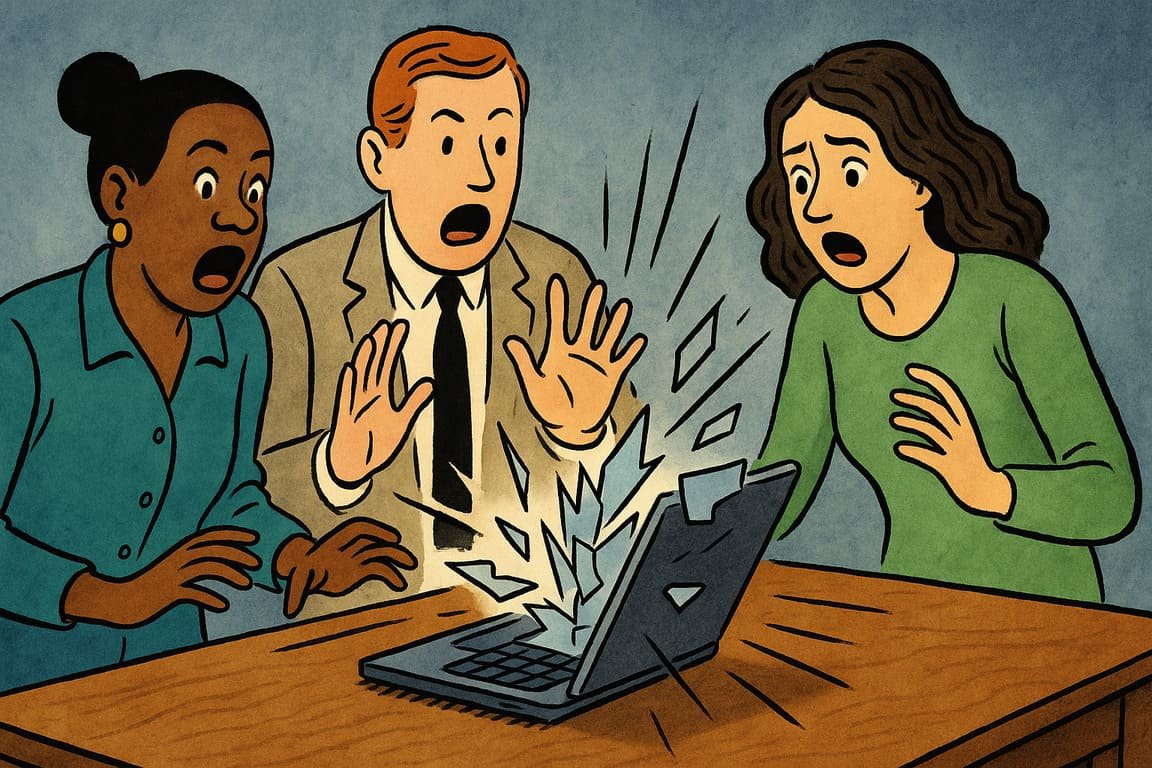
A rainstorm batters the city, glass towers shiver, and inside, every screen flickers. Systems whir with confidence—banking apps, hospital monitors, transit networks—each believing itself immortal. Then, with the smallest glitch, everything stops. Elevators hang in silence, cards decline at the checkout, doctors squint at frozen displays while alarms blare for no reason. The world’s finest engineering brought to its knees by a corrupted file or a severed cable.
Not long ago, a CEO at a tech unicorn watched helplessly as her flagship app crashed in the middle of a live event. No backup, no explanation, only panic. Engineers rebooted servers, sent frantic messages, but recovery felt like patching a sinking ship with wet napkins.
A startup’s warehouse robots froze mid-shift, leaving mountains of packages stranded. Passengers at a smart airport faced hours in darkness, their flights lost in a fog of missing data. The myth of unbreakable tech evaporates the moment reality bites. All it takes is one flaw—unseen, unpredictable—and modern life becomes a slow-motion emergency.
This is the fragility at the core of the digital age: when everything depends on flawless code, one glitch is all it takes to bring the future crashing down.
Quick Notes
- The Illusion of Reliability: Modern tech feels stable until the instant it fails, revealing the limits of even the most advanced systems.
- Cascade of Chaos: Minor faults trigger major meltdowns, exposing how deeply everything is connected—and how little backup exists.
- Human Fallout: Real people pay the price: businesses lose millions, patients wait for care, and customers lose trust.
- Culture and Crisis: Pop culture, viral news, and personal stories highlight society’s growing anxiety about tech that’s too big—and too brittle—to save itself.
- Redesigning for Resilience: Innovators and organizations rethink their systems, embracing simplicity, transparency, and humility to survive the next collapse.
The Illusion of Reliability: When Tech Betrays Its Promise
Most days, digital systems hum without complaint. People trust their phones to wake them, cars to drive them, and banks to guard their savings. But reliability is a performance, not a guarantee.
Sofia, a financial analyst in São Paulo, schedules her life by apps. When her calendar went blank one morning, she missed meetings, lost a contract, and realized how exposed she was. “It all seemed so solid—until it wasn’t.”
Tech companies boast of “five nines” uptime, but even a moment’s failure exposes their bravado. Last winter, a major payment processor’s network went down, leaving shoppers stranded at registers worldwide. There was no fix—only waiting and apologies.
Digital dependency grows while human readiness fades. When systems fail, people forget how to improvise. In a Tokyo hospital, young doctors fumbled with paper charts during a software outage, their training obsolete in a world that promised perfection.
The sense of safety in tech is a kind of hypnosis. The moment it’s broken, everyone wakes up to how vulnerable they truly are.
Cascade of Chaos: When Small Glitches Spark Big Disasters
It rarely takes a catastrophic event to cause disaster. One misconfigured update, a single line of buggy code, or a forgotten firewall rule can set off a domino effect. What seems trivial in isolation spirals into calamity.
A cloud storage giant learned this the hard way when a “routine” maintenance update erased client files, tanking reputations and lawsuits followed. The engineers could only watch as data vanished—there was no undo.
Airports live on the edge. In Atlanta, a minor system bug triggered a total shutdown, leaving thousands stranded. News feeds filled with photos of endless lines, abandoned luggage, and frustrated travelers. Behind the scenes, a technician discovered the cause: a software patch applied out of sequence.
Social media platforms, too, have seen outages bring chaos. When a global messaging service crashed, news, business, and even emergency services stalled. Influencers lost brand deals, while families missed urgent calls.
Every “smart” feature adds a layer of risk. When all is connected, everything is exposed.
Human Fallout: When Lives and Livelihoods Are on the Line
Tech’s fragility is not just inconvenience—it’s a human story. In a London hospital, a patient’s surgery was delayed as doctors waited for the records system to reboot. “Minutes felt like hours,” the patient recalls. “I could see the panic behind the smiles.”
A logistics startup watched a single server error cause days of chaos. Clients left, competitors pounced, and frontline workers bore the brunt—canceled shifts, angry customers, and paychecks delayed.
In Nairobi, a microfinance app crash locked thousands out of their accounts. For some, that meant missing rent or skipping meals. The pain rippled through families and neighborhoods.
The reputational cost is just as high. Trust once broken is slow to rebuild. The founder of a viral meditation app confessed, “One outage, and years of goodwill evaporated overnight.”
Every system failure is a test of human patience, resilience, and trust.
Culture and Crisis: Tech Anxiety Goes Mainstream
Fears about tech fragility have become part of the culture. “Mr. Robot” dramatizes hackers bringing cities to their knees. News headlines turn every outage into a global spectacle, with memes and outrage racing through Twitter in seconds.
Podcasts dissect famous meltdowns, from airline reservation system collapses to the infamous “cloudpocalypse.” Documentaries like “The Great Hack” remind viewers how easily control can slip away.
Even humor shows the anxiety. Stand-up comics riff on their dependency—“I can’t even find my own house without Google Maps!” TikTokers act out “day without Wi-Fi” skits, equal parts comedy and cry for help.
The unease is not just for geeks. Everyone with a device feels it, especially when reminders of collapse are just one push notification away.
Tech’s promise was control. Its fragility is the new collective fear.
Redesigning for Resilience: Building Systems That Bend, Not Break
In response, a new movement is growing—one that values humility, redundancy, and readiness. Leading banks run “failure drills,” shutting down core systems on purpose to practice recovery. It’s not about preventing every glitch, but surviving them.
Startups turn to “minimal viable tech”—fewer moving parts, more manual overrides. A logistics firm in Berlin now teaches workers to run routes by paper map in case GPS fails. The extra cost pays off when disaster strikes.
Open-source communities push for transparent code and public audits, so flaws are caught early and fixed fast. Some companies celebrate “postmortem culture,” sharing mistakes openly to learn and heal.
The goal is not to build unbreakable systems, but to create teams and cultures that bend, adapt, and recover stronger. True resilience is accepting that failure is inevitable—and planning for it. When tech fails, humans rise.
After the Crash: The Moment You Trust Yourself Again
A city glows back to life after the blackout. In the soft hum of returning power, people look up from their screens and find each other. They improvise, adapt, and remember how to solve problems without a guide. Confidence returns—not in the machines, but in the people who keep moving when everything else stops.
Fragility isn’t the end. It’s the invitation to build something wiser. You’re stronger than the code. When the system fails, trust the hands and hearts beside you.