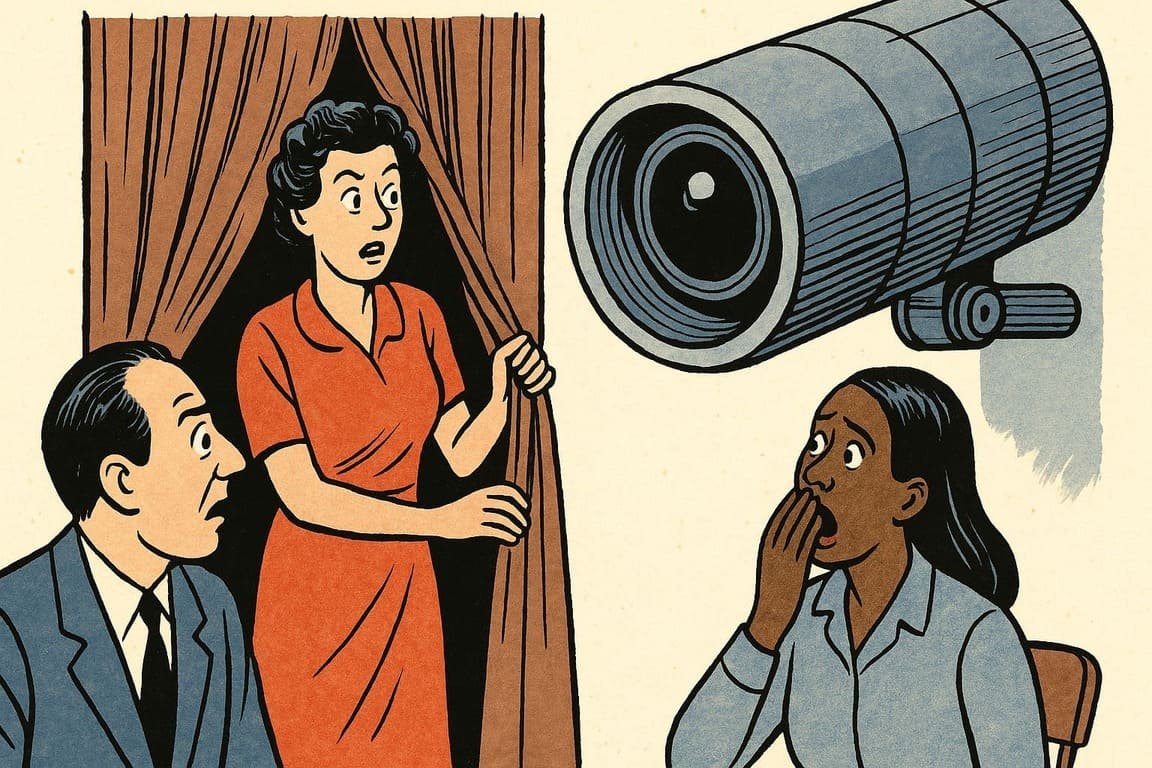
The apartment is small, nearly silent, but everywhere glints the faint red glow of “standby”—the television, the router, a forgotten smart plug in the wall. Beyond the window, a billboard promises “total privacy” from the world’s most popular phone, while a delivery drone floats past, scanning doorways for a signature no one remembers giving. On the kitchen table, a phone vibrates with news of a data breach at a popular fitness app, the message lost amid dozens of unread updates. In this city, shadows grow shorter by the year, and secrets evaporate under the relentless buzz of networked things.
Down the hall, an old laptop sits idle. Its camera, covered with tape, blinks off and on, betraying no hint of whether it truly sleeps. The new currency isn’t money, or even time—it’s privacy, sold and resold before most even know what’s gone. The lie whispers from every screen: nothing is hidden. Yet, in this world of perfect exposure, everyone is searching for a place to disappear.
Quick Notes
- Privacy Is a Mirage: Despite endless promises, digital privacy doesn’t really exist. Most people give up their secrets for convenience, then pretend the trade never happened.
- Transparency Hides Complexity: Companies flaunt “privacy controls,” but real protections are buried under endless menus and unreadable policies.
- Every Click Leaves a Mark: What you watch, search, buy, and say—even what you whisper near a smart device—gets stored, analyzed, and monetized.
- Exposure Shapes Behavior: Knowing you’re watched changes what you do, say, and believe. The illusion of privacy creates a reality of constant self-editing.
- Reclaiming Privacy Means Fighting Back: Only through resistance—tools, habits, laws, and bold refusal—can individuals claw back space for true secrets.
The Seduction and Surrender
Privacy used to mean closed doors, hushed conversations, and letters sealed with wax. Now, you sign up for “free” apps and surrender more than you imagine. The seductive interface asks only for your email, but soon your habits, location, and even sleep patterns flow to distant servers. In exchange, you get recommendations, rewards, and just enough control to pretend you’re safe. It feels fair—until it isn’t.
Consider Eric, a graphic designer in London. After downloading a trendy sleep tracker, he found himself barraged with ads for mattresses, teas, and health consultations. The app, it turned out, was quietly feeding his sleep data to third parties. “I never agreed to that,” he complained. But buried in the user agreement was a clause that made it legal, if not ethical. Like millions, Eric thought he could keep some things to himself. The reality: nothing was hidden.
Companies know how to make you feel in charge. Bright dashboards offer sliders and toggles for “privacy preferences,” but each choice is wrapped in jargon. You tell yourself you’re protected, but rarely understand what’s exposed. “It’s a trade-off,” says Dr. Sasha Lemoine, a privacy consultant. “You’re offered agency, but the real decisions were made long before you opened the app.”
The seduction works because everyone wants to believe they’re the exception—the one whose secrets are too boring, whose life is too small for scrutiny. But every user is interesting when viewed through the right algorithm. The lie is that you have nothing to hide. The truth is that you have everything to lose.
False Transparency and Hidden Complexity
Transparency is the watchword of the digital age, but rarely the reality. You see the headlines about “strong encryption” and “end-to-end privacy,” but behind the scenes, companies build labyrinths of terms and settings. Each toggle offers reassurance, but real control is elusive. A Berlin fintech startup launched a “transparent” banking app, inviting customers to “own their data.” Weeks later, hackers exploited a backdoor, exposing thousands of accounts.
Even the best-intentioned platforms can’t deliver on their promises. Tech giants hire teams to draft privacy statements that deflect blame without revealing risk. When a breach occurs, users receive apologetic emails and offers of credit monitoring, but the damage is already done. “They told us it was secure,” recalls Lisa, a college student whose photo cloud was hacked. “But they never said who else could see.”
Complexity breeds confusion. Lawmakers push for “plain English” agreements, but the industry responds with even denser contracts. Regulators struggle to keep pace as companies invent new ways to skirt disclosure rules. The net result: most people click “accept” without a clue, hoping for the best.
The illusion of transparency is potent because it shifts responsibility onto users. If you’re exposed, it’s your fault for not reading the fine print. Yet, in a system built to obfuscate, even the most careful user is outmatched.
The Mark of Exposure
Every action online leaves a mark. You may clear your browser, delete your history, or “go incognito,” but somewhere a copy survives. Advertisers harvest clicks to profile your desires, data brokers compile shadow dossiers, and government agencies sweep up everything “just in case.” A single late-night search can resurface years later in ways you never imagined.
Mia, a school principal, discovered this the hard way. An offhand tweet about stress during exam season became fodder for a tabloid article, after a reporter trawled her public social feeds. Her board demanded answers, and her students learned a harsh lesson about online exposure. “I thought my privacy settings were enough,” Mia told colleagues. “But nothing really disappears.”
Companies monetize the trail. Smart TVs record conversations, location apps log every journey, voice assistants keep fragments of every command. Even health apps, built to serve, sell “anonymized” data that can often be traced back to real people. In courtrooms, lawyers subpoena chat logs and location pings as evidence, revealing more than the accused ever intended.
Exposure changes behavior. Knowing you’re watched makes you cautious, even paranoid. You second-guess jokes, suppress unpopular opinions, avoid risky searches. The illusion of privacy fosters a climate of constant self-editing, where authenticity withers under the gaze of invisible judges.
The Real Cost of Nothing Hidden
The cost of exposure is more than inconvenience. It’s trust eroded, creativity stifled, and freedom narrowed. When you live as if you’re always observed, you become a performer—careful, guarded, and never fully yourself. The pressure is subtle but relentless.
Workplaces harness surveillance tools to monitor productivity. Employees who once trusted managers now worry about keystroke loggers and webcam checks. At a San Diego call center, workers banded together to protest “always-on” software that flagged bathroom breaks as downtime. Their small act of rebellion forced management to review the policy—but the damage to morale lingered.
In families, parents monitor children’s phones for safety, yet sometimes breed secrecy and mistrust. Couples debate whether to share passwords or location data, each trade-off a test of loyalty versus privacy. Teens create “finstas”—fake Instagram accounts—to carve out spaces free from parental gaze.
Communities, too, suffer. Whistleblowers fear retribution, activists self-censor, journalists guard sources with encryption and burner phones. The illusion of privacy means danger for those who most need protection.
The final loss is a society less willing to imagine, dissent, or take risks. When everyone feels watched, the world shrinks.
Reclaiming What’s Lost
Rebuilding privacy is hard, but possible. You start with habits—choosing tools that value security, questioning every permission, learning to say no. Encryption, burner accounts, and offline moments become acts of resistance. A Paris collective, Privacy Now, hosts monthly workshops teaching citizens to mask metadata and evade tracking. Their motto: “You have the right to hide.”
Laws matter, too. Demanding real protections—short, clear agreements, real opt-outs, harsh penalties for violations—can shift the balance. Some countries now enshrine privacy as a human right, forcing companies to compete on security, not just features. When Apple rolled out App Tracking Transparency, advertisers scrambled to adapt, and users gained real choices for the first time in years.
Above all, privacy is a mindset. Refuse to believe the lie that nothing is hidden. Protect the secrets that matter, not by withdrawing from the world, but by insisting on boundaries—technical, legal, and personal. Share less, question more, teach your children the value of secrets.
Every act of defiance redraws the line between seen and unseen. The fight for privacy is never finished—but it’s one that defines the dignity of every generation.
Unseen Again: Where Shadows Still Matter
In the city’s neon hush, a child pulls the plug on a smart toy, relishing the rare silence. A grandmother stirs sugar into tea, her phone off, humming a tune that belongs to no one else. For a moment, the world holds its breath, the illusion gone, the secret safe. In the age of exposure, privacy is an act of courage—a whisper that echoes long after the noise. Will you settle for the lie, or will you reclaim the right to be unseen?