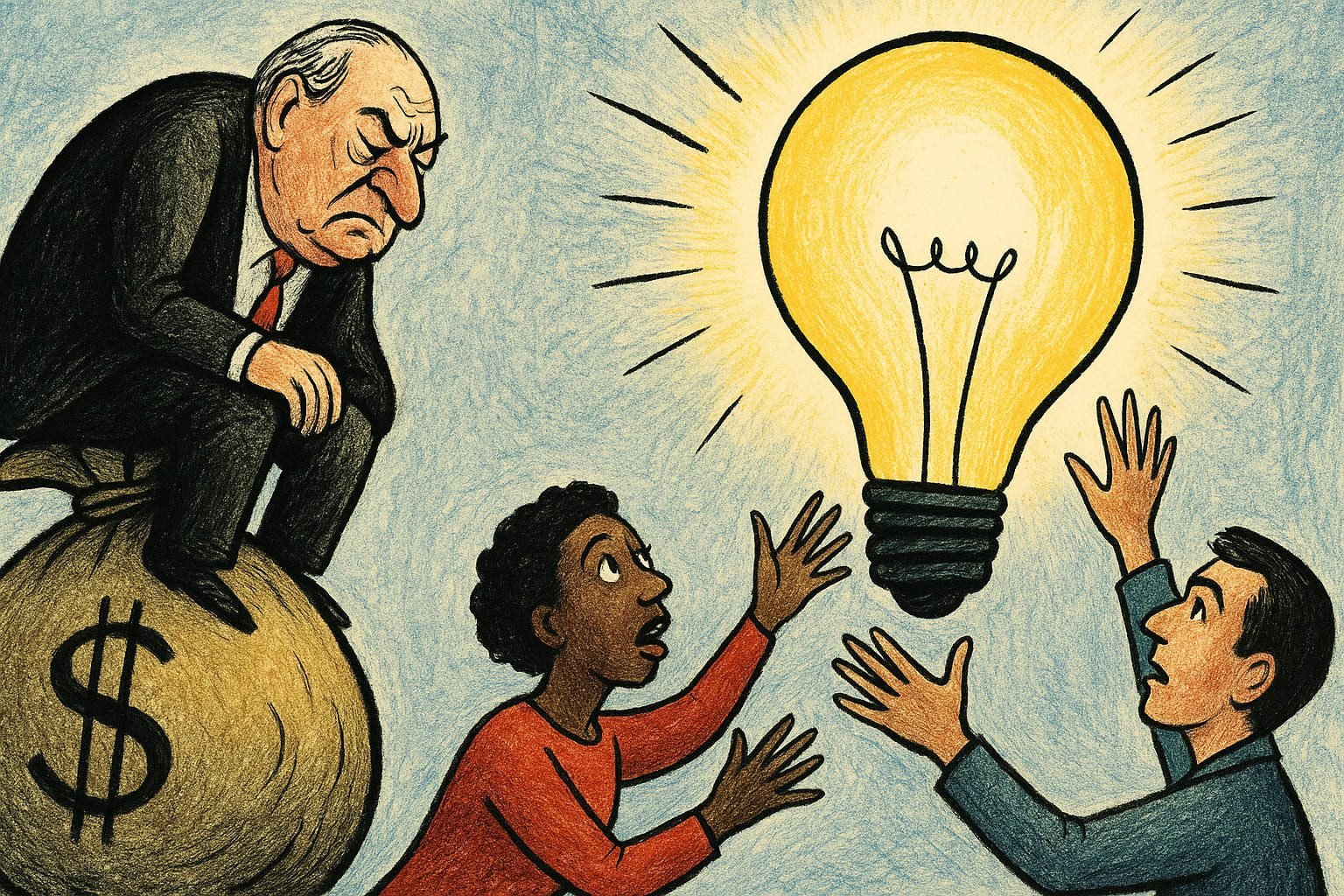
What if everything you thought about taxing the wealthy was backwards? Imagine the most powerful economic transformation; one that could ignite innovation on a global scale, not coming from trickle-down promises, but from turning the tax system on its head. Picture it: a world where taxing the ultra-rich isn’t a threat to creativity, but a catalyst that unleashes a new wave of ideas, companies, and progress. Would you dare to see the world that way? Buckle up. The story you’re about to read isn’t a lecture; it’s a philosophical roller coaster. We’ll confront economic dogmas, challenge comfort zones, and offer a blueprint for an innovation boom no one saw coming. Are you ready to break free from old beliefs and explore how taxing the rich might just spark the most thrilling chapter of human progress yet?
Quick Notes
- Rethinking Wealth and Progress: Redefining wealth taxation isn’t about punishing success; it’s about unlocking resources for everyone to contribute and innovate. This idea transforms the entire narrative on economic fairness and growth.
- Fueling the Engine of Innovation: Investing tax revenues from the rich into public goods, research, and entrepreneurship has the power to dismantle barriers and make creativity accessible to all. This levels the playing field and invites more diverse innovation.
- Challenging Old Economic Stories: The myth that taxing the wealthy kills ambition and progress has shaped decades of policy. Case studies and historical shifts reveal the exact opposite: strong, fair systems can multiply, not stifle, innovation.
- Stories from the Real World: From Silicon Valley to Scandinavia, examples abound of high-tax societies thriving with creativity, invention, and entrepreneurial energy. Real founders, real citizens, and real organizations have flipped the script.
- A New Blueprint for Prosperity: True innovation flourishes when society builds scaffolding for all dreamers, not just the privileged few. Taxing the rich isn’t a silver bullet but in a world craving transformation, it’s the bold step we need to unleash untapped genius.
The Golden Gates of Innovation: Why The Rich Hold the Keys And What Happens When We Turn Them
For as long as money has existed, those who’ve held the most have decided what comes next. Their hands have shaped cities, funded wars, and launched rockets into space. But with that power comes a question no one seems brave enough to ask: what if the golden gates to innovation swung wider if the keys were shared?
There’s a famous story in startup lore about the early days of Steve Jobs. In a small garage, fueled by equal parts caffeine and ambition, he tinkered with the technology that would later change the world. But what’s rarely told is how the American economic climate of his youth; one with far higher taxes on the wealthy than today; poured billions into education, highways, and research that made the very existence of Apple possible. This is not a tale of theft from the rich, but a fable of a society bold enough to seed dreams for all.
For most, the idea of “tax the rich” sounds like a battle cry, not a launchpad. Yet, history is filled with moments where societies channeled the fortunes of the few to build ladders for the many. Consider the rise of public libraries, the birth of the internet, and the moon landing each funded by wealth redirected to public goods, each catalyzing new waves of entrepreneurs and inventors. It’s a pattern too powerful to ignore.
Opponents will argue, as they always have, that high taxes dampen ambition. But ambition isn’t killed by taxation; it’s suffocated by a lack of opportunity, closed networks, and barriers to entry that the ultra-wealthy rarely face. When money stays locked at the top, the gates stay shut for countless would-be creators who never get the chance to try.
The real magic happens when societies see wealth not as a trophy to protect, but as fuel to ignite countless new ideas. When a young woman in Nairobi, a coder in Mumbai, or a scientist in Detroit finds their path smoothed by investments in education, healthcare, and infrastructure; funded by fair taxation the world gains innovators who would otherwise be lost. True progress comes not from hoarding, but from turning the keys so everyone can enter.
Ask yourself: when the next great idea is born, will it come from a familiar boardroom, or from a place we’ve never thought to look; because we finally dared to open the gates?
The Myth of the Taxed-Out Dreamer: Why Old Narratives Need New Endings
Step into any business roundtable or investor gathering, and the myth shows up on cue. It goes like this: if the rich are taxed more, they’ll close their wallets, hide their brilliance, and the world will dry up. Success, we’re told, only flowers in low-tax gardens. But what if that story is past its expiration date?
The myth persists for a reason. For decades, popular culture sold us the image of the lonely, rugged inventor who made it all on their own. But those stories always leave out the hidden scaffolding: public universities, safe roads, reliable courts, and research grants all made possible by redistributing wealth. Bill Gates didn’t just drop out of Harvard; he rode on the shoulders of a society that invested in its future.
Take Sweden, a country often caricatured for high taxes and social benefits. In reality, Sweden punches above its weight in entrepreneurship and innovation. Spotify, Klarna, and Minecraft were born in a climate where taxes funded universal education and healthcare. These aren’t cautionary tales; they’re blueprints for possibility.
Look at South Korea. After the war, the country faced ruin. Decades of deliberate public investment, funded by progressive taxation, turned it into a tech powerhouse. Samsung and Hyundai became global symbols of what happens when a society bets on its people, not just its moguls.
Even the United States, now so resistant to the “tax the rich” message, owes much of its economic muscle to policies from an era with the highest top tax rates in its history. The highway system, NASA’s golden age, and the birth of Silicon Valley all trace back to times when the wealthy shouldered a greater share for the common good.
Real progress never comes from clinging to old fables. The real engine of ambition is hope; the hope that anyone, not just the already-privileged, can break through. The next chapter of innovation starts by rewriting the narrative and investing in people we haven’t yet heard from.
Money in Motion: How Redirecting Wealth Sparks a Human Renaissance
Every breakthrough has a backstory, often starring people you’d never expect. When resources move from the bank vaults of the few into the hands of many, the result is a chain reaction; one that lights up whole communities.
Think about the story of Dr. Katalin Karikó, whose work led to the mRNA vaccines that changed the course of a pandemic. For years, her research was considered a dead end, funded mostly by public grants and university programs. Her story didn’t start in a luxury office but in modest labs, made possible by money set aside for scientific curiosity, not immediate profit.
Then there’s the case of Finnish education reform. With wealth taxes channeling resources into public schools, the country transformed its system to empower every child, not just the elite. Suddenly, students from every background began outperforming their wealthier international peers. It wasn’t magic; it was the result of putting money where minds could grow.
Closer to home, consider the explosion of small businesses in overlooked neighborhoods whenever a city reinvests tax revenues into microloans and training programs. Behind every local bakery or tech startup is a backstory of risk and support; a young founder whose parents couldn’t bankroll failure, but whose city believed in second chances.
Societies thrive when they move wealth from passive accumulation to active investment in human potential. Not every dollar from the rich will fund the next Google or the next blockbuster cure, but every dollar that’s put into education, healthcare, or entrepreneurship multiplies the odds.
This is more than a policy debate; it’s about rewriting destiny. When we tax the rich to fuel the dreams of many, we don’t just grow GDP. We create a living, breathing system where money is always in motion, always feeding the next breakthrough.
Who’s Afraid of the Innovation Tax? Debunking the Boogeymen and Flipping the Script
For every bold idea, there’s a chorus ready to play the role of skeptic. The boogeymen of tax policy are many: the capital flight scarecrow, the innovation exodus phantom, the investment drought goblin. But when you look closely, their shadows shrink.
Take the case of Norway’s sovereign wealth fund. By smartly taxing oil profits and investing them in public assets, Norway built not just a rainy-day fund, but a safety net for generations. Its robust entrepreneurial culture and thriving startups show that you don’t need to sacrifice ambition at the altar of taxation.
Australia, too, has often bucked the narrative. With progressive taxes supporting world-class universities and health care, the country remains a magnet for talent. Entrepreneurs from Asia and Europe flock to Sydney and Melbourne, not because taxes are low, but because the social contract supports risk-taking.
Of course, not every experiment works. France’s short-lived “millionaire tax” led to heated debates and a handful of high-profile departures. But the country’s commitment to public investment has continued to birth world-changing art, technology, and science. Temporary turbulence is no excuse for complacency; it’s a call for smarter policy design, not retreat.
Perhaps the most dangerous myth is that only the ultra-wealthy can create. When public goods and safety nets flourish, so do small businesses, creative artists, and solo inventors. Removing the fear of bankruptcy, medical bills, or unaffordable education means more people dare to take chances.
The real threat isn’t taxes; it’s the suffocation of potential when opportunity is sold to the highest bidder. Flip the script, and the innovation tax becomes not a bogeyman, but the spark that sets new ideas ablaze.
The Future We Deserve: A World Built on Boldness, Not Scarcity
Stand at the crossroads of history, and a choice comes into sharp focus. Will we let old fears dictate the future, or will we build something bigger; something worthy of our shared hopes? The time for safe bets is over. The world is hungry for transformation, and bold action beats timid half-steps.
Remember Maslow’s hierarchy? At the top sits self-actualization: the freedom to create, build, and dream. But that pyramid stands on a foundation only as strong as society’s willingness to invest in each other. Taxing the rich isn’t about tearing down; it’s about building up, laying stones for future generations to climb higher.
There’s a scene in “Good Will Hunting” where a janitor, overlooked by everyone, solves equations that stump the brightest minds. He was a fictional character, but he represents millions of real people whose genius goes untapped, not for lack of talent, but for lack of access. Every dollar that moves from a billionaire’s untouched fortune to a scholarship, a startup fund, or a community clinic is a bet on the Will Huntings of the world.
The future won’t be built in echo chambers or behind gilded gates. It will be built in classrooms, public parks, open labs, and bustling markets; anywhere boldness is invited and scarcity is banished. The greatest leap forward will come when we decide that genius is everywhere, waiting for a chance.
So here’s the challenge: spark the debate at your next dinner table. Imagine a world where innovation isn’t the privilege of a few, but the birthright of all. Ask yourself: What kind of society do we want to be remembered for? One that hoarded its gifts, or one that dared to share the keys to the kingdom?
Reflect for a moment: If the next life-changing idea is trapped behind a wall of privilege, what’s the true cost to all of us? Maybe it’s time to stop fearing the tax and start fearing what we lose if we don’t unlock the gates.
Partnered. Provocative. Worth Your Scroll.
This is a Promoted Post by ESYRITE—yes, it’s paid, but never filtered. Our voice stays raw, real, and razor-sharp. We team up with bold ideas, game-changers, and stories that spark something real. If it’s here, it earned its place—no fluff, just impact. We don’t just promote—we provoke. Stay sharp. Dive deeper.
