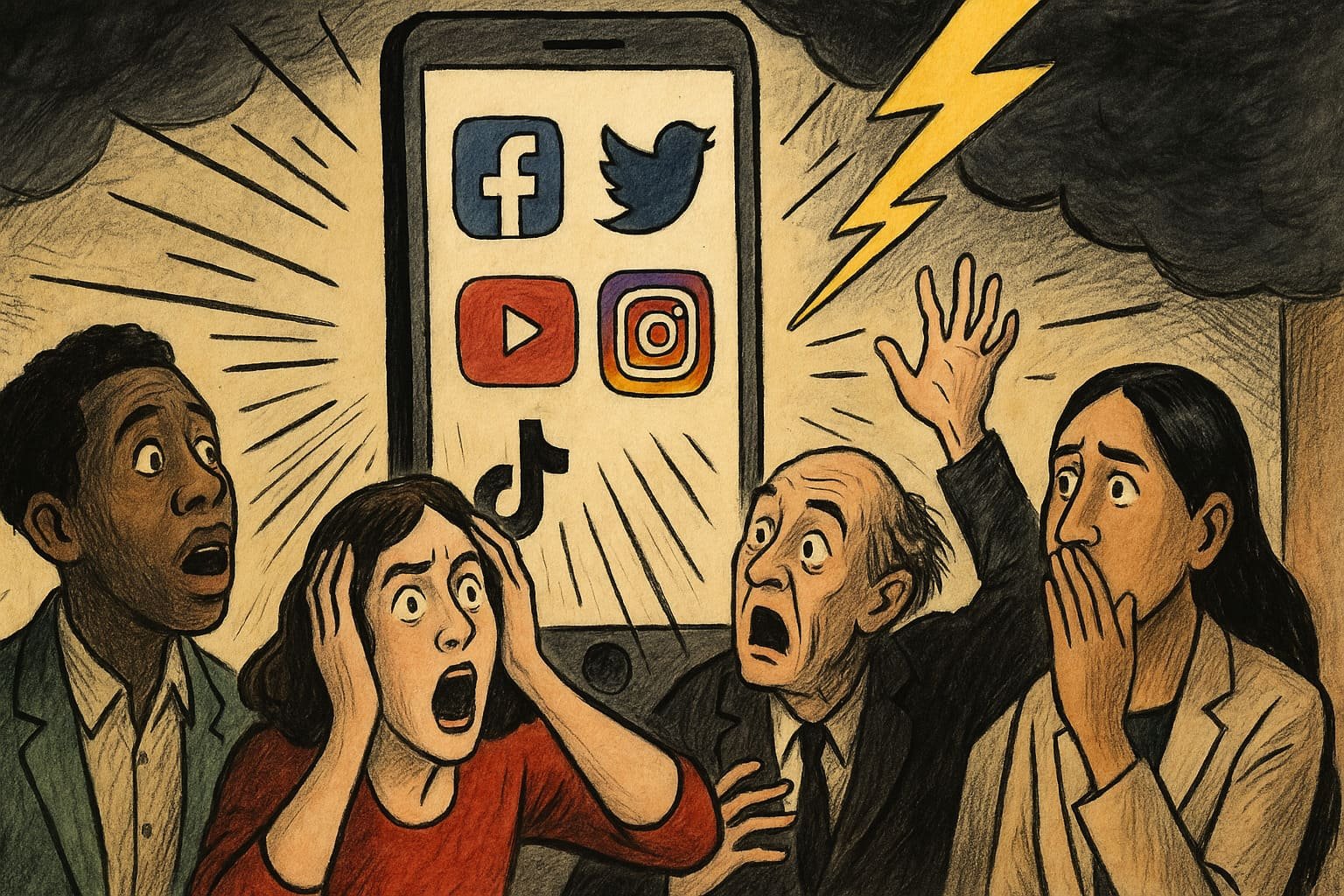
Somewhere between a double tap and a doom-scroll, democracy stumbled into the world’s greatest identity crisis. Imagine the scene: a global town square, buzzing with more voices than there are stars in the sky, but suddenly, the crowd grows restless. At first, social media promised freedom; the power to speak, share, connect, and rally. Today, that same technology feels more like a digital Trojan horse, rolling past the gates of civil society with wild promises, only to unleash chaos on the very foundations it claimed to empower.
If you feel like you’re living inside an endless group chat where no one agrees and everyone yells, you’re not alone. Democracy now lives on the frontline of a digital war, its fate twisted by algorithms, troll farms, and influencers with armies larger than most countries. The game is no longer about ballots and debates, but about who controls the conversation and whether the truth even stands a chance. The stakes? Nothing less than freedom itself. Get ready, because this is not your grandfather’s democracy. This is the digital siege and it’s personal.
Quick Notes
- Social Media Has Hijacked the Town Square: What began as a platform for connection has turned into a battlefield where democracy’s voice is drowned out by noise, manipulation, and viral misinformation.
- Truth Is Fragmented, Trust Is Broken: Algorithms reward outrage over facts, splintering societies into echo chambers that threaten shared reality and democratic consensus.
- The Rise of Digital Puppeteers: Real-world power now sits with invisible hands; tech giants, bots, and foreign agents able to tilt elections and foment unrest with a well-timed meme or viral video.
- People Fight Back, But the Ground Keeps Shifting: Citizens, journalists, and watchdogs have mounted resistance, but every solution is met by smarter, faster digital threats, forcing a never-ending race for democracy’s survival.
- Our Future Hinges on Digital Literacy and Bold Reform: The only way forward is through collective awareness, new rules, and the courage to reclaim the digital public square before democracy becomes just another trending hashtag.
Algorithm Overlords: When the Feed Becomes the Battlefield
Step into any bustling café and watch as people flick through feeds, thumbs gliding across glowing screens. What looks like idle scrolling is, in reality, a direct line to democracy’s frontlines. Behind every swipe lurk algorithms; mysterious, relentless, and engineered for engagement at any cost. What began as a noble attempt to “show you what matters” has devolved into a subtle but ruthless battle for your attention, fueling outrage, division, and viral confusion.
Facebook, Twitter(X), TikTok, and Instagram have become the new campaign managers, deciding whose voice echoes loudest, which story takes flight, and what narrative takes root. The platform’s secret recipes favor the sensational over the sober, the shocking over the subtle. As a result, posts that ignite anger or tribalism race to the top, crowding out reason and nuance. A single viral tweet can now ripple through parliaments and living rooms alike, leaving lawmakers and citizens scrambling to decipher fact from fiction.
Consider the story of Maria Ressa, Nobel Peace Prize winner and founder of Rappler in the Philippines. She watched as online mobs, unleashed by political operatives and bots, swarmed her news outlet with coordinated attacks, warping public debate and threatening her freedom. Her fight became a symbol of what happens when the digital town square turns hostile, and truth itself becomes a target.
Even elections, once sacred rituals of democratic self-determination, have not escaped this siege. Recent campaigns in major democracies show how micro-targeted ads, coordinated disinformation, and bot-driven smear campaigns have replaced honest debate with manipulation. The battlefield has shifted from doorsteps to DMs, with candidates forced to out-meme their opponents or risk being swallowed by the algorithm’s unforgiving tide.
The consequences run deep. Faith in institutions crumbles as people begin to believe the wildest claims and dismiss official statements as just another angle. Politicians who once feared public opinion now chase viral moments, crafting policies in 280-character bursts and TikTok trends. When democracy’s health depends on dopamine hits, who really wins; the people or the platform?
The paradox is chilling: the very networks meant to connect us have turned into digital coliseums, where democracy is not just debated but battered for sport. And as long as algorithms chase engagement over enlightenment, the battle for democracy’s soul remains fiercely up for grabs.
Echo Chambers & Outrage Machines: How Truth Gets Torn Apart
A walk through social media feels like stepping into a house of mirrors, each reflection bending reality a bit further. The era of one shared “truth” is gone, replaced by fragmented echo chambers, each louder and more insular than the last. At its core, democracy depends on citizens sharing a common reality; one where facts matter and trust holds societies together. Today, those pillars are crumbling as algorithms serve up not information, but affirmation.
Every click, like, and share becomes a data point, training the system to show you only what it thinks you want to see. Over time, feeds turn into comfort zones; echo chambers where dissent vanishes and only familiar voices remain. The effect? People stop questioning, start dividing, and democracy’s great promise; governance by and for a united people begins to fade into myth.
Look at the Brexit debate in the United Kingdom, where digital filter bubbles hardened divides and amplified misinformation, fueling a national identity crisis that lingers to this day. Political operatives, both domestic and foreign, learned to weaponize outrage, planting stories that grew roots in fertile, closed communities. Once, ideas crossed borders and challenged assumptions; now, they ricochet within tightly sealed silos, calcifying old prejudices and inventing new enemies.
Every major democracy has felt the sting. In the United States, election cycles now feel less like campaigns and more like tribal showdowns, each side convinced the other is not just wrong, but an existential threat. Social media inflames every difference, making it harder to find compromise or common ground. The result? Paralysis in government, cynicism among citizens, and a creeping sense that maybe democracy isn’t up to the task anymore.
It’s not just about politics; trust in experts, journalists, scientists, and institutions has been shattered. Once, a public health warning or official report might have united a nation. Today, every message splinters, met with viral skepticism and weaponized doubt. The fabric of democratic trust, painstakingly woven over centuries, is being torn apart in real time, one retweet at a time.
For societies that once prided themselves on open debate and reasoned argument, this fragmentation is a slow-motion disaster. Without shared facts, conversation becomes confrontation. Without trust, democracy can only limp forward if it moves at all.
Invisible Manipulators: Bots, Trolls, and Digital Puppet Masters
Few people realize how much power now sits in the hands of those who never stand for election or give a public speech. The true puppeteers of modern democracy are not presidents or party leaders, but digital masterminds who operate from the shadows. Armed with armies of bots, trolls, and fake accounts, these invisible manipulators can tilt public opinion, incite protest, or swing an election all with a few keystrokes and a deep understanding of platform dynamics.
Consider the infamous “Russian troll farms” that grabbed headlines in recent years, but don’t be fooled; this is a global game. Every region now contends with actors, both foreign and domestic, who exploit loopholes in social media platforms to flood conversations with noise, fear, and fake news. The sophistication of these campaigns often outstrips the ability of platforms or governments to respond, leaving societies vulnerable to chaos.
Take the experience of civic activists in Myanmar, where coordinated online campaigns sowed ethnic hatred and paved the way for real-world violence. Here, digital manipulation wasn’t just a nuisance it became a tool of war, erasing the line between online trolling and offline catastrophe. Journalists and researchers trying to warn of these dangers found themselves targeted, outgunned, and often silenced.
Political parties have learned the game, too. Some candidates now openly brag about their meme teams and troll squads, treating viral warfare as a basic campaign function. Instead of winning hearts and minds, the goal becomes “going viral no matter the cost to truth or civil discourse. Social media firms, wary of alienating users or governments, often move too slowly or not at all, stuck between profit and principle.
Ordinary citizens rarely see the strings being pulled, but they feel the effects; confusion, anger, and a growing sense of helplessness. Once, a well-placed editorial or town hall meeting might have set the national agenda. Now, a handful of clever memes or deepfake videos can shift public mood in minutes, undermining the old ways of deliberation and debate.
If democracy is a play, then the cast has multiplied and the script is constantly rewritten. The problem? The new authors aren’t accountable to the audience and the audience barely knows they’re there.
Democracy’s Digital Counterattack: Resilience in a World Gone Viral
For every shadowy manipulator, there’s a story of resistance; of citizens, journalists, and watchdogs fighting back with innovation and grit. The battle for democracy’s future isn’t lost yet; it’s just moved to new ground. As the digital siege intensifies, a new generation of reformers and defenders is writing the next chapter, often under daunting odds but with relentless hope.
Meet Carole Cadwalladr, the British journalist whose dogged reporting on the Cambridge Analytica scandal shook the world. Facing lawsuits, online abuse, and institutional indifference, she exposed the hidden mechanisms of data-driven political manipulation. Her work galvanized lawmakers and activists, inspiring a wave of digital literacy campaigns and regulatory proposals across continents.
Grassroots organizers have harnessed the same tools that threaten democracy to defend it, launching fact-checking networks and rapid response teams that debunk viral lies before they spiral. In some places, entire communities rally to teach digital citizenship, helping young people recognize manipulation and demand accountability. These efforts, though often local and underfunded, have delivered wins that ripple far beyond their origins.
Tech platforms, pressed by public outrage and government pressure, have begun to tweak their algorithms, label suspect content, and ban the worst offenders. Yet every step forward is met with new threats: deepfakes, encrypted chat apps, and ever more sophisticated campaigns. The race is neck-and-neck, with neither side holding a clear advantage.
Consider the case of Estonia, a small nation that transformed its vulnerability into strength. Faced with relentless digital attacks, the country invested in cyber education, transparency, and digital security; building what many see as the world’s most resilient e-democracy. Their success story proves that the battle can be won, but only through constant vigilance and adaptation.
The digital siege is relentless, but so is human ingenuity. Every hack spawns a counter-hack, every fake news surge breeds a new detective. The real question is not whether democracy can survive, but whether we have the collective will to defend it; one post, one law, one brave voice at a time.
Reclaiming the Public Square: The Path Forward for Democracy Online
There’s no “off” switch for the internet, no way to rewind to a simpler time. The challenge now is clear: if democracy is to survive this digital onslaught, it must evolve, reclaim the public square, and set new rules for the age of social media. Passive hope is no strategy; action is the only way forward.
Digital literacy is the first, most vital shield. Just as past generations learned to read, write, and debate, today’s citizens must learn to question, verify, and resist manipulation. Schools, families, and workplaces need to treat digital skills as a civic responsibility, arming people with the tools to spot deception and demand integrity from their leaders and platforms alike.
Regulation is inevitable and overdue. Platforms wield power once reserved for governments, yet operate with little oversight. Clear rules on data privacy, algorithm transparency, and online political advertising are not “anti-innovation.” They are the foundation for a digital space where democracy can breathe, debate, and thrive. Tech giants must become partners in the project of democracy, not just profit engines seeking the next viral hit.
A new social contract is emerging; one where companies, governments, and citizens must share responsibility for the quality of the digital debate. Transparency, accountability, and the willingness to challenge bad actors, no matter their reach, are the markers of a mature digital society. History is full of pivots where old structures bent, broke, and gave way to new forms. The digital age demands nothing less.
Pop culture offers a glimpse of hope. TV shows, influencers, and viral campaigns increasingly highlight the dangers of misinformation and the value of truth. Art, music, and storytelling are being weaponized for good, rallying communities and restoring a sense of shared purpose. These cultural counterattacks remind us that technology is never destiny; it’s what we do with it that counts.
The path forward will not be smooth. There will be setbacks, scandals, and moments when the noise feels overwhelming. But the alternative; surrendering democracy to algorithms and unseen manipulators is unthinkable. The heroes of the digital age will be those who refuse to log out, who fight to reclaim the conversation, and who believe that the next chapter of democracy can be written by the people, for the people, online and off.
This Is Your Feed. This Is Your Fight.
Picture yourself staring at your phone, thumb hovering over a story that makes your blood boil. Now pause; right there is democracy’s battleground, and you’re holding the front line. Social media shockwaves are not some distant crisis, but the daily reality shaping your mind, your choices, your world. Every like, share, and comment is a brick in the digital house we’re building together.
The old ways are gone. The future belongs to those who can think critically, act bravely, and connect with purpose. If democracy feels under siege, remember: it is, but the power to defend it sits in your hands; quite literally. Maybe you don’t need to storm a capitol or run for office; maybe you just need to question, to challenge, to build bridges in a world of walls.
So next time you scroll, remember this story isn’t over. In the digital age, the battle for democracy is personal, immediate, and everywhere. Are you ready to fight for the future or will you just watch as the feed decides for you? Because your democracy isn’t just trending; it’s on the line.
Partnered. Provocative. Worth Your Scroll.
This is a Promoted Post by ESYRITE—yes, it’s paid, but never filtered. Our voice stays raw, real, and razor-sharp. We team up with bold ideas, game-changers, and stories that spark something real. If it’s here, it earned its place—no fluff, just impact. We don’t just promote—we provoke. Stay sharp. Dive deeper.
