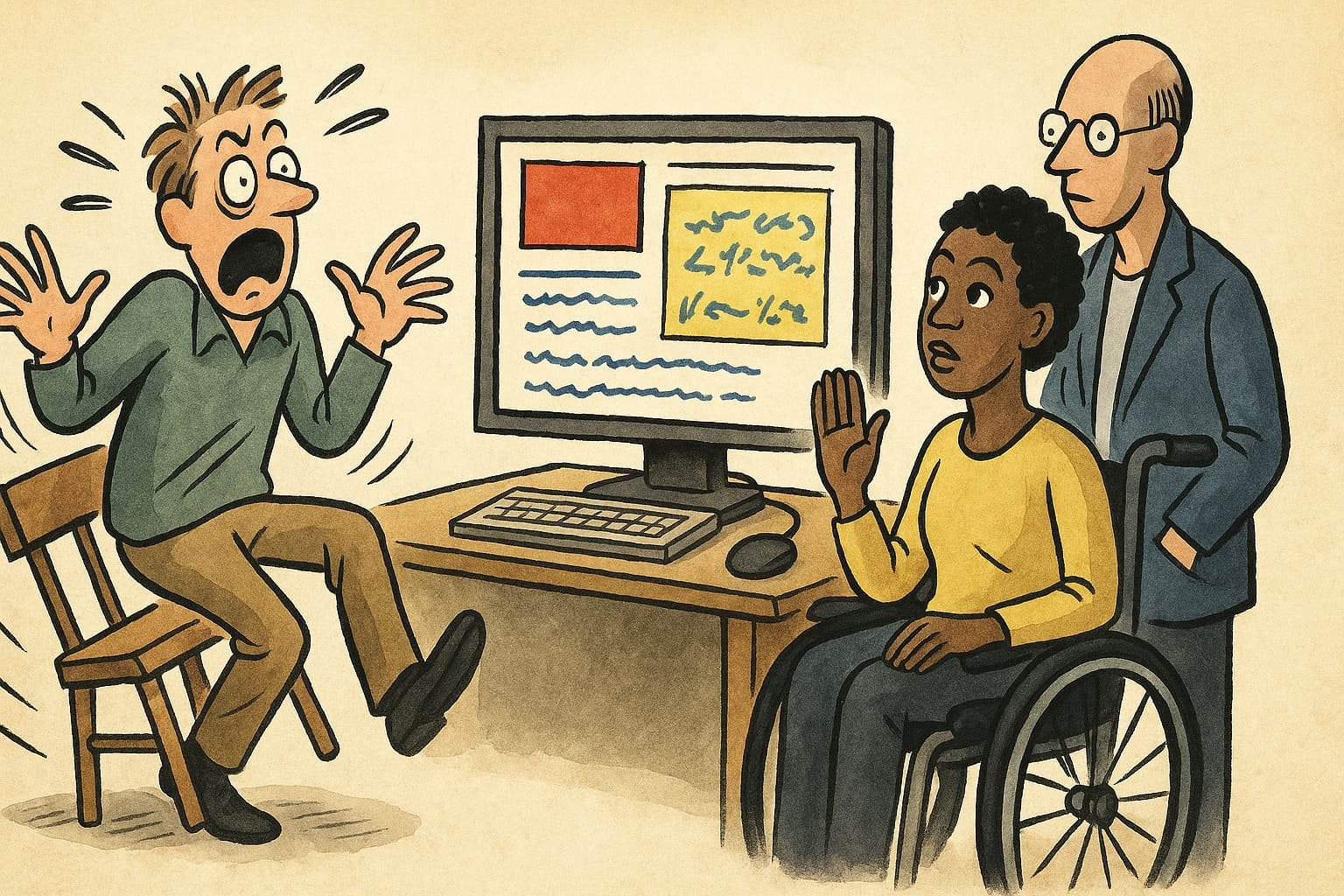
Imagine pouring months into designing a website that looks slick, loads fast, and flaunts every bell and whistle money can buy only to watch users bounce in frustration, conversions flatline, and your brand slowly sink into digital irrelevance. This isn’t hypothetical. It’s the silent fate of thousands of brands that unknowingly alienate millions by ignoring one crucial principle: accessibility. We’re not just talking about color contrast or alt text. We’re talking about a seismic shift in digital design thinking; a shift that puts human dignity at the core of UX.
This isn’t about compliance or checking boxes for ADA requirements. This is about making your design usable by everyone, regardless of ability, device, or bandwidth. And here’s the punch: accessibility isn’t just moral. It’s strategic. Brands that prioritize it see longer on-site engagement, better SEO, stronger customer loyalty, and yes, higher profits. This article dives deep into the uncomfortable truths and hidden potential of accessible design. Real stories, rich examples, and powerful takeaways await. You might laugh, cringe, or have an existential crisis about your last homepage design but one thing’s for sure: you’ll never look at digital design the same again.
Quick Notes
- Ignoring accessibility is a silent killer of digital engagement: Most users don’t leave because your product sucks. They leave because your design shuts them out.
- Accessibility boosts SEO, loyalty, and profits: From Google’s ranking algorithms to a 75-year-old grandma on a tablet, inclusivity pays real dividends.
- Bad design is more common than we admit: Even award-winning websites fail basic accessibility tests, proving that beauty without empathy is a losing game.
- Real accessibility is proactive, not reactive: It’s about design systems, inclusive narratives, and a culture shift; not a few alt tags added last-minute.
- The brands winning the future are human-first: They embrace universal design as their secret weapon and turn empathy into their edge.
Beauty That Betrays: Why Pretty Design Isn’t Always Smart Design
Aesthetics can be a seductive trap. Designers chase minimalism, bold colors, and crisp animations that impress at first glance but frustrate in use. Think of that portfolio site that looks like an art gallery but behaves like a Rubik’s Cube on Adderall. Accessibility issues don’t start with intent; they start with ignorance masked as innovation. A gorgeous design that excludes is like a luxury car with no doors; impressive, but ultimately useless.
Spotify once faced criticism when its color choices made it impossible for colorblind users to see important indicators. Designers weren’t malicious; they were myopic. The result? Public backlash and an urgent design overhaul. Many brands replicate this mistake unknowingly. They optimize for applause instead of access, for Dribbble likes instead of lived realities. Accessibility isn’t about muting creativity; it’s about adding purpose to it.
There’s also the cult of modernism, where the absence of content is mistaken for clarity. But white space isn’t inclusive when it conceals navigation or instructions. Designers often assume users are digital natives with flawless eyesight and lightning-fast Wi-Fi. That assumption is not only elitist; it’s dangerous. By sidelining users with disabilities, neurodivergence, or non-traditional tech habits, brands essentially shut the door on millions of potential customers.
Consider Airbnb’s redesign that tanked accessibility scores with hard-to-spot text and decorative animations. It was sleek. It was buzzworthy. But it sidelined thousands. The lesson? Don’t confuse eye candy for user care. Accessibility is about clarity, not just creativity.
Ultimately, smart design speaks fluently to all users, not just the trend-savvy. Your design doesn’t have to be ugly to be usable, but it has to be usable to be valuable. That means bold UX decisions rooted in empathy, not ego.
Invisible Barriers: The Real Cost of Leaving Users Behind
Most exclusion in digital design isn’t visible until it’s personal. Imagine a brilliant teen with dyslexia trying to navigate a form with no voice support. Or a visually impaired shopper trying to buy your product but trapped by unlabeled buttons. These aren’t edge cases. These are daily realities for millions. Accessibility isn’t about adding features. It’s about removing roadblocks.
Case in point: Domino’s Pizza. They faced a landmark lawsuit because their website and app weren’t navigable by screen readers. The brand fought the case to the Supreme Court and lost. The fallout wasn’t just legal. It was reputational. Consumers saw a company willing to fight rather than include. Accessibility isn’t just compliance; it’s culture. And in the culture of modern commerce, exclusion is poison.
Most teams don’t wake up intending to exclude. They just work fast, follow patterns, and assume default users are like them. That’s the fatal flaw. True accessibility means killing assumptions. It means designing for real-world variance; slow connections, foreign languages, motor impairments, aging eyes, and broken devices. If your website doesn’t work on a cracked Android screen in low light, it’s not accessible.
Here’s a lesser-known truth: accessible design benefits everyone. Closed captions help commuters in noisy places. High contrast helps users in direct sunlight. Keyboard navigation helps power users move faster. What starts as an accommodation becomes an enhancement. Accessibility isn’t niche. It’s universal.
Designers need to start asking new questions. Not “Does this look cool?” but “Can everyone use this without friction?” Not “Will users figure it out?” but “Will they feel seen?” Because when design sees people fully, it invites them in. And that invitation builds loyalty that no pop-up discount ever could.
From Token to Transformation: Real Accessibility Starts with Culture
You can’t slap an accessibility widget on your site and call it a day. True accessibility is cultural, not cosmetic. It has to live in the DNA of your design system, not as a post-launch patch. This means training your team, changing your metrics, and shifting your mindset. Accessibility isn’t a feature; it’s a philosophy.
Apple’s commitment to accessibility didn’t start with flashy marketing. It began with engineers embedding voiceover tech into iOS from the beginning. The result? Blind users became power users, and Apple built one of the most loyal communities in tech. That level of inclusion requires foresight, not fear. It’s proactive, not performative.
Too often, accessibility is treated like a checklist. Color contrast? Check. Alt text? Check. But what about tone of voice? Reading level? Multilingual support? These deeper layers often get ignored because they aren’t easy to quantify. But they’re easy to feel especially for the users you’re trying to reach. Accessibility that feels human is what builds trust.
To embed accessibility, start with people, not personas. Hire disabled designers. Interview real users from marginalized communities. Build in feedback loops that challenge your assumptions. It’s not enough to test for bugs. You have to test for dignity. When accessibility becomes a team value, it stops being a constraint and starts being a compass.
Creating an inclusive design culture also means rewarding accessibility wins. Celebrate the dev who added keyboard nav. Spotlight the copywriter who simplified dense jargon. When accessibility becomes celebrated instead of sidelined, it scales. Culture is contagious. And in this case, it might just be your competitive advantage.
Designing for the Edges: How Empathy Expands Innovation
Design breakthroughs don’t happen in the middle. They happen at the edges. When you design for extreme users, you uncover problems that average users didn’t even know they had. Accessibility is where innovation hides. And those who dare to explore those edges reap the deepest rewards.
Microsoft’s inclusive design team famously prototyped with people who had limb differences. That process led to the Xbox Adaptive Controller; a product praised by gamers across ability lines. It wasn’t a charitable move. It was a business move grounded in empathy-driven innovation. When you make products easier for people with limited motion, you make them easier for everyone.
Edge-case thinking expands your design vocabulary. It forces you to build smarter navigation, write clearer copy, and reduce cognitive load. It’s not about dumbing down. It’s about widening access. That shift has radical implications. It forces designers to unlearn default settings and prioritize intentionality over instinct.
Empathy also invites unexpected audiences. The visually rich, simple UI that helps a child with autism also delights a stressed executive on a red-eye flight. The slow-reading-friendly content that assists a dyslexic teen also engages a non-native speaker learning English. Accessibility isn’t compromise. It’s enhancement.
Designing for the edges future-proofs your brand. Because tech changes, but human needs remain. The more you root your design in empathy, the less brittle your UX becomes. Accessible design adapts because it listens. And in a world of endless noise, that’s what users remember.
The ROI of Kindness: Accessibility as Brand Strategy
Accessibility isn’t charity. It’s a power play. Brands that lead with inclusion build stronger loyalty, better SEO, and deeper resonance. And they do it without gimmicks. Because accessibility isn’t an add-on; it’s a multiplier.
Take Nike. When they launched their FlyEase shoe, designed for people with limited mobility, it wasn’t a side project. It became a core product, worn by athletes, influencers, and everyday users alike. The message was clear: inclusion is not an afterthought. It’s a brand value. That authenticity earns loyalty no ad campaign can buy.
From a financial lens, accessibility pays off in organic traffic, reduced bounce rates, and higher customer retention. Search engines reward inclusive sites. So do users. The ROI of accessibility includes brand equity, public trust, and long-term resilience. It’s not just about today’s users. It’s about tomorrow’s champions.
Even startups can harness this strategy. A tiny SaaS team in Berlin redesigned their dashboard to be screen-reader friendly. Within six months, they saw a spike in user testimonials and unexpected press coverage. Accessibility became their growth engine. Not because they had millions. But because they had the mindset.
Kindness scales. And in design, kindness is clarity, simplicity, and empathy in code. It’s not fluff. It’s the foundation. Accessible brands win not just because they’re inclusive but because they’re unforgettable. When you lead with care, users don’t just click. They stay.
Your Design Isn’t Broken: Your Perspective Might Be
Let’s be honest: most digital experiences still whisper, “This isn’t for you.” Whether it’s a confusing layout, missing captions, or buttons that vanish on smaller screens, the message is loud to those affected: you weren’t considered. And that’s not just a design flaw. It’s a human one. Accessibility isn’t a trend. It’s a truth. A reckoning. And, for those brave enough, a revolution.
We’re standing at the edge of a design era where empathy isn’t optional; it’s essential. Accessibility has proven it can make brands richer, teams smarter, and users seen. But only if we stop seeing it as a checkbox and start seeing it as a creative north star. The web wasn’t built to be exclusive. It was built to connect. Let’s honor that intention.
So here’s your final challenge: before your next design sprint, ask this one uncomfortable, transformational question: Who are we accidentally leaving out? Because if you can answer that and fix it you won’t just design a better site. You’ll design a more human web. Your users won’t forget it. And neither will the world.
