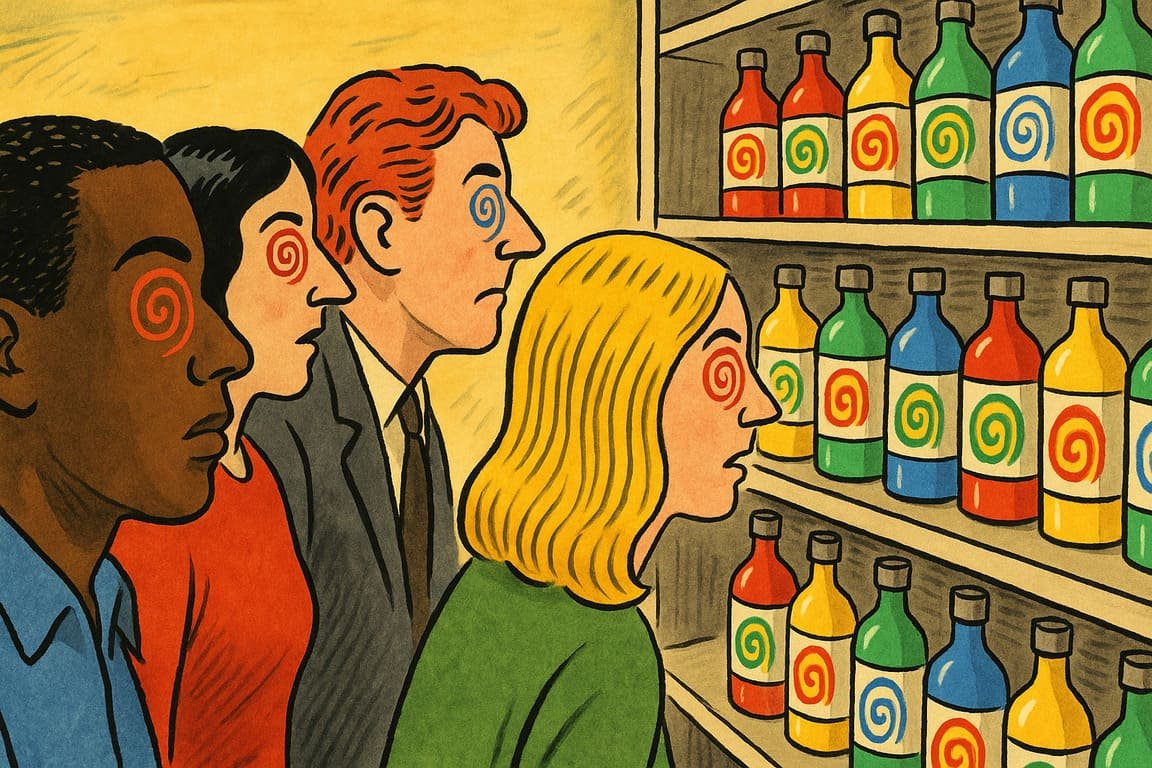
A supermarket at midnight is its own universe: cold light shimmers across a sea of boxes, cans, and bottles, each one clamoring for a glance. Beyond the hum of freezers and the rhythmic beep at the lone register, a silent battle unfolds on every shelf. Here, design is not decoration—it is warfare. Labels seduce, distract, and dare the weary shopper to break their routine. Every detail—color, font, even the glint of foil—has been engineered to hijack attention. In aisle seven, a mother stands frozen before a wall of juice cartons. Her hand hovers, not sure why she keeps reaching for the one that glows, promising energy, youth, and a better morning.
Designers know this stage. Their work turns the everyday into a pageant, a drama where the heroes are not just the products, but the labels themselves. It’s the pop of red on a cereal box that catches a child’s eye, the sly script on a luxury chocolate that flirts with nostalgia. Each choice isn’t an accident. It’s a calculated move, tested by psychologists and tweaked by marketers who understand the alchemy of consumer desire. When sales spike after a rebrand, it’s not luck. It’s theater.
You, the shopper, play a starring role—often without realizing it. The packaging whispers promises. It suggests that picking this soap over another will earn you approval, that grabbing that coffee with the neon swirl will make your morning different. You find yourself drawn to a shampoo bottle simply because it feels good in your hand or because the label’s story matches the version of yourself you want to project. Even when you think you’re making a practical choice, the drama is already in motion.
In the world of retail, the stakes are high. Brands fight for inches of shelf space, knowing that a single glance can change fortunes. When Method launched its iconic teardrop soap bottles, the design broke every rule. Instead of blending in, it invited shoppers to touch, to turn, to imagine their own homes transformed. Sales soared not because the soap itself was new, but because the story on the shelf had changed. It’s not the loudest voice that wins. It’s the most hypnotic.
Imagine the meetings: teams obsess over shades of blue, debate the curve of a logo, test the feel of matte versus gloss. These choices can be the difference between a product gathering dust and one flying into baskets. Sometimes, the drama is accidental—a printing error that turns into a trend, or a limited-edition label that sparks a collector frenzy. Other times, it’s a slow burn, a gentle push that turns into a tidal wave of new habits.
As you wander through aisles, it becomes clear: design has colonized every corner of the consumer mind. The drama doesn’t stop at the shelf. It follows you home, reshaping your routines, becoming part of your daily rituals. Ask any successful marketer—like Zara Connolly at Elixir Foods—how they cracked the code, and you’ll hear about endless prototypes, consumer tests, and the moment they realized their “unicorn label” made people smile at checkout.
The hypnotic power of a label is more than surface deep. It taps into memory, tribal identity, and the search for meaning. Sometimes, a label becomes a cultural icon, the kind of thing people save, trade, or tattoo on their skin. The classic Coca-Cola script, the punk grit of Monster Energy, the cool assurance of LaCroix—all have become shorthand for lifestyles, tribes, even rebellion. The best labels don’t just sell a product. They sell an aspiration.
You can feel it when you spot that perfect package: the little thrill, the magnetic pull. That moment is the result of months, sometimes years, of effort by designers and strategists who treat the shelf as a battleground. It’s a chess match of color, shape, and psychology, where even the smallest shift can tip the outcome. If you’ve ever bought something you didn’t need just because it “felt right,” you’ve already been hypnotized.
This isn’t manipulation in the sinister sense. It’s art. At its best, the shelf drama respects intelligence, delights the senses, and sparks a tiny revolution in your basket. When a new label launches and sales leap, it’s because the drama reached you—quietly, deeply, and with just the right twist of desire.
The most successful brands aren’t afraid to take risks. They let their labels become bold, even controversial. Consider Oatly, whose snarky cartons turned a mundane fridge item into a cultural conversation. Or Glossier, whose minimalist packaging launched a thousand bathroom selfies. These are not accidents—they are provocations. They invite you to see yourself differently, if only for a moment.
The future belongs to brands that can stage this drama, not just with louder graphics, but with stories that stick. As attention grows scarcer and competition sharper, only the most memorable labels will survive. If you want your product to leap from the shelf, ask not just what it says, but how it makes people feel. When the label tells a story, the sale follows.
In the deserted supermarket, a single package remains, its label catching the last pulse of fluorescent light. Somewhere in the city, a designer breathes out, knowing their gamble paid off—another mind quietly captured by a well-told story. The hypnotic drama never truly ends. It only waits for you to enter the next aisle, ready to fall under its spell.
One day you’ll realize your favorite brand knew you better than you knew yourself.
