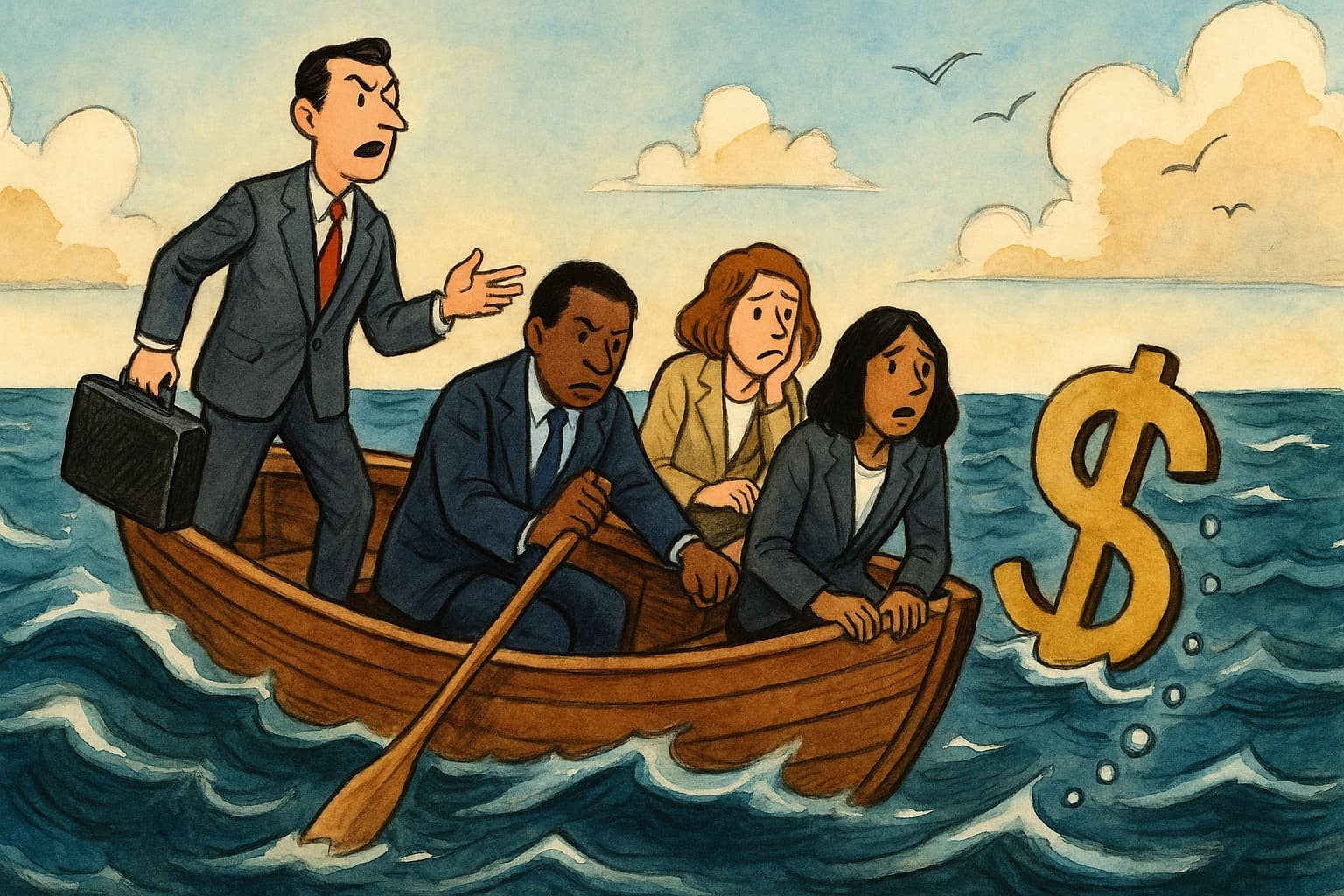
You built it. Brick by brick, pitch by pitch, deal by deal. And now you’re staring at the one question most founders dread asking out loud: Should I sell my business now? Or keep holding on and risk watching it bleed? In a world where timing is everything and exits are glorified in headlines, behind the scenes, exits are more complex, more gut-wrenching, and often more personal than anyone dares to admit. And yet, one thing remains brutally true: your exit strategy could be your biggest payday or your final downfall.
We don’t talk enough about the actual exit journey; the false starts, the panic calls to lawyers, the valuations that insult your life’s work, or the silent collapse of legacy because someone stayed too long. This isn’t about numbers. It’s about knowing when to let go, how to exit with power, and why the difference between selling big and sinking slow is usually one smart move. This is the real blueprint nobody shares. Until now.
Quick Notes
- Timing Is More Than a Clock: The right moment to sell isn’t about the market alone; it’s about your vision, energy, and long-term viability.
- Valuation Is an Emotionally Charged Negotiation: Your business worth is more art than science. Your story, IP, team, and growth potential all shape it.
- Exit Isn’t the End-It’s a New Beginning: Smart founders use their exits as a springboard for legacy, reinvention, or even a richer second act.
- Buyers Play Poker: Understanding the psychology of acquirers makes or breaks the deal. Learn their motivations to drive your terms.
- Walking Away Takes Guts: Sometimes, the best deals are the ones you reject. But knowing when takes courage, clarity, and conviction.
Founder’s Fatigue vs. Founder’s Freedom: When Enough Is Enough
Jason Fried of Basecamp once said, “You don’t sell a business because it’s failing. You sell it because it’s finished serving you.” That truth hits like a freight train when you realize your heart left the building long before your name did. Every founder faces it: the creeping burnout masked as drive, the silent Sunday dread before another week of 18-hour days. When your joy curdles into obligation, you’re already exiting emotionally, even if the cap table says otherwise.
The worst exits are the ones we make too late. Kodak had a digital camera prototype in the 70s. They never exited the film business. We know how that went. Sometimes the signs aren’t flashing neon; they whisper in boardrooms, missed KPIs, or the moment you dodge your own leadership team. Fatigue isn’t weakness; it’s information. And ignoring it can turn profitable empires into historical footnotes.
But selling isn’t quitting. It’s evolution. Think of Sarah Blakely, who exited a majority stake in Spanx while staying on to shape culture and purpose. She took money off the table without walking away from the mission. That balance is the holy grail; freedom without a funeral.
So here’s the litmus test: If you had zero financial incentive left in the business, would you still run it? If the answer is no, it’s not a moral failure. It’s a market signal. Your next great move might be stepping out, not pushing through.
And what about succession? Many founders fear selling because they think they are the company. But that mindset kills growth. The real power move? Build systems that outlast your name.
Valuation Illusions: Your Baby Isn’t Worth What You Think
Ask ten founders what their company is worth and you’ll get ten love letters disguised as valuations. But love doesn’t sell. Story does. And buyers aren’t paying for your blood, sweat, and tears. They’re buying future cash flows, leverageable assets, and scalable growth. So the sooner you detach emotion from math, the clearer the picture becomes.
Valuation isn’t just EBITDA or ARR multiplied by a magic number. It’s narrative, IP defensibility, recurring revenue quality, team depth, and strategic fit. Instagram sold for a billion not because of its revenue, but because of its threat. Your perceived value is in what you disrupt, not just what you build.
Here’s a dirty truth: most founders get offended by first offers. They should be. First offers are rarely real. They’re anchors. Google did it to Waze. Facebook did it to Snapchat. If you’re not ready to play chess, you’ll get checkmated before you finish your first term sheet.
Look at Mailchimp. Sold for a reported multi-billion-dollar price without ever taking VC. That valuation didn’t just reflect their P&L; it captured brand equity, user loyalty, and moat strength. That doesn’t come from spreadsheets alone. It comes from building something irreplaceable.
If you want a premium exit, stop benchmarking against industry multiples. Instead, build toward narrative leverage. Own a story that buyers can’t replicate without you.
The Buyer Behind the Curtain: What They Really Want
Most sellers negotiate with logos, not humans. Big mistake. You’re not selling to “Google” or “Private Equity Fund #24.” You’re selling to Jim, Head of M&A, who has two weeks to close or lose his year-end bonus. Or to Priya, a corporate development lead betting her next promotion on acquiring your tech. Understand them, and you write your terms. Misread them, and you’re just another pitch deck on a pile.
Buyers come in flavors. Strategic buyers want synergy. Financial buyers want arbitrage. Acquihires want talent. Each comes with a playbook, pressure points, and blind spots. Your job isn’t just to fit into their plans; it’s to shape them. Make your vision their best-case scenario.
Don’t just present metrics. Present momentum. Tell a story they can champion internally. You’re not just selling capabilities; you’re selling a win. Help them imagine the internal email they send after buying you. If they can’t pitch it, they won’t buy it.
Take WhatsApp’s acquisition by Facebook. It wasn’t the user base alone. It was the symbolic value: anti-ad platform meets ad behemoth. Marketers call it juxtaposition branding. Exit planners call it positioning gold.
And never forget the leverage in scarcity. Exclusive access, limited windows, and competitive heat can flip power dynamics. The best negotiations aren’t battles. They’re performances. So rehearse the right script.
Second Act or Second Guess? What Comes After the Wire Transfer
Money in the bank doesn’t equal meaning in life. Ask any founder who sold and spiraled into identity loss. We tie so much of who we are into what we build that the absence of the fight feels like failure. But the best exits aren’t retirements. They’re reinventions. And reinvention starts before the deal closes.
Some go angel route, hoping to pay it forward. Others launch new ventures with lessons carved from old scars. Reid Hoffman, after PayPal, shaped LinkedIn. Stewart Butterfield, post-Flickr, birthed Slack. Exit was never the finale just the prelude.
Legacy doesn’t mean building another unicorn. It might mean mentoring the next. Or funding underrepresented founders. Or finally writing that book. If you exit and feel empty, it means you sold the company, but didn’t plan the life.
There’s a simple exercise that helps: Write your “next chapter” headline before you sign the deal. Not for TechCrunch. For you. Because the best exits create more doors than they close.
The psychological side is just as real as the financial. Prepare for ego whiplash. One day, you’re the boss. Next day, you’re “former CEO.” That shift can crush or liberate. Choose your frame.
The Power of Walking Away: Saying No to Yes
It’s tempting. The offer is decent. Your investors nudge you. Your peers whisper “take the win.” But your gut says no. Here’s the kicker: sometimes, no is the most valuable word in your exit vocabulary.
Deals rushed are deals regretted. Just ask Groupon. They turned down billions, then scrambled for market share. But ask Zendesk too. They walked away from acquisition pressure to stay mission-aligned. Regret is a dish both hot and cold.
A “no” backed by strategy is power. It repositions your brand. It signals confidence. And it teaches you what you truly value. Because the worst exits aren’t low ones. They’re the ones that take your soul with the shares.
Pressure will come. From boards. From fatigue. From headlines glorifying liquidity events. But your job isn’t to impress Twitter. It’s to build something you respect when it’s over.
The next time you get that offer, remember: not every check is worth cashing. Some are IOUs to your own future. Know the difference. And trust your read.
Legacy Over Liquidity
You don’t need to build a billion-dollar company to win. You just need to know when to stop building. Most exits fail not because the deal terms were wrong, but because the founders didn’t know what they truly wanted. The real currency isn’t dollars. It’s clarity. And clarity buys peace.
There is no universal playbook. No perfect timing. No magic number. But there is alignment; between vision, value, and the life you want. If you’re lucky, you only get one great exit. Don’t waste it proving something. Use it to create something even better.
So ask yourself: Are you selling a company or stepping into your next legacy? Because one ends a story. The other begins a movement.
