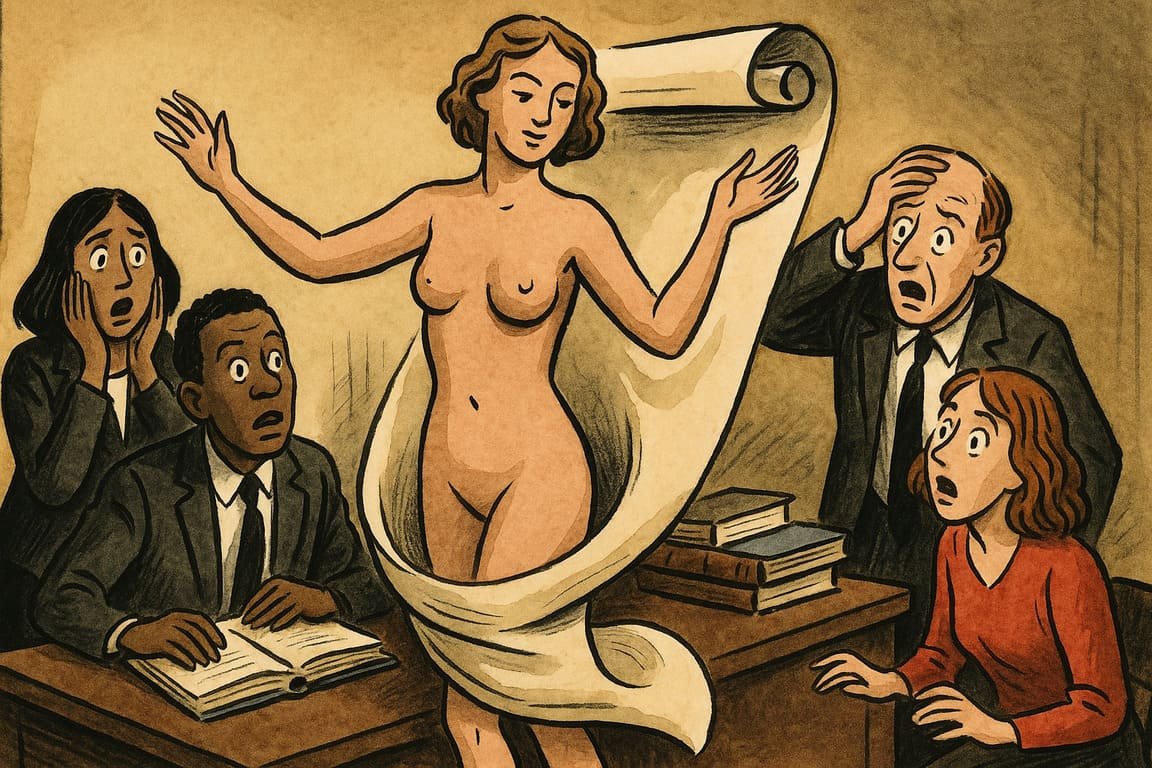
Somewhere in a stark warehouse, where whiteboards lean against chipped concrete and sticky notes collect dust, a conference table hosts a peculiar scene. No PowerPoint slides, no jargon-filled monologues. Just three worn notebooks, two empty coffee cups, and a circle of minds daring each other to admit what everyone else pretends to know. A clock ticks in the background, indifferent. The air smells of caffeine, ink, and the faint metallic tang of anxiety. Every silence feels dangerous, like someone might blurt out the only thing nobody ever says: “I have no idea what the truth really is.” In that raw moment, research loses its armor and finally stands exposed.
Forget the grandstanding and academic theater. Most research, once you strip it to the bone, is as messy and uncertain as midnight kitchen experiments. The big secret? Even the boldest thinkers get it wrong, and some of the most transformative insights start as throwaway questions. The magic lives in those awkward pauses and failed hypotheses—the naked moments when ego is dropped and curiosity takes the wheel. Remember when Janice Kim, a rising data scientist in Seoul, deleted a month’s worth of data and stumbled into her breakthrough on predictive modeling? That blunder became a signature story at every tech conference for years, not because she hid her mistake, but because she owned it.
You spend your days searching for answers, but real progress happens when you get comfortable with not knowing. There’s power in saying, “Let’s just see what happens.” Some of the greatest scientific advances were born from accidents, half-baked theories, or wild improvisations. The world rewards those who admit they don’t have all the pieces. You, too, can join that club by tossing aside the urge to look clever and starting from the blank page.
What if the real breakthrough lies in revealing the questions nobody else will ask? The truth is that the polished, final reports and pristine charts only tell half the story. True research is a war zone of doubts, retracted papers, and false positives. It’s late nights with fried circuits, weird smells from failed lab experiments, and the gnawing suspicion that everything might be wrong. And yet, the more you expose those doubts, the more credible you become. See the story of Daniel Reyes, whose failed prototype for sustainable packaging got him laughed out of three investor meetings—until he posted his raw data online and drew a cult following of eco-warriors ready to crowdsource the solution.
Getting naked in research isn’t about oversharing, but about discarding the armor of pretense. You stand to gain more respect from showing your scars than from boasting about perfect runs. When you risk looking foolish, you unlock deeper insight. That’s why open-source platforms, hackathons, and radical transparency movements are shaking up the old order. People crave realness in a world that filters everything. The only way to build trust in your findings is to let the public see you sweat.
You’ve seen polished presentations that left you suspicious. “How did they get it so right?” The honest answer is, they didn’t. Behind every perfect chart is a spreadsheet of chaos, an inbox full of rejections, and endless debates with self-doubt. You don’t need to hide your failures; you need to show your process. The new credibility currency isn’t authority—it’s vulnerability. Research stripped bare is research worth trusting.
Think about Sara Mendoza, a school teacher in Mexico City who launched a literacy project based on a hunch, only to see her first model flop. By journaling her setbacks online, she attracted linguists and coders who rewrote the program from scratch. Her nakedness became her strength, and today, her reading tool is in classrooms across four continents. People followed her because she let them into her uncertainty, her wins and stumbles, and every weird pivot in between.
There’s a reason why mythbusters and whistleblowers attract cult followings. They expose what everyone suspects but few dare to say: the truth is often unglamorous, inconvenient, and unfinished. Strip away the technical gloss, and what’s left is the human side of research—the side that feels, doubts, jokes, and sometimes panics. Once you start sharing your process, you’ll notice how quickly others show up, eager to contribute or cheer you on.
Peer pressure still shapes research culture, but the boldest voices ignore the crowd. The next generation of disruptors—whether hackers in Berlin, environmentalists in Jakarta, or medics in Rio—are celebrated for their openness. They record their fails on video, publish messy drafts, and host public experiments. Their rawness makes the findings unforgettable, and in a world flooded by hype, the naked truth has never been more magnetic.
Transparency isn’t a trend; it’s a survival skill. With public scrutiny higher than ever, honesty beats perfection every time. The temptation to bury embarrassing results will always lurk, but those who reveal their learning curve will shape the new normal. The best researchers don’t mind being caught in the act of learning. Their legacy isn’t a clean résumé, but a trail of moments where they chose candor over comfort.
Sooner or later, every discovery comes down to a leap. You have to risk embarrassment, challenge your assumptions, and let go of the fear of being wrong. The spotlight rarely lands on the careful, the hidden, the silent. It finds the rebels, the misfits, and the ones who can laugh at their own blind spots. When you start stripping your research bare, you step onto that stage.
What are you afraid of? That someone will steal your idea, judge your data, or mock your clumsy drafts? The real loss is not sharing them. Research that never leaves the safe confines of a hard drive never changes the world. If you want to make an impact, you’ll need to expose your process—the beautiful, the broken, the bizarre. It’s the only way to connect, collaborate, and create something worth remembering.
Night has fallen on a glass-walled rooftop lab. Rain paints streaks on every window, blurring the city below. Here, a young analyst leans into her monitor, sweat on her brow, heart racing. With one trembling hand, she uploads a spreadsheet filled with wild guesses and missing data points. Her mentor watches, saying nothing, understanding that courage isn’t about certainty but about revealing unfinished work to a world hungry for honesty.
Every streetlight below flickers with stories of failure, redemption, and wild hope. Across continents, strangers tune in, rooting for a stranger brave enough to share the truth as it really is—no filter, no spin, just the raw material of progress. A thousand connections form in the dark. Out there, somewhere, someone is inspired to drop their own guard, to join the chorus of seekers who make the future possible by refusing to hide their scars.
You are not here to blend in. You are here to show your true work, scars and all.
