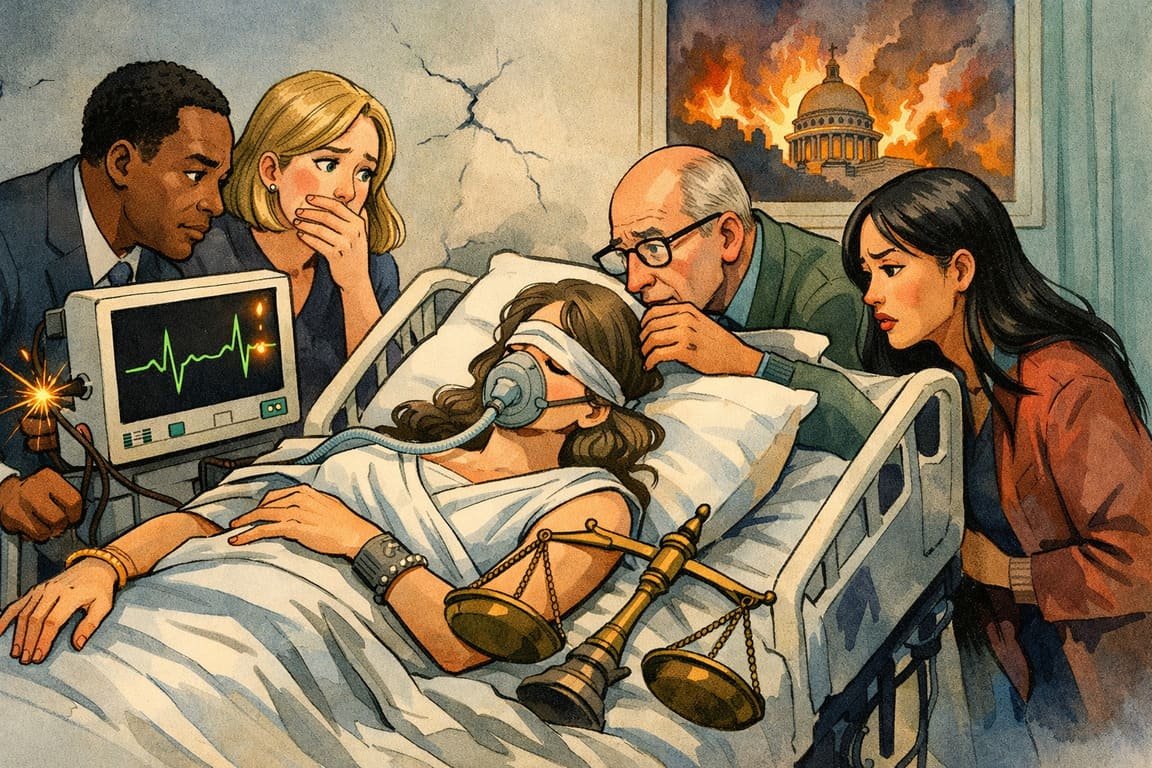
The room is too still for a moment this consequential. Ballots lie neatly arranged. Screens glow with percentages that refuse to settle. Volunteers whisper, careful not to sound alarmed. Democracy rarely collapses with drama. It wobbles first. What once felt solid now feels conditional, as if the ground beneath civic life has shifted slightly, just enough to make everyone check their footing.
Democracy was never meant to be perfect, but it was meant to be believed in. Participation would legitimize outcomes. Debate would refine truth. Institutions would absorb conflict without breaking. For decades, that belief held through friction and failure. Today, faith thins. Turnout swings wildly. Courts are questioned openly. Elections are challenged before results finish counting. The system still stands, but confidence in it does not arrive automatically anymore.
Pressure comes from everywhere at once. Economic inequality stretches patience. Political discourse accelerates until reflection feels indulgent. People feel talked at rather than represented. When systems appear slow or unresponsive, frustration searches for shortcuts. Strong personalities begin to feel comforting. Process starts to look like obstruction rather than protection.
Technology complicates everything. Access to information exploded while shared reality shrank. Algorithms reward certainty and outrage, not doubt or humility. Political identity hardens into tribal affiliation. Compromise starts to resemble surrender. Democracy depends on disagreement without dehumanization. That balance has become difficult to sustain in digital spaces built for speed.
A fictional election observer once described volunteers arguing over rules that had guided generations without controversy. Procedures became political. Neutrality felt suspicious. The issue was not fraud. It was disbelief. When people stop trusting the fairness of the process, even clean outcomes feel illegitimate. Democracy relies less on perfection than on acceptance. That acceptance is under strain.
Culturally, impatience fuels disillusionment. Democratic systems move slowly by design. They deliberate. They negotiate. In an era accustomed to instant response, delay feels like failure. Authoritarian decisiveness begins to look efficient by comparison. The cost of that efficiency is often hidden until freedoms quietly narrow.
History offers sobering perspective. Democracy has always been fragile. It survives not because it is strong, but because people choose it repeatedly despite frustration. The danger is not disagreement. It is withdrawal. When citizens stop believing participation matters, the system hollows out long before it collapses.
There is a myth worth challenging here. Democracy was never meant to be comfortable. It is supposed to be noisy, contested, and occasionally unsatisfying. Discomfort is not evidence of failure. It is evidence of pluralism. The real threat emerges when complexity is rejected in favor of simple answers that promise relief without accountability.
Some democracies adapt better than others. Transparency reforms rebuild trust slowly. Anti corruption measures restore credibility. Civic education strengthens resilience. Media literacy becomes democratic infrastructure. These efforts lack spectacle, but they address the roots rather than the symptoms of decline.
Globally, the picture is uneven. Some nations drift toward illiberal shortcuts. Others recommit, painfully, to democratic norms. Decline is not inevitable. Renewal is possible, but it demands effort beyond election cycles. It requires citizens who remain engaged even when outcomes disappoint.
Power itself has changed shape. Economic influence rivals political authority. Corporate leverage can outweigh legislative voice. When people sense decisions are made elsewhere, democracy feels symbolic rather than substantive. Restoring faith means confronting power where it actually operates, not where tradition insists it should.
Late at night, long after campaigns end and pundits fall silent, democracy remains what it has always been. A fragile agreement among strangers to share a future without force. It does not die in a single moment. It erodes quietly when care disappears. The question waiting beneath the anxiety is not whether democracy is dying, but whether enough people still believe it is worth the daily, imperfect work required to keep it alive.
