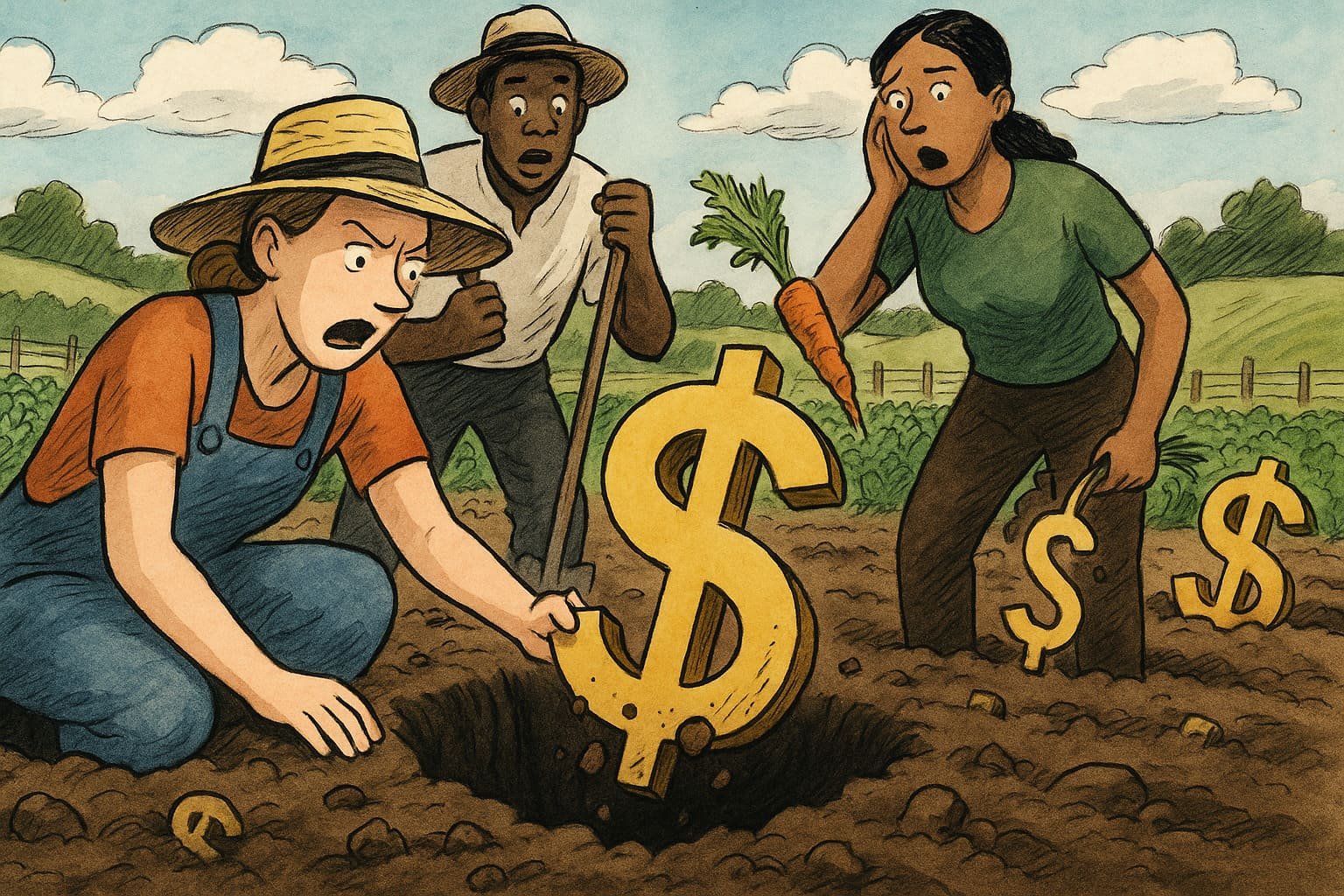
Imagine stepping into a bustling weekend market, sunlight glinting off a row of apples polished to a surreal shine. You grab a handful, convinced you’re holding a slice of paradise; pure, wholesome, and untouched by chemicals. Every shelf and influencer post whispers the same story: organic means safe, clean, and virtuous. Yet, beneath this glowing promise hides a shadow few want to see. The global rise of organic farming has ignited hope but also unleashed a cascade of hidden costs, ethical dilemmas, and sobering truths the movement’s loudest champions avoid.
Today’s food revolution has become a playground for greenwashed marketing, “sustainable” stickers, and celebrity chefs. Parents empty their wallets for organic produce, schools rewrite lunch menus, and startups spring up to cash in on the hype. Still, the dirty little secret persists: what if organic isn’t always the ecological savior or health miracle we crave? In this journey, you’ll meet disillusioned farmers, see the overlooked victims, and confront the price that gets swept under the compost pile. Brace yourself as we unearth the hidden story buried deep beneath the rich soil of organic dreams. This is the side of sustainability the brochures never reveal and the world urgently needs to face.
Quick Notes
- Organic Farming’s True Face: The industry’s image as an eco-champion is often a mirage, hiding systemic inefficiencies and social inequities that mainstream narratives skip over.
- The Yield Dilemma: Producing the same food with less synthetic aid often means larger land use, increased water consumption, and pressure on wild habitats making “natural” not always more sustainable.
- Socioeconomic Divide: Organic premium pricing turns healthy food into a status symbol, widening food inequality and leaving low-income families behind in the sustainability race.
- Human Cost Revealed: Labor-intensive methods burden farmers with back-breaking work and inconsistent profits, while global certification schemes often favor large, well-connected enterprises.
- The Path Forward: True agricultural transformation means blending the best of science and tradition, empowering smallholders, and holding industry accountable for the real cost of food not just the price tag.
The Green Halo: How Organic Became the New Virtue Signal
Beneath the bustling city lights, Instagram feeds overflow with “clean eating” challenges and influencers championing organic as the moral choice. Brands drape their products in earth tones and rustic fonts, tugging at our collective longing for a lost, simpler era. The image is irresistible: every organic tomato, a silent protest against Big Ag’s greed. Yet this fantasy comes at a price, and the world rarely pauses to consider who actually pays it.
Step inside Whole Foods on a Saturday morning. You’ll see parents comparing pesticide lists, yoga instructors extolling the virtues of “clean” eating, and shoppers calculating which groceries fit their weekly budget. There’s a growing pressure to “do the right thing” at the checkout counter; no one wants to be caught supporting conventional farming when organic is available, even if the sticker price stings. The emotional toll is real: guilt, pride, and anxiety intermingle as food becomes a test of virtue.
For small businesses, organic’s green halo is a double-edged sword. It promises loyal customers, but the certification process demands fees, inspections, and paperwork. Family farms in Vermont and Tuscany tell stories of red tape that nearly pushed them under, while industrial-scale operators swoop in, snap up the label, and sell at volume. The system that began as a grassroots movement now often serves the same old powers just with new branding.
History remembers Alice Waters of Chez Panisse as a pioneer of the local, organic food movement. Yet her original vision was deeply personal: food should connect people, land, and community. Fast-forward, and the movement risks being co-opted by supermarket giants eager to cash in. The organic aisle morphs from a statement of rebellion to a symbol of privilege, more about image than substance.
Pop culture piles on. From Gwyneth Paltrow’s “Goop” empire to Netflix documentaries, a moral panic grows around non-organic food, stoking fear and aspiration in equal measure. It’s become harder than ever to separate genuine stewardship from slick marketing. This confusion leaves ordinary people overwhelmed, wondering if they’re failing their families or wasting their money.
The Land Paradox: Why Yield and Sustainability Clash
Scratch beneath the surface of organic farming and a troubling paradox emerges. Organic eschews most synthetic fertilizers and pesticides, relying instead on natural compost, crop rotation, and good old-fashioned hand labor. The romanticism is powerful, but the science tells a trickier story: without modern inputs, yields usually drop, and that means the planet needs more land to feed the same number of people. That’s where the hidden shock kicks in.
Picture a patchwork of fields in rural India. Farmers, lured by higher organic prices, convert to natural methods, only to find that rice and wheat yields falter. To maintain output, neighbors clear patches of forest, encroaching on fragile ecosystems. The irony is brutal: in the quest for green purity, biodiversity takes a hit. In the Brazilian Cerrado, organic cotton pushes into habitats where endangered birds and mammals once thrived, upending the local balance.
Water use complicates the story. Organic fields often require more irrigation to compensate for slower plant growth and lower soil fertility. California’s drought-battered valleys offer a haunting example; organic almond growers tout their chemical-free credentials while drawing ever deeper from dwindling aquifers. The promise of ecological harmony turns into a scramble for resources, as neighbors fight over every drop.
Conventional agriculture’s environmental sins are real. Pesticide runoff, monoculture deserts, and depleted soils have sparked a justified backlash. Yet romanticizing organic as the only way forward risks missing the nuance. The world needs more than a one-size-fits-all solution. Countries like the Netherlands experiment with high-tech “precision organic,” blending innovation and tradition to reduce the land gap, but adoption remains slow outside wealthy enclaves.
Maslow’s hierarchy reminds us that basic needs; food security, shelter, health form the foundation of any society. Organic’s lower productivity risks putting this foundation in jeopardy, especially in regions where every harvest counts. As food prices spike globally, the question becomes not just what’s best for the environment, but who can afford to eat well and who cannot.
On the ground, the story grows even more tangled. Farmers in Kenya’s Rift Valley, like Jane Mwangi, face impossible choices. She wants to steward her land for future generations, but when pests ravage her beans and maize, organic methods offer little defense. The choice is stark: pay a premium for imported natural pesticides or watch her family’s food security vanish. In the real world, ideals must survive contact with tough realities.
The Class Divide: Organic’s Unequal Table
Organic food’s meteoric rise has made supermarkets glossier, menus trendier, and Instagram feeds more envy-inducing. Yet for millions, the movement has created a fresh divide: those who can afford the organic badge and those left behind. This wasn’t the future that pioneers like J.I. Rodale imagined. The dream was wholesome food for everyone, but the reality feels more like a members-only club.
Step into a classroom in Detroit, where teacher Angela Lopez faces a harsh truth: her students’ families struggle to pay rent, let alone buy organic spinach. School lunches become a battleground for nutrition and dignity. Healthy food is a right, not a luxury, yet the organic price tag slams the door on the most vulnerable. Studies show that when cities like San Francisco tried to “go organic” in public cafeterias, participation plummeted, and food waste soared.
This gap is everywhere, from Paris to Manila. Organic’s high cost transforms supermarket aisles into a landscape of subtle exclusion, turning sustainable eating into a sign of status rather than stewardship. The world’s poorest already bear the brunt of environmental damage from agriculture, yet the solutions remain locked behind a paywall. It’s a cruel twist in the sustainability saga.
Smallholder farmers, especially in the Global South, encounter barriers at every turn. Certification programs, run by Western agencies, require paperwork, fees, and inspections most can’t afford. Even when they succeed, export markets gobble up the profits, leaving little for local consumption. Fair trade movements try to help, but the process is often riddled with red tape and market volatility.
Philosopher Daniel Pink’s concept of autonomy, mastery, and purpose speaks to the heart of this dilemma. People want to make good choices and feel empowered, but the system pushes them into impossible corners. Should they buy local, organic, or affordable? Is it better to support a neighbor or a distant certified brand? The confusion breeds frustration, and many simply give up, returning to what’s cheap and easy.
On the flip side, savvy marketers exploit the green gold rush. Celebrity chefs hawk organic meal kits. Social media personalities flash their “farm-to-table” credentials, never mentioning that their “ethical” steak comes from across the globe. The sustainability conversation becomes a fashion show, not a movement for change.
Human Labor, Broken Promises: The Hidden Burden of Organic Work
Organic farming may sell a picture of peaceful, sun-drenched fields, but behind the scenes lies a reality of intense labor and uncertain reward. Without chemical shortcuts, workers must weed, plant, and harvest by hand, enduring long hours and unpredictable weather. The romance of “back to the land” fades fast when you’re stooped under a July sun, battling thistles and biting insects.
The story of Jorge Rodriguez in California’s Salinas Valley captures this contradiction. He left conventional farm work for an organic outfit, dreaming of better health and higher wages. What he found was grueling work, inconsistent schedules, and little protection when profits dipped. The company’s Instagram glowed with images of happy workers, but the reality was fatigue and strain, with few rights or benefits.
Certification schemes meant to protect labor often miss the mark. Audits focus on chemical use and crop rotation, leaving working conditions unchecked. Large organic farms, especially in the United States and Spain, employ migrant labor under the same tough terms as their conventional rivals. Meanwhile, small family-run plots struggle to compete, squeezed by costs and unpredictable weather.
Innovation offers some hope. In Japan, companies like Oisix blend organic practices with robotics, easing the human toll and boosting efficiency. Yet these advances are rare in most of the world, where tradition still rules. Farmers in Ethiopia’s coffee highlands tell of proud heritage but ever-thinning margins as costs rise and global markets swing.
The harsh truth is that idealism doesn’t always pay the bills. Workers and farmers need systems that protect not just the soil, but their dignity and wellbeing. Until then, the hidden cost of organic is paid in aching backs, sleepless nights, and dreams deferred.
Rethinking the Soil: A Blueprint for Honest Sustainability
If the organic dream has stumbled, where do we go next? The answer is neither a total rejection nor a naïve embrace, but a radical rethink of what sustainable agriculture should mean in a hungry world. Blending tradition and technology, holding industry accountable, and empowering those most at risk; these are the seeds of real transformation.
Agroecology offers a pathway forward. By combining the wisdom of indigenous farmers with scientific rigor, this approach rebuilds soil, boosts biodiversity, and honors local knowledge. Instead of top-down certification, it puts control in the hands of communities, letting them shape their own future. Farmers like Leah Penniman of Soul Fire Farm in New York use these methods to heal land and empower neighbors, showing that food justice and ecological stewardship can walk hand in hand.
Policy change is crucial. Governments must shift subsidies away from monoculture giants and toward regenerative practices, rewarding outcomes not just labels. This means funding research into drought-resistant crops, supporting smallholders, and taxing the worst polluters. Scandinavian nations lead with incentives for crop rotation, cover cropping, and smart irrigation. The result is better yields, cleaner water, and thriving rural economies.
Technology must become a tool, not a master. Precision agriculture, data-driven irrigation, and advanced breeding can make organic and conventional methods more efficient. The challenge is to ensure these benefits reach everyone, not just the well-connected. Partnerships between research institutes, NGOs, and local cooperatives can spark a quiet revolution, breaking the monopoly of big food.
Education unlocks change at the deepest level. Schools, community gardens, and social media campaigns can dispel myths and teach real skills. Celebrity advocates like Chef José Andrés use their platforms to demystify sustainability and rally support for fair food systems. The more people understand the true cost of their choices, the more likely they are to demand change from brands and leaders alike.
Asking tough questions becomes an act of rebellion. What does “organic” really mean? Who profits? Who pays the price? Only by challenging assumptions, seeking nuance, and pushing for transparency can consumers hope to reclaim power from marketing machines. The road to real sustainability starts with radical honesty, courage, and a willingness to imagine a different world.
The Harvest of Truth: Choosing a Future Beyond the Hype
The seductive promise of organic farming has shaped a generation’s dreams and diets. Yet the hidden costs; land, labor, inequality cannot stay buried forever. Every apple, every carrot, tells a story deeper than the label it wears. Facing that truth isn’t comfortable, but it’s the only way forward. Sustainable agriculture demands humility, imagination, and a relentless hunger for justice. Are we brave enough to face the full cost and demand a food system that nourishes everyone, not just the privileged few? So ask yourself: will you settle for the label, or will you dig deeper for the real story the one that just might save us all?
Partnered. Provocative. Worth Your Scroll.
This is a Promoted Post by ESYRITE—yes, it’s paid, but never filtered. Our voice stays raw, real, and razor-sharp. We team up with bold ideas, game-changers, and stories that spark something real. If it’s here, it earned its place—no fluff, just impact. We don’t just promote—we provoke. Stay sharp. Dive deeper.
