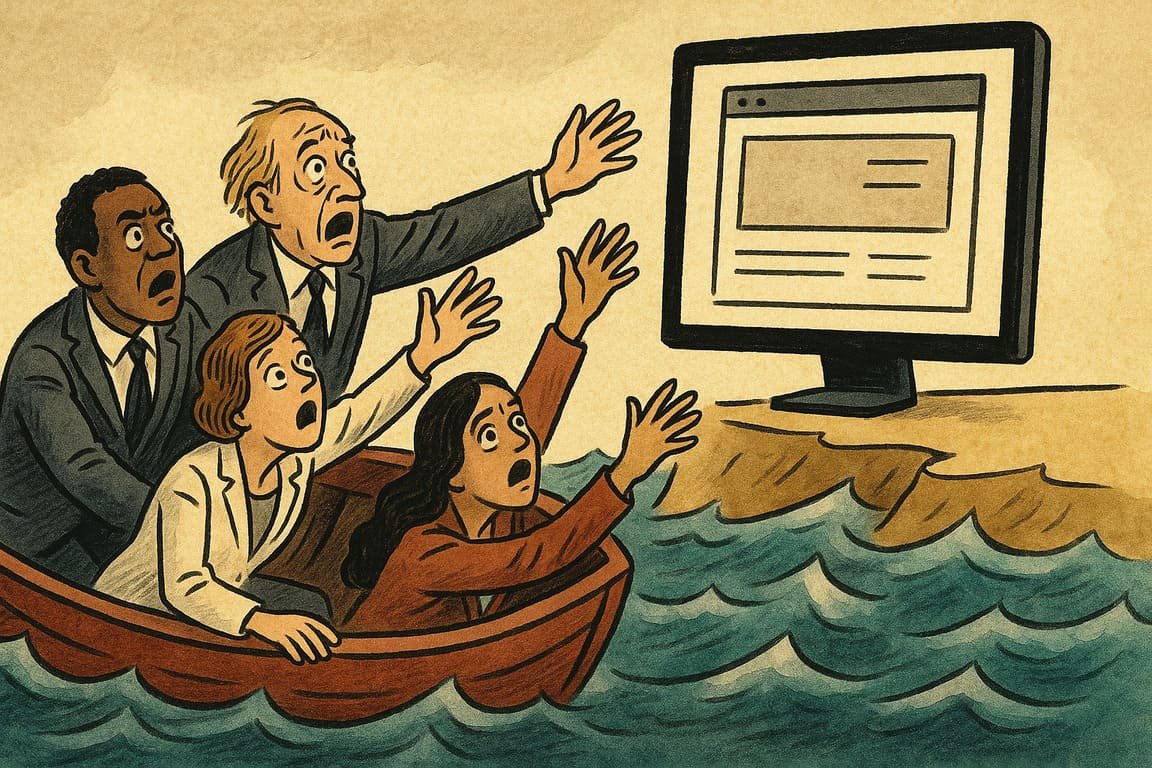
Night settles over a city pulsing with invisible signals. Glass towers flicker, storefronts close, and somewhere beyond the hum of traffic, a freshly minted entrepreneur stares at her empty shop window. No passerby stops to look. Behind her, a laptop glows softly—an open tab, a half-finished website, waiting for the world to notice. Out on the digital streets, attention is auctioned off to the highest bidder, while those without a virtual address simply vanish. Every click is currency, every search a desperate hunt for belonging, yet countless businesses stay mute, locked behind bricks and mortar, hoping for footsteps that rarely come. Underneath the surface, a subtle panic: if nobody finds you online, do you even exist?
Consider the irony. Empires built on handshake deals now trade trust for a five-star rating. Legacy brands cling to their history, but TikTok teens can topple their relevance with a single meme. Nobody is immune—not the corner bakery, not the tech titan, not the freelance coach. The real war isn’t over price or product. It’s the invisible battle for digital credibility, fought one Google result at a time. Today, if you can’t be found on a screen, you’re not part of the conversation.
Look at Maya Patel, a Nairobi-based artisan chocolatier who spent years perfecting her recipes but saw her shop empty while a competitor’s website brought in orders from across continents. Her pivot to digital brought global fans who’d never set foot in Kenya, all thanks to a three-page website with rich photos, behind-the-scenes videos, and a booking form that pinged her phone while she slept. Maya’s story isn’t rare—it’s the new rule of survival.
Yet skepticism lingers. People whisper about the cost, the tech jargon, the fear of making a mistake that sinks the business before it sails. There’s a whole chorus of quiet voices—owners, founders, dreamers—wondering if a website really matters, if maybe they can wait just a little longer. The truth? There’s a digital clock ticking, and it doesn’t care about comfort zones. As algorithms get sharper and markets go borderless, every second spent offline is a sale, a customer, a chance lost forever.
Modern commerce rewards only the visible. Digital invisibility is commercial extinction. The only way to win the auction of relevance is to play—and that means owning your corner of the web. Not tomorrow. Not when it feels safe. Now.
Quick Notes
- Visibility Decides Survival: If your business isn’t online, most potential customers never know you exist. Visibility is no longer a luxury but the price of entry.
- Websites Build Instant Trust: Shoppers, clients, and partners judge your legitimacy in seconds based on your online presence. An outdated or absent site destroys credibility.
- Growth Means Going Digital: Word-of-mouth used to be enough. Now, algorithms, SEO, and shareable content fuel business growth. No website means you’re stuck in neutral.
- Competition Never Sleeps: While you hesitate, your rival launches a slick site, reaches your audience, and grabs loyalty. Digital apathy is an open invitation for competitors.
- The Website Is Just the Beginning: A real website unlocks analytics, global reach, direct customer feedback, and endless new channels. Digital transformation starts at your homepage.
Digital Street Cred—Why Online Presence Is Non-Negotiable
Every modern business faces the same question: can you be found, and does your presence inspire trust? In today’s world, even grandma’s knitting circle expects to Google a business before showing up. Search engines are the new town square, and not showing up there is the business version of shouting into the void.
One story stands out: Ali, who ran a sneaker store in Mombasa. He poured his energy into in-person charm, believing loyal customers would return forever. But when a rival opened an Instagram-friendly website, his store’s foot traffic fell off a cliff. “It felt like being erased overnight,” Ali said. “Everyone assumed we’d shut down, just because they couldn’t find us on Google.” Digital absence sent a signal louder than any marketing: irrelevance.
A credible online presence does more than attract eyeballs. It signals legitimacy, authority, and belonging. A simple website, with crisp branding and clear details, becomes a digital handshake—a promise you are who you say you are. In a world awash with scams and fake reviews, people crave certainty. An up-to-date site, with a real address, phone number, and testimonials, often decides who gets the sale.
Then comes reputation. Without a website, every positive customer story, rave review, or viral moment disappears into thin air. With one, you own your narrative. Positive Google reviews, embedded testimonials, and fresh blog posts create a virtuous cycle. Customers become your advocates, and your brand moves from local to legendary. For every business lost in anonymity, there’s a rival winning customers through simple, consistent online engagement.
Brand personality shines brightest online. Your site can feel like a pop-up shop, a digital afterparty, or a high-gloss magazine—whatever makes your story stick. When Netflix built its early buzz, it was through a sleek site that captured curiosity and a sense of being “in the know.” Every brand, no matter how small, can now curate that same energy, winning loyalty before a customer ever steps inside.
And here’s the twist: digital presence isn’t about looking big or techy. It’s about being reachable, relatable, and real. A neighborhood barber with an honest blog and online bookings becomes a community favorite, often outselling flashy chains. Modern credibility isn’t handed down. It’s earned—one click at a time.
Trust or Bust—How a Website Shapes Belief in Your Business
Trust used to mean a handshake, a smile, or a business card passed across a table. Now, trust begins with a loading bar and a split-second first impression. In the eyes of customers, a website is your business suit, your storefront, and your pitch deck rolled into one.
Jasmine Torres, a legal consultant in Manila, saw her practice triple after launching a professional website. “I’d meet clients, and they’d quote back things they’d read on my site,” she said. “People trust you when they feel you’re open about who you are and what you do.” Her competitors kept relying on old networks and word of mouth, but she pulled ahead simply by being findable and transparent.
Without a website, your business looks either amateur or temporary. “Is this a real company?” people wonder. No site, no credibility. The internet doesn’t care about intentions, just what’s visible and reliable. Professional websites, even the simplest ones, create a sense of permanence. They become your digital storefront—always open, never tired.
Psychologically, humans crave stories. Your website is the stage for yours. Through photos, testimonials, and blog updates, businesses create an emotional connection that brochures and flyers can never match. When a craft brewery in Berlin added staff bios and behind-the-scenes brewing stories to their website, customer loyalty soared. The site made customers feel like insiders, invested in the journey, not just the product.
A strong online identity also protects you from misinformation and rumor. With a website, you control the facts, correct mistakes, and shape perceptions. No website leaves you at the mercy of online gossip, fake profiles, and competitors who aren’t shy about “borrowing” your audience. The risk of being misunderstood or misrepresented grows with every day you stay silent online.
Finally, websites offer a foundation for trust that endures. Brands like Patagonia, Warby Parker, and even local flower shops built entire communities through blogs, newsletters, and transparent pricing. Trust doesn’t come from perfection; it comes from openness. A website is the most honest invitation you can offer, saying: “Here’s who we are. Here’s what we stand for. Judge for yourself.”
Growth Engines—How Websites Unlock New Customers and Revenue
Imagine growing your business while you sleep. For founders and teams everywhere, a website makes this possible. Digital storefronts work around the clock, handling inquiries, making sales, and collecting leads while you chase dreams—or catch up on sleep.
Case in point: Akio Nakamura, owner of a Tokyo bike repair shop, created a site with online appointment scheduling. Soon, he was serving clients he never would have met through walk-ins alone. “It was like unlocking a second city of customers,” he said. With smart SEO and a little local storytelling, his shop became the go-to spot for urban cyclists, not just commuters passing by.
A website scales your reach far beyond your street address. You can target new markets, test ideas, and create content that resonates globally. From Nigerian tech startups to Parisian pastry chefs, websites open the floodgates for growth by removing all geographical barriers. Your niche can be as small as gluten-free dog treats or as vast as business strategy—digital reach knows no limits.
The rise of e-commerce shows just how critical websites are for revenue. From Shopify to Etsy, brands launch with little more than a compelling landing page and a payment button. This isn’t just a trend; it’s a fundamental shift in consumer behavior. People expect to buy, book, and browse online. The businesses still relying on paper receipts and cash counters will watch opportunities pass them by.
Content marketing has become the stealth weapon for growth-minded teams. Blog posts, how-to videos, downloadable guides—these pull in visitors who are searching for answers, not just products. Brands like Glossier built their empires by creating digital communities long before they had shelves in stores. Customers today want to learn, not just shop, and the brands that teach win loyalty for life.
Lastly, the website’s analytics become a goldmine for future growth. You can see what works, what flops, and what your customers crave most. No need to guess. You have real-time feedback. Decisions get smarter, marketing gets sharper, and every experiment becomes an investment in your next wave of growth.
The Competition Is Already Online—Why Waiting Means Losing
Hesitation is the hidden killer of ambition. For every business pondering a digital leap, a dozen competitors race ahead. Delay means surrendering market share to those who understand that digital speed equals survival.
Take the story of Lila and her boutique fitness studio in Johannesburg. For years, she ignored the rise of online booking. Her rival set up a website, offered virtual classes, and snapped up clients during the pandemic. By the time Lila finally launched her site, her best trainers had moved on, and her brand felt stale. “It was like trying to start a party after everyone had left,” she reflected. The digital gap had become a chasm.
Modern customers are ruthless with their attention. If your site loads slowly or doesn’t exist, they move on without regret. Today’s best brands aren’t just found online—they’re experienced there. Slick web design, clear calls to action, and instant customer service have become minimum standards, not nice-to-haves.
Even industries once seen as “offline” have shifted. Real estate agents close deals through virtual tours. Doctors consult via secure portals. Street vendors announce specials through WhatsApp web pages. The lines between digital and physical have all but disappeared. To stay competitive, every business must adapt or risk irrelevance.
Word-of-mouth still matters, but now it’s digital. Referrals spread through social shares, review sites, and viral moments. Without a website, your story is told for you, by others—often inaccurately. Control of your narrative depends on showing up online, fast.
Some leaders believe they can wait until “the time is right.” Yet, every delay hands advantage to the bold. The most successful teams treat their websites as living, breathing assets—constantly updated, always evolving. That’s not tech hype. It’s how modern market leaders are born.
Digital Transformation Begins at Your Homepage
Digital transformation sounds overwhelming, but it always begins with a website. Your homepage isn’t just a digital business card—it’s the launchpad for all future innovation.
Carlos Mendes, founder of a boutique marketing agency in São Paulo, built a website to showcase past work. Soon, analytics revealed which services attracted the most attention. By shifting his business strategy to highlight those strengths, Carlos saw exponential growth and landed clients far beyond his city. His site became a living experiment in adaptation and progress.
Websites unlock more than customers. They enable businesses to collect data, build mailing lists, and launch new services without physical constraints. A simple opt-in form can double engagement. A chatbot answers questions while you’re in meetings. The smallest tech upgrade often sparks the biggest competitive leap.
Real transformation is iterative. Businesses start with a site, then add blogs, e-commerce, webinars, and digital communities. Each addition fuels a cycle of feedback and improvement. Brands like Peloton, born in obscurity, leveraged their digital hubs to build global communities—and their stories inspire teams everywhere.
Investing in a website often triggers a cultural shift. Teams think bigger, act faster, and embrace innovation. A small family-run restaurant in Dublin launched an online menu and booking engine, discovering a whole new segment of tourists. Every team member—from the chef to the host—felt pride seeing their work showcased to the world. Digital pride is contagious, and it transforms organizations from within.
At its core, a website says, “We’re ready for tomorrow.” It’s not about perfection; it’s about progress. The first step online becomes the spark that ignites a thousand others.
When The Lights Go Out, Will Your Business Still Exist?
Deep in the heart of every city, after neon fades and traffic slows, the storefronts that once buzzed with life stand in silent rows. Behind locked doors, old ledgers gather dust, reminders of days when reputation depended on who knew your name. But on the digital streets, the lights never go out. Websites glow like lighthouses in a sea of endless choices, guiding strangers to places they never knew existed.
In a small office, a founder stares at her glowing screen, eyes wide with the quiet thrill of seeing new orders arrive from places she’s never visited. She remembers the fear—what if building a site was too risky, too expensive, too late? Now, her story is told in pixels and passion, reaching corners of the world she never dreamed possible.
The digital world offers no guarantees, only opportunities. The invisible current will sweep away those too slow to move. Yet for those who risk the leap, the reward is immortality—a business that lives on, no matter what locks click shut in the night.
You will never have a second chance to claim your digital presence. The future belongs to those who show up. Will you let your business vanish when the world goes dark, or will you build a light that never fades?
