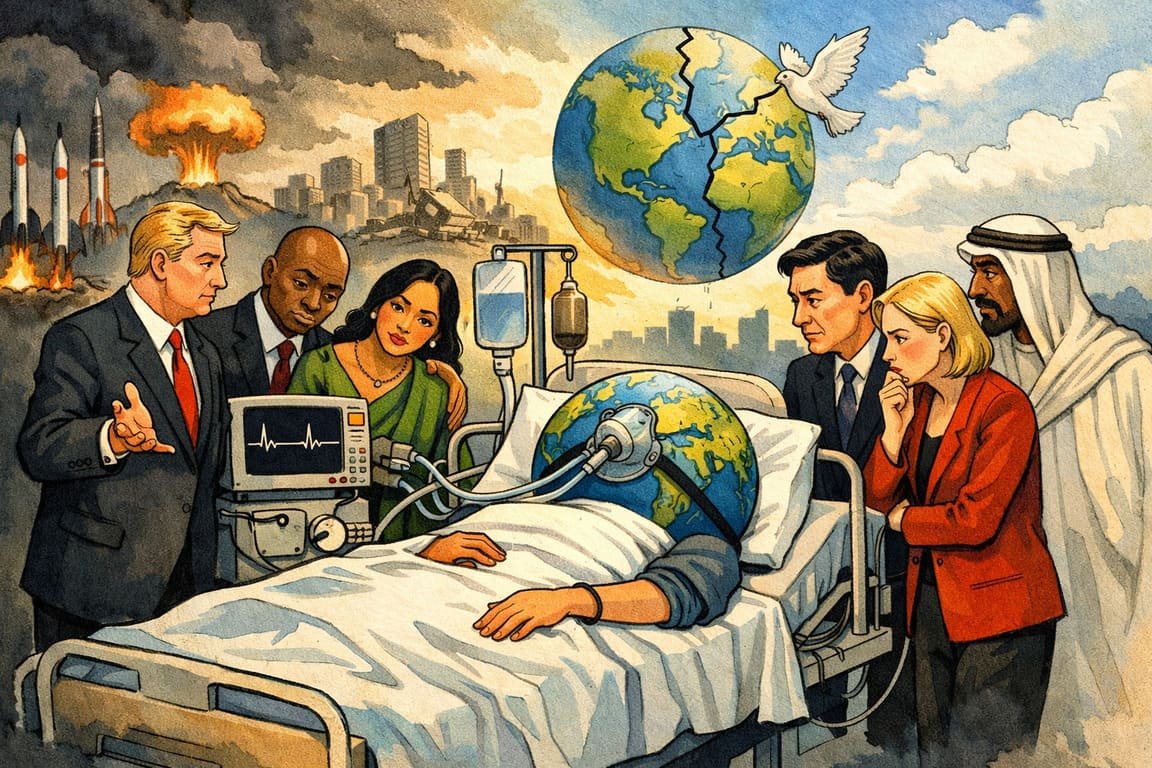
The chandeliers inside the great halls of diplomacy still shine, but the light feels thinner now, almost theatrical. Delegates arrive on schedule. Statements are delivered with practiced confidence. Applause lands where it is supposed to. Yet beneath the ritual, something essential has slipped away. The belief that nations can truly act together, not just speak together, no longer feels solid. Multilateralism has not collapsed. It has drifted into performance, where presence replaces conviction and process substitutes for purpose.
This idea was once born of exhaustion. After devastation that defied language, cooperation felt less like idealism and more like survival. Shared institutions emerged to prevent history from repeating itself. They were imperfect from the start, but they worked well enough to feel durable. Peacekeeping mattered. Trade rules stabilized expectations. Collective security reshaped fear into deterrence. Over time, success bred assumption. The system began to feel permanent, almost natural, as if cooperation were the default setting of global politics rather than a fragile achievement sustained by trust.
Trust, however, does not shatter dramatically. It erodes quietly. Powerful states bent rules while insisting others respect them. Smaller nations noticed. Dispute mechanisms stalled. Climate commitments multiplied without consequence. Security councils debated while violence metastasized. Each contradiction carried a cost. Citizens watching from afar sensed the imbalance. They began to ask why these institutions demanded loyalty without delivering fairness. Multilateralism did not lose credibility because it failed completely. It lost credibility because it failed selectively.
Domestic politics accelerated the decay. Compromise stopped winning elections. Blame proved more efficient than explanation. Leaders learned that tearing up agreements played better than maintaining them. Cooperation became suspicious, framed as weakness or surrender. Withdrawal turned into spectacle. The applause lines changed. Multilateralism did not lose on substance alone. It lost on emotion, because it stopped speaking to how people actually experience power and insecurity.
The pandemic stripped away any remaining illusions. Borders closed reflexively. Medical supplies became bargaining chips. Coordination lagged while national stockpiles grew. Institutions designed for collective response struggled to command trust. Fear revealed instinct. When survival felt immediate, solidarity thinned. This was not cruelty. It was realism. But it exposed a deeper truth. Cooperation functioned best when convenient. Under pressure, it bent toward fragmentation.
Security alliances revealed similar strain. Deterrence depends not just on weapons, but on belief. That belief now feels conditional. Debates over obligation and burden sharing surface even as threats grow more complex. Unity appears reactive rather than reflexive. Adversaries notice hesitation faster than rhetoric. An alliance can look formidable while quietly doubting itself. History shows how dangerous that combination can be.
Economic interdependence once acted as glue. The logic was simple. Hurting one another would hurt everyone. That logic still holds intellectually. Emotionally, it no longer convinces. Supply chain shocks turned efficiency into vulnerability. Dependence became something to escape rather than manage. Governments began chasing resilience instead of integration. The language shifted. Cooperation now competes with control, and control sounds safer in uncertain times.
Technology widened the gap. Power no longer moves only through armies and markets. It flows through data, platforms, and standards. Institutions designed for a slower era struggle to regulate systems that evolve in months rather than decades. Authority lags innovation. When governance cannot keep pace with reality, legitimacy fades. Citizens feel the mismatch even if they cannot articulate it.
None of this means cooperation is obsolete. It means the old version feels disconnected from lived experience. People do not reject working together. They reject rituals that look detached from consequence. When summits end with statements instead of action, faith weakens. When rules apply unevenly, loyalty erodes. Multilateralism is gasping not because it is wrong, but because it stopped evolving while the world accelerated.
A different form is already emerging. Smaller coalitions replace universal consensus. Issue specific partnerships move faster than grand assemblies. They are messier, less elegant, and often exclusionary. Yet they work. Purists mourn fragmentation. Practitioners notice results. The question is whether these arrangements can scale without recreating inequality under a new banner.
What makes this moment dangerous is not collapse, but ambiguity. Old structures still exist. New ones remain incomplete. Power flows through overlapping systems without clear accountability. In these gaps, mistrust thrives. History rarely punishes chaos immediately. It waits until miscalculation becomes unavoidable.
In a quiet corridor after the speeches end, the banners still hang, heavy with inherited meaning. The rooms remain ready for the next meeting. Multilateralism has not vanished. It is standing still, unsure whether it will be renewed or slowly replaced by something colder and more transactional.
And as the world edges toward its next shared crisis, one question presses gently but relentlessly against the surface of global politics: when cooperation is needed most, will it arrive as instinct again, or will it hesitate, trapped between nostalgia for what once worked and fear of committing to something new?
