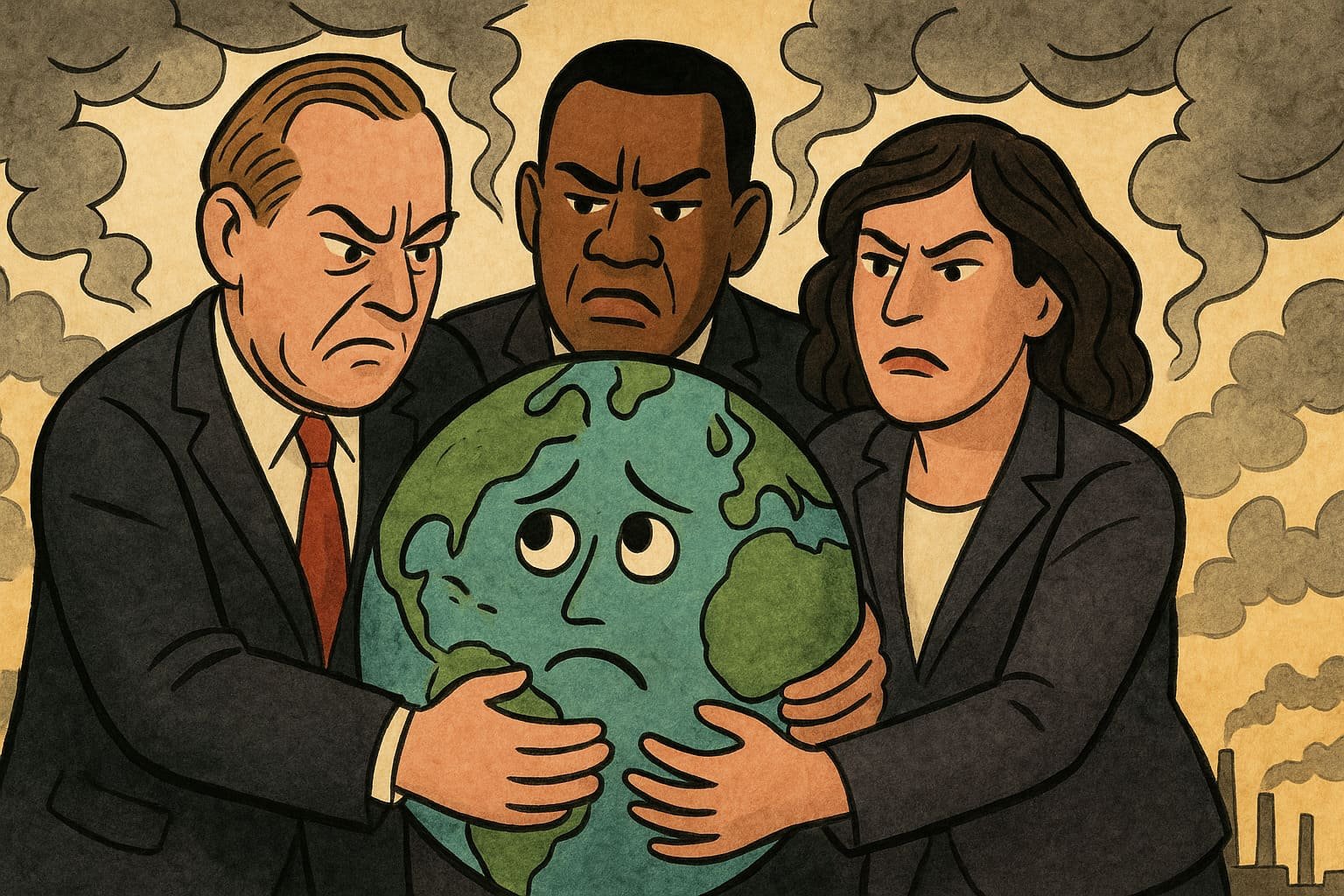
Imagine walking into a shimmering supermarket aisle, every product shouting, “Eco-friendly!” “Sustainable!” “Planet Safe!” For a split second, you exhale. Maybe the world is getting its act together. But then, a question gnaws at you: Is this hope, or is it just hype with a price tag? Behind every lush green label, there’s a story unfolding that most people never hear. It’s the story of how the world’s mightiest companies hijacked the language of environmental salvation, then used it as a smokescreen to keep polluting, extracting, and yes strangling the planet. This isn’t a conspiracy theory. It’s a masterclass in psychological misdirection, where corporate greenwashing isn’t just clever marketing it’s become a global tragedy hidden in plain sight.
Every day, ordinary people are lured into believing that their choices; vegan shampoo, “recyclable” bottles, or carbon-neutral deliveries will somehow patch the ozone and save the turtles. Big firms have become expert illusionists, performing ethical magic tricks while quietly draining the lifeblood of ecosystems. With every public promise to “go green,” they tighten their grip. This article unpacks the dirty secrets, reveals the real-world victims, and exposes why true sustainability is more than a press release. You’re about to see how greenwash became the ultimate get-rich-quick scheme and why the solution starts with tearing off the mask.
Quick Notes
- Corporate Greenwashing Masks Destruction: The world’s biggest brands weaponize eco-friendly language to distract, delay, and avoid accountability while continuing to harm the environment behind closed doors.
- False Promises, Real Consequences: Each greenwashed campaign tricks consumers into complacency, letting companies dodge regulations and prevent real, systemic change hurting the planet and the public.
- Human Faces, Broken Trust: Real stories, from exploited communities to everyday shoppers, show how greenwashing is more than a PR problem; it’s a human tragedy that deepens inequality and erodes public trust.
- Systems, Not Slogans: The only escape from this trap lies in systemic change; regulations, transparency, and grassroots movements that put real power back in the hands of citizens and force companies to walk their talk.
- Time to Unmask the Illusion: The fight for our future demands a radical mindset shift from passive hope in branding to active, critical engagement with the truth. Your choices, your voice, and your skepticism are the front line.
The Green Mask: How Corporations Turn Eco-Anxiety Into Profit
Walk into any high-street store, and you’ll spot it immediately: shelves gleaming with “all-natural” soap, organic cotton t-shirts, and “carbon-neutral” coffee. Brands like Nestlé, BP, and even fast-fashion behemoths slap leafy badges on their products, promising a guilt-free conscience for just a few dollars more. The truth? These green flourishes rarely scratch the surface. Beneath the glossy marketing, business continues as usual: toxic waste, supply chains riddled with exploitation, and emissions that dwarf the footprint of entire countries. It’s a carefully crafted performance that preys on good intentions and pockets the proceeds.
Take Volkswagen’s “clean diesel” debacle. While billboards celebrated their eco-innovation, engineers installed software to cheat emissions tests poisoning the air while the world clapped for cleaner cars. The scandal was breathtaking not just for its technical audacity, but for its audacious manipulation of trust. Customers wanted to believe in progress, and corporations weaponized that hope. In boardrooms, environmental pledges morph into strategic assets; a line on a balance sheet, a way to boost share price and dodge activists. It’s not about saving the Earth; it’s about owning the narrative.
Think about the average consumer: bombarded daily with anxiety about the climate crisis, yet desperate for agency. Greenwashing dangles an easy solution. Buy the right brand, and you’re absolved. But as Naomi Klein put it, “Climate change is not a ‘brand opportunity.’” Every time a mega-corporation launches a new “green” product line, they’re selling more than soap they’re selling an illusion of impact, while the true scale of destruction stays hidden behind the curtain.
Real change-makers, like Patagonia’s Yvon Chouinard, have called out this charade. In an open letter, he admitted his own company’s limits: “There’s no such thing as a sustainable company. The best we can do is less harm.” That kind of honesty stands in sharp contrast to the empty hype flooding social media feeds. This gulf between real sustainability and manufactured green optics is growing and as long as the illusion persists, so does the crisis.
Meanwhile, smaller brands genuinely innovating for a cleaner future get drowned out by the roar of corporate ad budgets. Big players crowd the market with half-hearted initiatives, blocking legislation, and lobbying for loopholes. The tragedy is that every dollar spent on hollow green campaigns is a dollar stolen from real solutions. As long as consumers are dazzled by false hope, the status quo tightens its grip.
The Price of Deception: When False Promises Become Deadly
Behind every “green” billboard lies a trail of broken promises and real-world casualties. In Bangladesh, fast-fashion giants tout organic cotton lines while local rivers run blue and red with dye effluent. The factory workers making these “eco” garments labor in hazardous conditions, their wages barely enough for survival. Corporate sustainability pledges rarely reach the communities that bear the true cost. Greenwashing isn’t just misleading it’s deadly.
Take the story of the Ogoni people in Nigeria’s Niger Delta. Oil giants rolled out sustainability initiatives for global audiences, promising environmental stewardship. On the ground, decades of spills and gas flaring left farmland poisoned and drinking water unsafe. Promises of cleanup funds and compensation evaporated after press conferences faded. Here, the gap between boardroom and reality is measured in childhood illness and lost livelihoods.
Back in the West, millions of consumers believe recycling solves the plastic problem, thanks to relentless campaigns by beverage and packaging conglomerates. The truth is grimmer. Most plastic still ends up in landfills or shipped overseas, where it’s dumped or burned. In towns like Muzaffarnagar, India, families living near plastic-processing plants describe toxic air and contaminated water. The illusion of a circular economy masks an ugly export of environmental harm from rich nations to poor.
Not even iconic brands are immune to this rot. Coca-Cola declared itself a leader in “water stewardship,” yet investigative journalists found communities from Mexico to Africa facing water shortages after bottling plants siphoned local reserves. Corporate greenwashing becomes a shield against regulation, deflecting criticism long enough to secure the next profit cycle. Regulators scramble to keep up, but well-funded legal teams and armies of lobbyists stall meaningful change.
Meanwhile, whistleblowers and activists risk careers and safety to reveal these truths. Just ask lawyer Steven Donziger, who battled Chevron over Amazon rainforest pollution only to face years of retaliation. His fight shows how powerful firms weaponize legal complexity and PR spin to silence critics. For every successful exposé, hundreds more abuses stay hidden, protected by corporate “sustainability” departments trained to bury the evidence.
Real People, Real Damage: The Human Cost of Greenwashing
Greenwashing isn’t a victimless crime. It sabotages the trust that communities, workers, and customers place in the brands they invite into their lives. People believe in the story told on the package, only to discover they’ve been complicit in harm they never intended. Every broken promise lands somewhere real on a farmer’s field, in a family’s water supply, or inside a worker’s lungs.
Consider the residents of Flint, Michigan. The city’s lead-poisoned water crisis became a global scandal, but few noticed the greenwashed PR campaign launched to reassure the public. Authorities insisted that “safe, clean” water was being delivered, even as brown liquid flowed from taps. It took relentless community organizing, journalists, and scientists to pierce the illusion. By then, thousands had been exposed. When institutions play fast and loose with environmental truth, everyday people pay the price.
In Indonesia, palm oil producers tout their “certified sustainable” badges to global buyers. On the ground, indigenous communities are bulldozed off ancestral land to make way for monoculture plantations. Activists like Aleta Baun known as “Mama Aleta” lead blockades and peaceful protests to defend forests, often facing threats and violence. Her fight is proof that real sustainability means giving power back to those who live on the front lines, not to distant shareholders.
Shoppers in London or Los Angeles often discover the dark side of “conscious consumerism” the hard way. When The Guardian exposed that H&M was incinerating unsold “green” clothing, many loyal customers felt betrayed. They had trusted the brand’s sustainability pledge, only to realize it was little more than a sales tactic. For many, the shock of betrayal lingers long after the scandal fades.
Greenwashing also deepens social divides. Wealthy consumers enjoy a curated illusion of responsibility, while the poorest communities inherit the toxic byproducts. It’s the same script repeated from Lagos to Louisiana: glossy ads for “clean energy” or “sustainable food” masking a reality of sacrifice zones and sacrificed lives. This is not just environmental injustice it’s an assault on the social fabric.
Yet amid the heartbreak, stories of resistance shine through. From Greta Thunberg’s school strikes to the farmers’ protests in India, ordinary people refuse to accept greenwashed solutions. Their courage exposes the hollow core of corporate promises and inspires others to demand more than a new logo or hashtag. In the end, it’s these grassroots movements that hold the keys to true accountability.
Systemic Change or Slogan Slavery? Breaking the Cycle of Corporate Greenwash
As long as companies control the story, the greenwashing cycle spins on. Regulators issue guidelines, but clever lawyers find the loopholes. Voluntary certifications spring up, only to be gamed by those with the deepest pockets. The truth is, real sustainability requires systemic change that no amount of slick advertising can deliver. So, how do we escape this hall of mirrors?
The first step is radical transparency. When Unilever began publishing the environmental footprint of every product, it wasn’t just a PR move it opened the door to real accountability. Transparency means making data public, traceable, and understandable. It forces companies to show, not just tell. This shift is catching on: in France, fashion brands must now label products with environmental impact scores. Consumers armed with truth can finally make informed decisions.
Another critical lever is regulation with teeth. The European Union’s crackdown on misleading green claims is just the beginning. Laws that fine or ban deceptive marketing force companies to invest in real solutions, not just slogans. Australia’s ACCC and the UK’s CMA have begun naming and shaming serial offenders. It’s slow work, but every victory sends a signal that the era of free-range greenwashing is coming to an end.
Grassroots activism remains a powerful force. In Canada, an alliance of First Nations, environmentalists, and citizens blocked the Northern Gateway oil pipeline proving that local resistance can derail even the most powerful lobbyists. When communities unite, they punch above their weight. The rise of “buycott” movements where consumers choose brands that pass rigorous independent audits shows how market pressure, applied with precision, can reshape entire industries.
Real innovation matters too. Instead of pouring billions into marketing, some brands focus on designing products with genuine life-cycle accountability. Interface, a carpet manufacturer, rebuilt its business around zero waste. By measuring every impact and inviting scrutiny, they set a benchmark others scramble to match. Genuine sustainability means hard choices, honest trade-offs, and a willingness to sacrifice profit for principle.
Education is the hidden superpower. When schools, universities, and media teach people to recognize greenwashing, it becomes harder for bad actors to get away with it. Courses like Yale’s “The Science of Well-Being” and documentaries like “Seaspiracy” empower audiences to see through the smog. Armed with skepticism and knowledge, people become the ultimate regulators demanding proof, not promises.
Beyond the Green Curtain: Reclaiming Power, Rebuilding Trust
The world faces a stark choice. We can keep buying the dream trusting billion-dollar brands to save the day or we can pull back the green curtain and demand a new kind of accountability. This isn’t just an environmental issue; it’s a fight for the soul of our future. The good news? Ordinary people, armed with critical thinking and community power, have always been the spark that ignites real change.
Look at the global climate strikes. Led by children and teenagers, these movements forced world leaders to the table. Greta Thunberg’s withering speeches cut through the smog of corporate doublespeak and reminded everyone that the stakes are personal. It was a teenage girl with a handmade sign, not a boardroom full of executives, who became the face of the real sustainability revolution.
Brands that survive the coming decade will be those that embrace vulnerability and truth. Imagine a world where a CEO stands on stage and admits, “We don’t have all the answers, but we’re listening, and we’re changing.” When people hear honesty, they respond with trust. Patagonia’s radical transparency and Ikea’s circular business pilots prove that candor isn’t just ethical it’s profitable in the long run.
Your choices matter, but your questions matter more. Instead of asking which brand is “most sustainable,” ask who stands to gain from the story being told. Seek out companies with open supply chains, third-party audits, and genuine ties to the communities they claim to serve. Demand to know not just what’s in your product, but whose lives it touches along the way.
This isn’t about despair. It’s about empowerment. Every major transformation starts with a moment of clarity; a point where illusions shatter and something new emerges. That moment is now. The world doesn’t need more “green” products. It needs truth, courage, and a new relationship with the planet that puts people and ecosystems above profit. Are you ready to see past the illusion and step into the fight?
Unmasking the Future: The Real Revolution Starts With You
The story of greenwashing is a cautionary tale for the ages; a warning that even the brightest hopes can be twisted into profitable lies when power goes unchecked. But it’s also an invitation. Every false promise exposed, every illusion shattered, is a chance to build something better: a world where honesty outshines hype, where the future belongs to those who refuse to settle for cosmetic change. The next chapter depends on us. Will we keep clapping for the magician, or will we storm the stage and demand the real trick; the one where we heal the world for good? So ask yourself: Will you settle for the story they sell, or will you write the one the world truly needs?
Partnered. Provocative. Worth Your Scroll.
This is a Promoted Post by ESYRITE—yes, it’s paid, but never filtered. Our voice stays raw, real, and razor-sharp. We team up with bold ideas, game-changers, and stories that spark something real. If it’s here, it earned its place—no fluff, just impact. We don’t just promote—we provoke. Stay sharp. Dive deeper.
